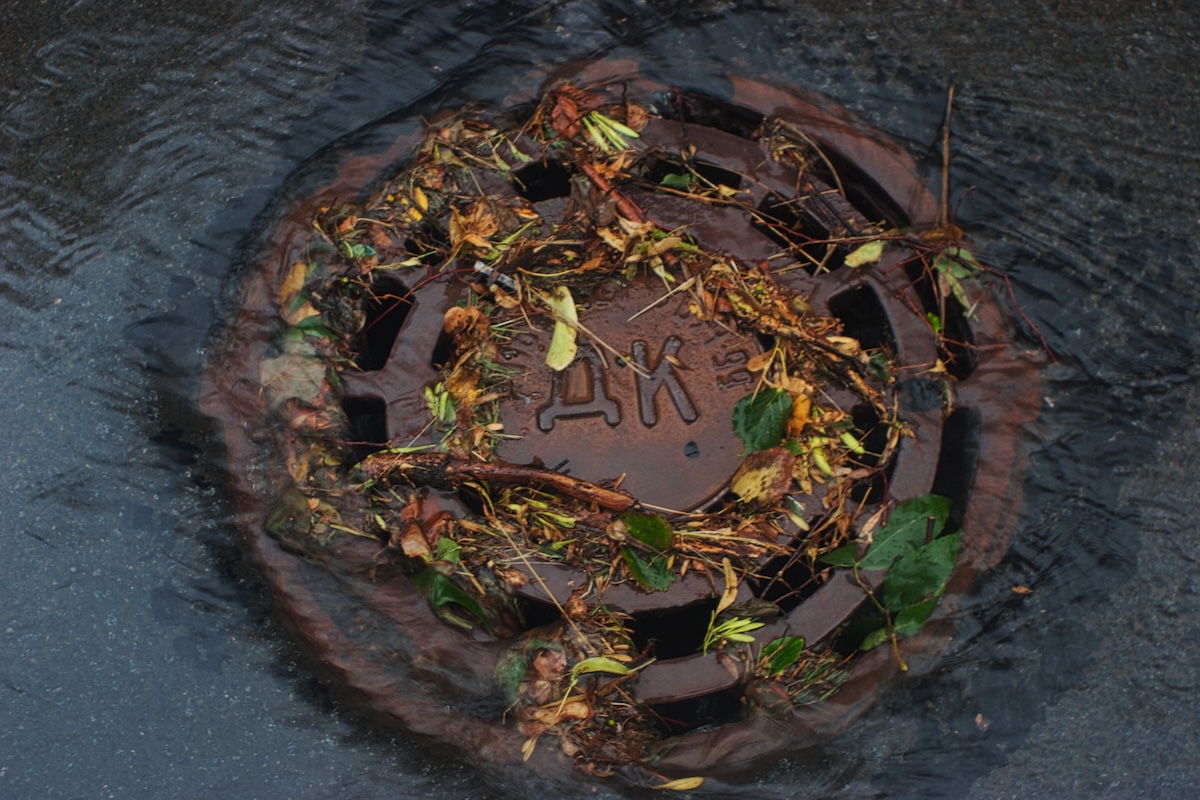
Outdoor drains often receive little attention until water begins collecting around a gully or spreading across a path. A few simple checks during wetter months can reduce the likelihood of an avoidable blockage and reveal when professional investigation is needed.
Leaves can create a hidden restriction
Fallen leaves are an obvious problem when they cover a drain grate, but the obstruction does not always remain on the surface. Smaller pieces can pass through the grate and gather inside the gully. Soil, moss and grit then settle around them, gradually restricting the route available for rainwater.
Clearing visible debris before heavy rain is therefore more useful than waiting until water has already started pooling. Gloves should be worn, and only loose material within safe reach should be removed. Pushing a stick or unsuitable tool into the pipe can compact the blockage or damage the fitting.
Watch how quickly rainwater disappears
A working surface-water drain should accept normal rainfall without remaining full for long periods. Water that drains noticeably more slowly than before can indicate debris in the gully, a restriction farther along the pipe or a problem affecting a shared run.
The same applies to downpipes. If water spills from a connection or the base of the pipe during rain, the cause may be a blocked hopper, gutter outlet or underground connection. Cleaning only the visible opening may provide temporary relief without dealing with material that has already entered the drainage system.
Kitchen habits still matter outside
Outdoor gullies often receive wastewater from kitchens or utility areas. Fat, oil and grease should never be poured into a sink or gully. These materials can cool and stick to the inside of a pipe, where food particles and other waste attach to them. The restriction can continue growing even while water still appears to pass through.
Cooking oil should be allowed to cool and placed in a suitable container for disposal. Plates and pans should also be scraped before washing. These small habits help limit the material entering both internal and external drainage pipes.
Signs that a simple clean may not be enough
Repeated pooling, unpleasant smells, gurgling sounds or water returning soon after a drain has been cleared can indicate a deeper issue. Roots may have entered through a defective joint, scale may have narrowed the pipe, or part of the system may have moved or deteriorated. In these situations, repeated use of household drain cleaner is unlikely to identify the cause and may not be suitable for the pipework.
A drainage specialist can choose a method suited to the symptoms and access available. Professional drainage services may include mechanical clearance, high-pressure water jetting or a drain camera inspection where a blockage keeps returning. The purpose of the inspection is to establish what is happening before recommending further work.
A short routine can prevent disruption
Checking grates after windy weather, keeping gullies free from loose debris and paying attention to changes in drainage speed can prevent a minor restriction from becoming an overflow. Householders should also avoid lifting heavy covers or entering confined spaces. Where water is backing up, sewage is present or several fixtures are affected, professional assistance is the safer option.
Drainage & Plumbing Ltd provides specialist drainage work including drain unblocking, high-pressure water jetting, drain camera inspections, root cutting, descaling and drain repairs. Despite the company name, its operational services focus on drainage rather than general plumbing.