Write a comment
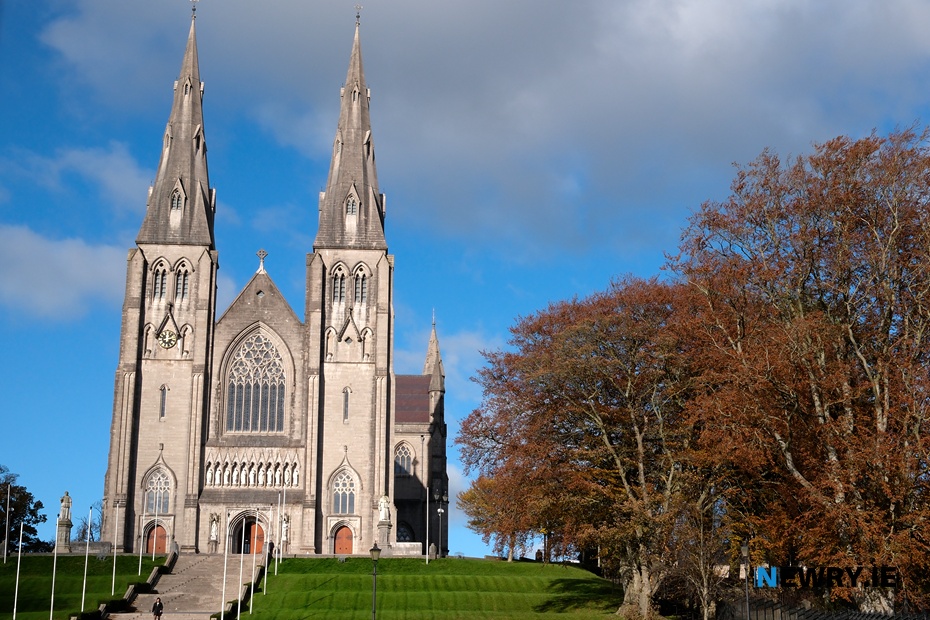
Archbishop Eamon Martin has repeated his call for young people to consider joining the PSNI, as he marked 25 years of the service at a Mass of Thanksgiving in Saint Patrick's Cathedral, Armagh. He delivered the homily on Monday 23 November at the 12.00pm Mass, which was held on the feast of Saint Columbanus.
Archbishop Martin said the Mass was also a time to remember those who have died. "Today we remember those officers and staff of the PSNI who have gone to their rest, and especially those who have been killed whilst in service," he said. He added that the Mass was taking place in November, a month set aside for remembering the dead and offering prayerful consolation to their loved ones, and that those who have died as a result of violence and conflict here and around the world were also remembered.
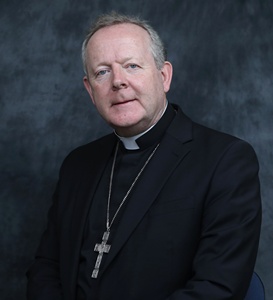
He said it was fitting to gather on the feast of Saint Columbanus, a missionary of reconciliation and peace in Europe. Born in 543 along the border between County Carlow and County Wexford, Columbanus studied as a young monk at Cleenish Island on Upper Lough Erne and then at Bangor Abbey. He left for the continent at around fifty years of age. Archbishop Martin said Columbanus built bridges of mutual understanding and peace between cultures and borders, and that Pope Benedict XVI had described him as one of the "Fathers of Europe".
Turning to the anniversary, the Archbishop prayed that Saint Columbanus would bless the officers and staff of the PSNI who have answered the call to build peace and shape a safer future for the people they serve. He described policing as a "noble vocation" and said it involves putting others first, serving justice and the Common Good, and protecting human life and dignity. He said officers, alongside other emergency service workers, are there for people in times of crisis and are prepared to put themselves in harm's way to protect others.
Archbishop Martin acknowledged the difficulties of the past 25 years. "While marking this significant anniversary, we are not naive," he said. He pointed to political deadlock, scarce resources, the unhealed wounds of the past and slow progress on reconciliation, and said there is still a struggle to achieve a police service that is genuinely representative of the entire community. He said, however, that more progress can be made with resolve, commitment and openness to further change.
He said society will always want to hold its police service to high standards of integrity, impartiality, accountability, leadership and governance, and rightly so. He said the current officers and staff of the PSNI, and the young people who will join in future, should be affirmed, appropriately resourced, trained and protected from intimidation, and that everyone has a part to play, including the Churches, sporting and community organisations, politics, the media, education, business and industry.
"No one should have to hide the fact that they are police officers or staff members; no young person should be afraid to say that she or he is applying for the PSNI," he said. He added that families should be made to feel proud that someone in their home has chosen policing, and repeated his previous calls for the very best of the country's young people to consider applying.
Archbishop Martin also referred to Pope Leo XIV's first encyclical letter, published in May, in which he said peace and human dignity are closely linked in the resolution of conflict. He said this is the kind of peace everyone is called upon to build and support, and that, as Saint Columbanus did in his day, people must share the responsibility of illuminating the land with the light of peace and understanding, tolerance, respect, charity and dignity for all.
He concluded with the words of Jesus: "Blessed are those who mourn; they shall be comforted; Blessed are the peacemakers; for they shall be called children of God."