
 Write a comment
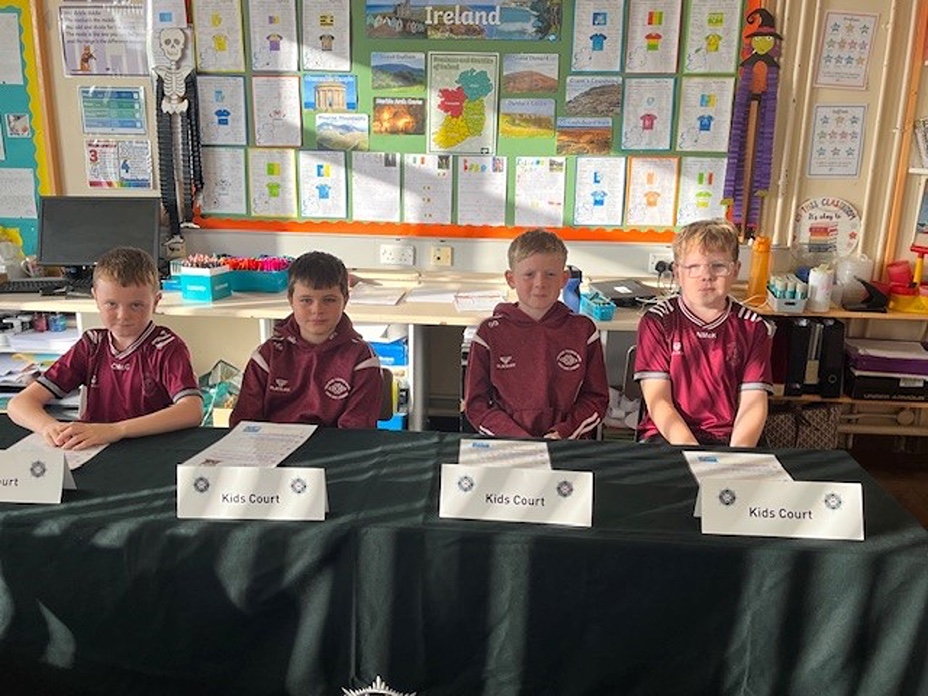
Pupils from St Patrick’s Primary School in Crossmaglen joined the local Neighbourhood Policing Team last week for an anti-speeding laser operation outside their school. Drivers caught speeding and stopped by police could accept a roadside penalty, choose magistrates court or, if eligible, face the school’s Kids’ Court. Slieve Gullion Neighbourhood Inspector Graeme Reynolds said the experience has an impact that a fine or penalty points cannot match.
The operation took place outside the school on Tuesday. Motorists who were stopped had a choice to make. They could accept the penalty points and fine at the roadside, reject the points and attend magistrates court, or, if eligible, appear before the judges of the St Patrick’s Primary School Kids’ Court.

Kids’ Court is a voluntary road safety initiative set in a mock court, and it has been running in the north since 2017. Drivers who opt to attend are not choosing an easy option. Being brought into the school to face probing questions from the panel of young judges is a difficult and often emotional experience.
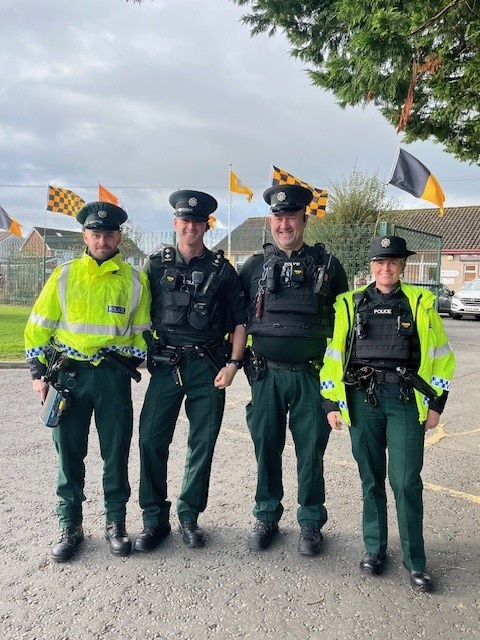
Inspector Reynolds said: “When a driver has to sit before a panel of children and explain why they were speeding past their school gates, and answer questions like ‘do you realise your speed outside my school could kill me or one of my friends?’, I really think it creates an impact and hits home in a way that no fine or penalty points ever could. We have found that many people are actually moved to tears by facing the children and accepting the reality that their actions really could cost a child, maybe one of these children, their life.
“We all agree that children should feel safe in and around their school, and so then it is entirely unacceptable that some people would knowingly put that safety at risk by speeding.”
The Inspector said 53 people have been lost on Ireland’s roads this year, and that the verdict from the Kids’ Court judges is that everyone has to do their bit to make sure no one else dies.
He added: “Drivers must adhere to the Fatal Five: don’t speed, don’t drink or drug driving, never use your phone while driving, always wear a seatbelt and pay attention on the roads.
“It is uncomfortable, raw and humbling for drivers to face the children in ‘court’ but it is a powerful experience that will live with them and hopefully as a result awareness will spread, and help shape safer driving behaviours in the future, ultimately making the children - and all of us - safer on local roads.”