

 Write a comment
The Permanent Secretary of the Department for Infrastructure has replied to a request by Newry, Mourne and Down District Council re possible Shared Island funding for the Southern Relief Road bridge over Newry Ship Canal.
The reply is marked as correspondence marked 'for information' on the Agenda for Monday's August council meeting. The reply explains that it would be up to the Irish Government to consider whether they would engage re the Shared Island fund and seems to suggest that even if funding was found it wouldn't make a difference to the Department's plans for a fixed bridge.
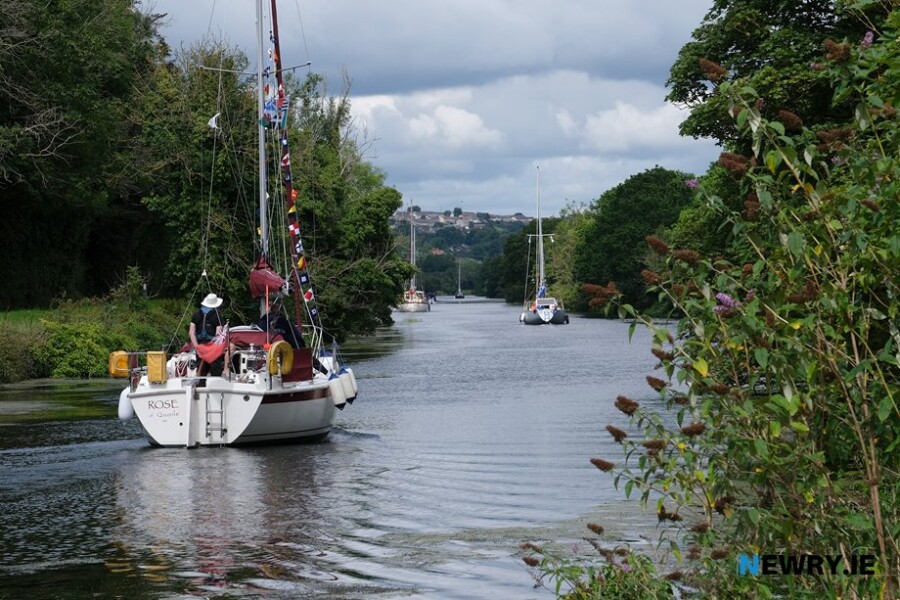
Currently the bridge is being progressed as a fixed bridge that would block off virtually all shipping traffic but at the July council meeting Cllr Michael Savage had suggested that the fund could be a potential solution in finding the extra money needed to make it an opening bridge and that the DfI permanent Secretary should be asked to engage with the Shared Island Fund.
The letter to Council CEO Marie Ward from Permanent Secretary Dr Julie Harrison said "It is my understanding from your letter that Newry Mourne and Down District Council has suggested that the Department engage with the Shared Island Unit. Departmental colleagues will continue to advance the project, however, any contribution or support for any project from the Irish Government would be a matter for them to consider."
Dr Harrison continued "To be clear again, the Department explored all engineering options for the crossing of Newry Canal. These included a lock gate option which would have necessitated extensive engineering works to achieve the additional 25m clearance required, significantly impacting on the Scheduled Monument. The cost of this option was estimated to exceed £50m. Operation of the lock would have required a significant volume of water (75,000m3) to be pumped in and out for one vessel which would have taken a full day to achieve.
"Any supported span less than 50m adversely impacts on the scheduled monument of Newry Canal. Unsupported spans opening less than 10m, that would accommodate a mast, were also considered. Designs included a short mid-span opening or sliding section. However, experience confirms that cost savings in construction would be outweighed by the implications of operation and maintenance. These forms of openings settle over time, because of their function and traffic loading making them inappropriate for the loading imposed by a strategic road of this significance."
Pointing out the potential of delays Dr Harrison concluded "I would also note that any change to the design of the bridge at this stage would ultimately delay the delivery of the scheme. The period of delay would be subject to the level of amendments required."