

 Write a comment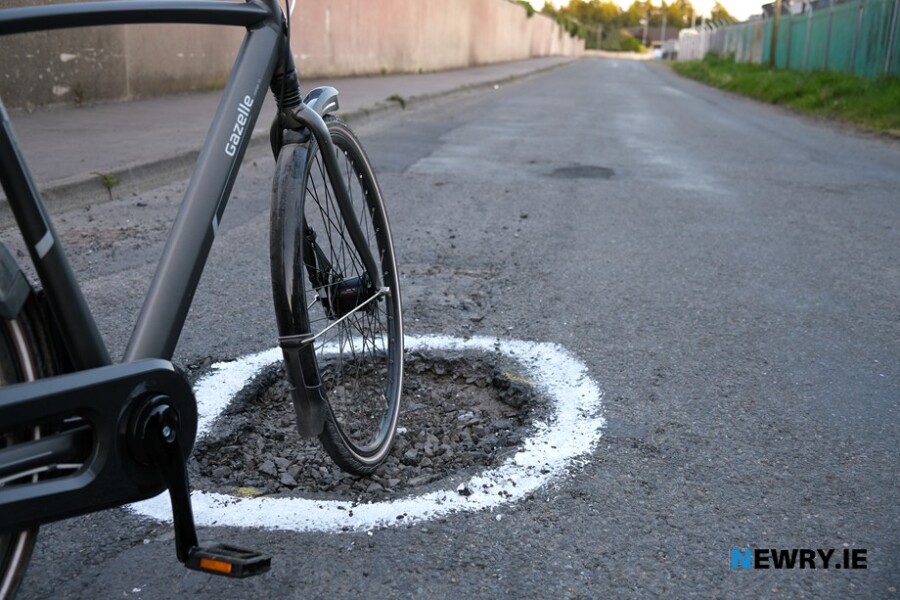
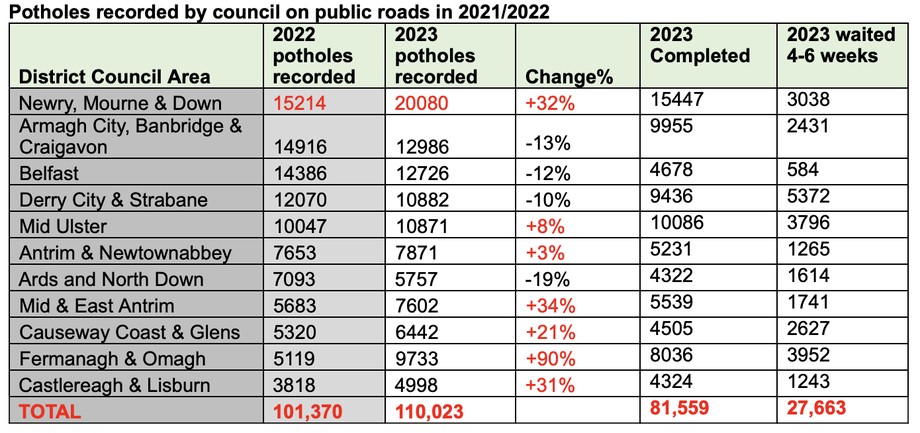
It appears that the Newry, Mourne and Down District Council area is the leader where it comes to the prevalance of potholes throughout the north's 11 council districts with Armagh, Banbridge and Craigavon Council and even Belfast City Council far behind.
A total of 20,080 potholes were reported in 2023 in Newry, Mourne and Down, a 32% increase from the previous year's total of 15,214. This area represents almost 20% of the total Northern Ireland pothole tally of 110,023. Before resurfacing work was carried out on Catherine Street in Newry last summer it appeared that most of those potholes were on that one street alone!
Potholes can be a frustrating and dangerous problem for drivers. With more bad weather to come this winter, and the cost-of-living crisis pushing car insurance premiums up, motorists run an increased risk of costly incidents if potholes continue to increase.
A new survey by CompareNI.com found that 91% of drivers in Northern Ireland have issues with potholes in their area. 94% of respondents also believe not enough is being done about potholes, while 96% said they weren’t fixed quickly enough. (based on a randomised survey of 500 respondents across Northern Ireland in January 2024, which represents a margin of error of approximately 5% at a 95% confidence level.)
The government statistics show that of the 138,464 surface defects recorded on NI roads in 2023 with a staggering 110,023 related to potholes. This means that potholes accounted for 79% of all recorded surface defects on NI roads in 2023.
According to the data, 78% of all recorded potholes were repaired, however, over a third took 4-6 weeks to be fixed.
Seven council areas saw the number of potholes recorded in 2023 increase from 2022, Newry, Mourne and Down Mid Ulster, Antrim and Newtownabbey, Mid and East Antrim, Causeway Coast and Glens, Fermanagh and Omagh and Castlereagh and Lisburn.
Fermanagh and Omagh saw the biggest increase of potholes up 90% from 2022, significantly higher than any other council area. In comparison, Mid and East Antrim saw the second biggest increase in potholes which was 34%.
Armagh City, Banbridge and Craigavon, Belfast, Derry City and Strabane and Ards and North Down all saw a decrease across 2023.
Ards and North Down saw the biggest decrease, down 19% from the previous year.
The increasing number of potholes on Northern Ireland roads has largely been attributed to a lack of adequate funding from the government. Although the majority of reported potholes are repaired by the council, cheaper insufficient materials are reportedly being used to cut costs, meaning the repairs are often only a temporary solution.**
Recent bad weather has also been attributed to the growing number of potholes on the roads, with 2023 being the third wettest year on record in Northern Ireland.*** The consistent heavy rain has added to the already dangerous state of the roads.
Commenting on the figures Ian Wilson,Managing Director of CompareNI.com said: “With the cost-of-living crisis pushing insurance premiums and fuel prices up, costly damage to vehicles due to potholes is the last thing drivers here need.
“Unfortunately, potholes are a continuous problem and the ongoing weather conditions, and lack of adequate funding can be very frustrating for many drivers on our roads.
“Not only can potholes cause serious damage to vehicles, but they also increase the risk of accidents and make the roads more dangerous for drivers.
“Pothole related damage to vehicles is becoming more expensive as parts, paint and repair costs all soar, meaning drivers are having to lose their no claims bonus to claim for repairs. It’s one of the key reasons that car insurance costs are on the rise, a surge in claims is escalating insurance premiums right across the UK.”
Drivers who experience damage from potholes can also contact the Department for Infrastructure and appeal for compensation if they have evidence the damage caused is related to a pothole.
CompareNI.com helps hundreds of thousands of drivers every year find savings on car insurance.
** www.infrastructure-ni.gov.uk/(Page 10)