
 Write a comment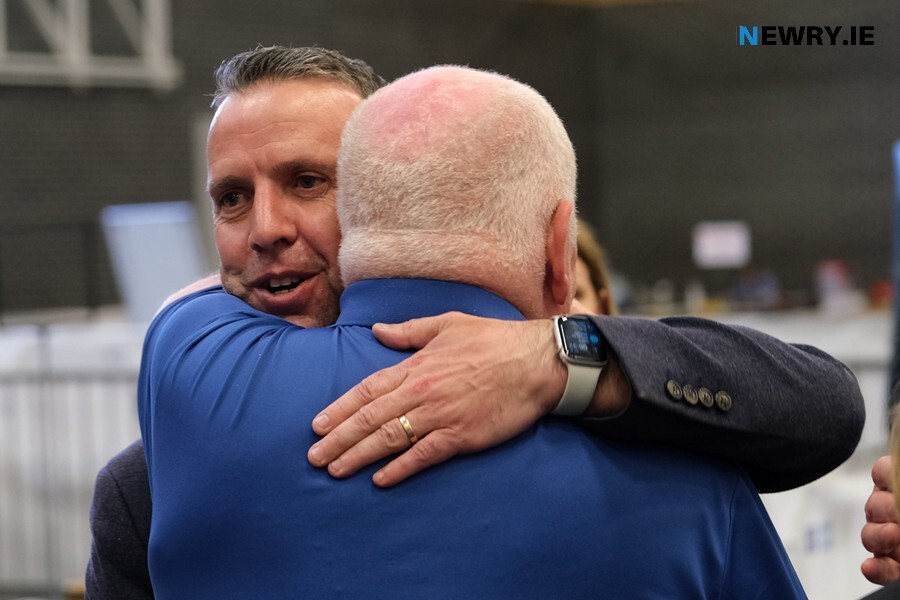
One of the big shocks of the local election, was the failure of Sinn Féin group party leader on Newry, Mourne and Down District Council, Barra Ó Muirí to retain his seat in Slieve Gullion.

The, now former, councillor, was the casualty of his party’s strategy of running six candidates in a seven-seat DEA where they had already five sitting councillors.
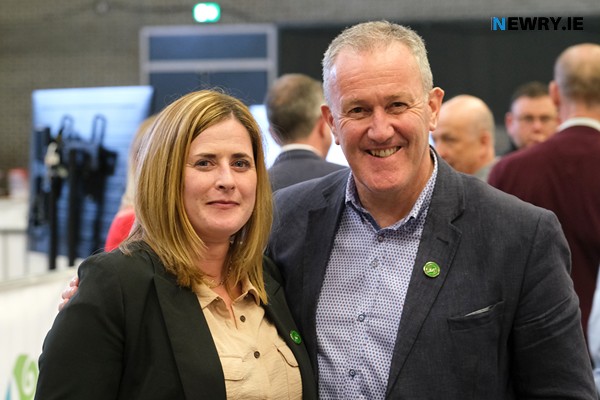
As it turned out, it was one candidate too many with Cllr Oonagh Magennis edging out her party colleague taking the fifth Sinn Féin seat on Count 9 at the end of a very lengthy count process to return to council.
The party, with the additional candidate, understandably increased first preference votes from 7,857 in 2019 to 9,978 last week.
Its share of the vote was also up from 62.7% of 12,522 votes in 2019 to 66.7% of 14,957 votes in 2023.
Three seats were secured after the first count with councillors Aoife Finnegan and Declan Murphy - co-opted onto the council during the last 18 months and fighting their first election - picking up 1,934 and 1,932 first preference votes respectfully. The surprise to many was the performance of Aine Quinn, the 22-year-old, standing for the first time, received 1,932 votes to easily take her place in the council.
However, it was to be some hours before the next two Sinn Féin candidates were elected.
Molly Ní Mhánais, from the Green Party, was eliminated on the second count but her 69 votes took an inordinate amount of time to distribute as the count dragged on into the evening.
The SDLP’s sitting councillor Pete Byrne, was re-elected on the eighth count. He polled 1,447 first preference votes - down from his 2019 performance of 1,643.
He was helped across the line by transfers from party colleague Killian Feehan who exited the race on count seven following the elimination of Alliance party candidate Caolan Gregory on count five (298 first preference votes) and the DUP’s Linda Henry (360 first preference votes) and Aontú’s Liam Reichenberg (439 first preference votes).
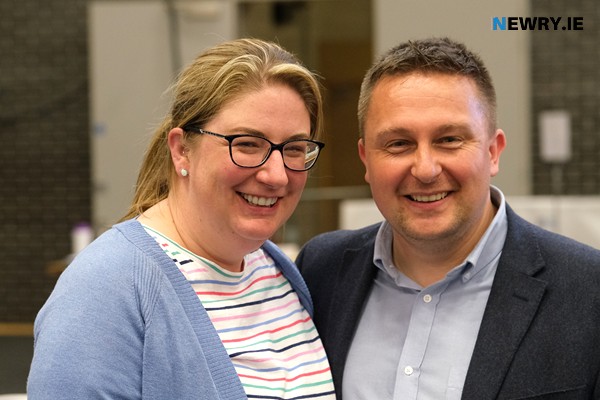
With Byrne safely elected, that left four candidates for three seats and with transfers complete the result was called. Ó Muirí was the one to miss out with Sinn Féin’s Mickey Larkin, party colleague Magennis and the UUP’s David Taylor duly elected on count nine just after 6.30am on Saturday morning.
Ó Muirí can probably count himself unlucky that party transfers didn’t go his way. Along with Magennis and Larkin he stood in 2019 receiving 1,316 first preference votes and 1,331 this time around.
On the other hand, Magennis secured 1,622 on her debut election in 2019 but dropped to 1,316 while Larkin’s vote was 1,646 in 2019 dipping slightly to 1,558 in last week’s election.
An answer to this might be the share of the voting area within Slieve Gullion allocated to each candidate as the party attempted to gain a sixth seat.
With Ó Muirí holding his vote up though, he obviously got his vote out even with a smaller area and his elimination boiled down to transfers…no doubt Sinn Féin will do a deep analysis of this result.
For unionist candidates the squeeze is on in Slieve Gullion. Six seats are a real possibility for Sinn Féin but within the region, there are some 2,000 potential unionist voters - there is a unionist seat.
However, the problem is how do they get them out to vote. Taylor recorded 1,287 first preference votes in 2019 but that dropped slightly to 1,197 while the DUP’s Linda Henry did increase her vote from 315 four years ago to 360 this time. But that’s just over 1500 votes in total – they have work to be done over the next four years.