
 Write a comment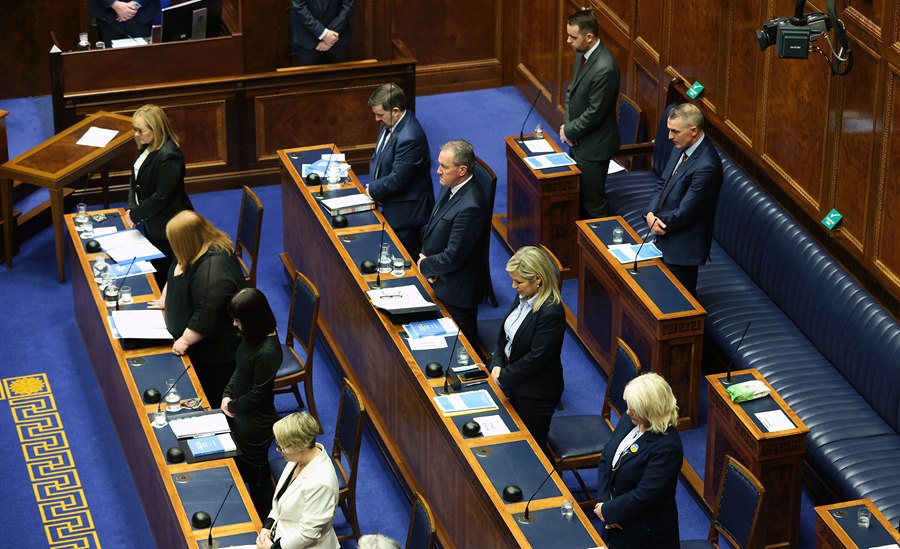
A long long awaited public apology to victims and survivors of historical institutional childhood abuse was finally heard at Stormont today.
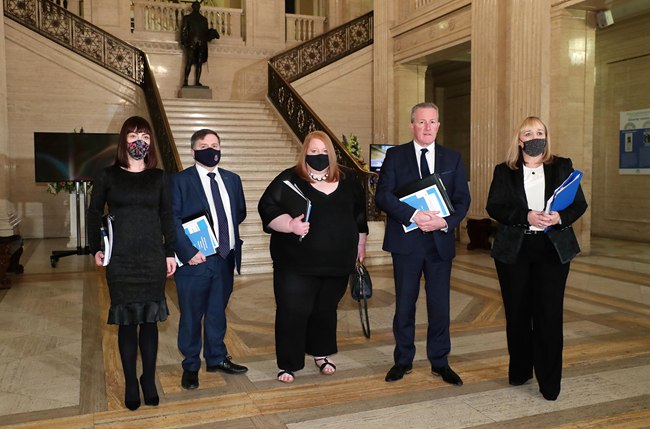
Ministers Michelle McIlveen, Conor Murphy, Nichola Mallon, Robin Swann and Naomi Long all stood up at Stormont today to offer a public apology to victims and survivors of historical institutional abuse.
The Commissioner for Victims and Survivors of Institutional Childhood Abuse, Fiona Ryan acknowledged the pain and suffering of all historical institutional abuse victims and survivors in Stormont today finally fulfilling a recommendation of the 2017 Historical Institutional Abuse Inquiry chaired by Sir Anthony Hart.
In her speech, Commissioner Ryan paid tribute to all who had campaigned for an inquiry into historical institutional abuse. She called for commitment to victims and survivors and said that she hoped the words said today were underwritten by action. There are still Inquiry recommendations to be carried forward.
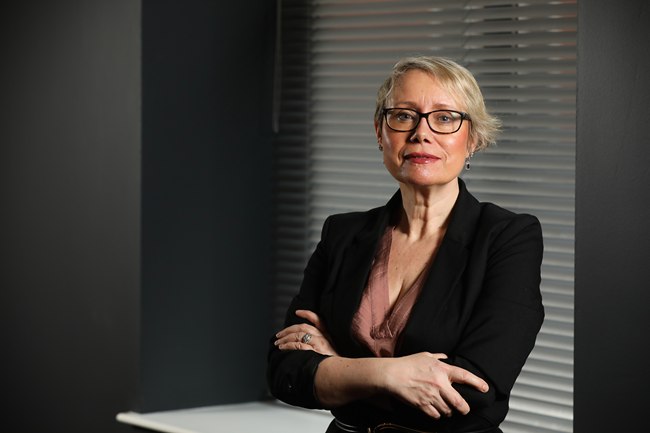
In her speech, the Commissioner reminded all present why the Apology was being made:
“Let us be clear why we are here today and what is being apologised for. We are talking about the systemic abuse, sexual abuse, emotional abuse and neglect of children for decades in residential institutions in Northern Ireland. For this abuse to succeed on this scale requires not only individual abusers and institutions to perpetrate the abuse but failed oversight and accountability on the part of the public authorities.”
“Survivors campaigned. They put their case to the media, talking to sympathetic politicians; and their actions pushed the door open to the public inquiry into historical institutional childhood abuse. Survivors walked into those rooms and began telling the truth of the abuse they suffered in these institutions; some for the first time to anyone, even to members of their own families...”
“We need to acknowledge and recognise the journey of survivors here today; the survivors in communities here and abroad; the survivors who journey alone never telling anyone of their experiences: to you, the choice is always yours but if you choose to talk there are people there to listen.”
She also acknowledged the survivors for whom the public apology holds little value. The Inquiry noted a range of opinions among survivors in relation to a public apology, from people who very much wanted an apology to those who saw no point in having one.
The Commissioner invited those present to observe one minute’s silence in memory of victims and survivors who had passed away before hearing the apology:
“Finally, we need to acknowledge those whose journey has ended; the survivors who have passed and who will not hear this apology. For whom this apology is too late. If there is a question as to the lifelong impact of child abuse, talk to the loved ones of some of the survivors who have died and they will tell you in their final days, it was their earliest years they remembered.”
Speaking on the Chamber Minister Conor Murphy said "We recognise that the experience of every victim and survivor is different. Many of you have told us that you were able to overcome your painful past and that you went on to have a happy life. However, we also know that countless people have lived with the pain and trauma over many years, and continue to suffer. We hope that today’s apology can contribute in some small way to your healing."
Mr Murphy added "
We recognise that the experience of every victim and survivor is different. Many of you have told us that you were able to overcome your painful past and that you went on to have a happy life.
"However, we also know that countless people have lived with the pain and trauma over many years, and continue to suffer. We hope that today’s apology can contribute in some small way to your healing."
Commisioner Fiona Ryan
Thank you Mr Speaker.
Today we are gathered in this chamber to hear words that have been delayed for years, are lifetimes’ late and, in many cases tragically, are too late. We are here today to hear the words of a public apology offered to victims and survivors of historical institutional childhood abuse.
This promised public apology is a recommendation of the Inquiry into Historical Institutional Childhood Abuse, chaired by the late Sir Anthony Hart, which delivered its findings and recommendations five years ago on the 20th January 2017.
The fact that the Inquiry happened is due to the victims and survivors themselves who fought to be seen and heard by an officialdom that was largely blind and deaf to the abuse they had suffered, to their anger and to their ongoing pain.
Made to feel ashamed as children. Shunned as adults. Silence was expected. Survivors, however, were not silent. Instead they began speaking out, telling the truth of what had happened to them in these institutions. Of what it was like to be “reared in bleak lovelessness”, as one Ministry of Home Affairs inspector said in 1953 of the homes she had visited.
The survivors campaigned. They put their case to the media, talking to sympathetic politicians; and their actions pushed the door open to the public Inquiry into Historical Institutional Childhood Abuse. Survivors walked into those rooms and began to tell the truth of the abuse they suffered in these institutions; some for the first time to anyone, even to members of their own families.
Sir Anthony Hart thanked victims and survivors at the end of the Inquiry for their courage and determination while acknowledging their distress and pain in describing their experiences. Victims and survivors were asked to find even more courage and be even more determined as it became apparent they would have to fight again for the Inquiry recommendations to become reality including this public apology today.
Tortuous is the word that has been used to me by a survivor. How else do you describe having to fight every day when you are already hurting so badly from hurts of the heart, of the mind and the spirit caused by systemic abuse throughout your childhood.
For let us be clear why we are here today and what is being apologised for. We are talking about the systemic physical abuse, sexual abuse, emotional abuse and neglect of children for decades in residential institutions in Northern Ireland. This was the finding of the Inquiry which examined a 73 year period from 1922 to 1995. For abuse to succeed on this scale requires not only individual abusers and institutions to perpetrate the abuse but failed oversight and accountability on the part of public authorities or as the Inquiry stated:
“It was not only the religious and voluntary bodies that provided and organised the institutions investigated that were at fault, the Inquiry found systemic failings on the part of the public authorities in the form of County Welfare Authorities, Health and Social Services Boards, the Ministry of Home Affairs, the Department of Health and Social Services and the Northern Ireland Office, when it was responsible for criminal justice institutions and the RUC.”
Are there words big enough to describe what victims and survivors have told us was done to them and the impact it has had on their lives? How are we to capture the scale of the abuse perpetrated on children across years, decades and institutions? Perhaps a small word is more useful than a big one here. Loss is a small word but with big meaning. Victims and survivors have experienced a litany of loss; not accidental losses but inflicted losses:
- loss of childhood
- loss of family
- loss of what might have been; of who they might have been
- loss of peace
For the survivors sent to Australia, the majority under the age of 10 and some not much older than toddlers as young as 4; all of these losses were compounded by being ripped away from community and country and sent to the other side of the world.
How do we do justice then to the journey victims and survivors have undertaken, carrying themselves, and at times, other survivors along the way with dignity and strength. We need to acknowledge and recognise the journey of the survivors here today; the survivors in communities here and abroad; the survivors who journey alone never telling anyone of their experiences: to you, the choice is always yours but if you choose to talk there are people who will listen.
We need to acknowledge today as well the survivors for whom there is little value in a public apology. The survivors who ask – what good are words… when they took my name and gave me a number… When they tore me away from my brothers and sisters… when they tried to strip me of my dignity and left me to be abused. These feelings are real and are also shared in many instances by the survivors who want the apology. Every survivor is an individual.
Finally, we need to acknowledge those whose journey has ended; the survivors who have passed and who will not hear this apology. For whom this apology is too late. If there is a question as to the lifelong impact of childhood abuse, talk to the loved ones of some of the survivors who have died and they will tell you that in their final days, it was their earliest years they remembered.
We can only acknowledge and pay tribute to their courage and the courage of all survivors and ensure the words said today are underwritten by action and commitment to do right.
I call on all now present to observe a moment of silence in memory of those survivors who have passed.
Conor Murphy MLA
We understand the importance of today’s apology.
We also recognise that it has taken too long for you to hear it. We acknowledge that the delay in progressing this recommendation from the Hart report has further added to the stress that you experienced. For this, we are sorry.
We pay tribute to the persistence of those who have campaigned for justice and those who have been dedicated to supporting victims and survivors, including all the victims’ and survivors’ representative groups; SAVIA, Survivors North West, Rosetta Trust, Survivors Together and Campaign for Survivors of Abuse.
You, and all victims and survivors, deserve nothing less than full acknowledgement of the harm inflicted on you as children, and the suffering you have endured throughout your lives as a result of our failures.
You deserve to be supported in the right way, as recommended by Sir Anthony Hart.
The appointment of a Commissioner for Survivors of Institutional Childhood Abuse, and the health and wellbeing support services delivered by the Victims and Survivors Service, in partnership with the WAVE Trauma Centre and Advice NI, are all intended to make sure you are supported. Today we commit to continue working with you to ensure these services meet your needs.
While no amount of financial redress can ever make up for the pain you have endured, we hope that it can in some way provide reassurance that your suffering has been recognised and acknowledged, and allow you the possibility of moving forward with appropriate support.
You deserve a redress process that is sensitive to your needs.
We listened to your experiences of the Redress process. We hope that changes coming from the Independent Review will make the Redress journey a much more victim-centred process.
We will continue to hear your voice.
We should have heard your voices as children and we did not.
We all agree on the need for the child’s voice to be heard.
In 1995 the Children Order recognised this, and there is rightly a priority placed on the views of children in decisions being made about them.
Courts must consider the wishes and feelings of the child when making an order to place the child in care. And there is a requirement for Health and Social Care Trusts to consider the child’s wishes before providing accommodation.
Children in care must also have the necessary support to express their views, and specialist advocacy arrangements are now in place, delivered on a regional basis.
The Commissioner for Children and Young People has a role to advise government on the policies, legislation and services it provides for children and young people; to monitor how these services are provided; and to hold government to account where the Commissioner believes that not enough is being done.
The law now demonstrates our commitment to safeguard and promote the rights and best interests of children and young people. And we will continue to do everything in our power to make sure our children are protected.
Whilst we are focused on supporting people now, we are very conscious of those no longer with us.
Indeed, we are very mindful today of the many victims and survivors of historical institutional abuse who have died. Sadly, they did not live to see the justice, or have the acknowledgement, they deserved.
Today we remember them, and we offer this apology, along with our sincere sympathies, to their families.
We recognise that the experience of every victim and survivor is different.
Many of you have told us that you were able to overcome your painful past and that you went on to have a happy life.
However, we also know that countless people have lived with the pain and trauma over many years, and continue to suffer.
We hope that today’s apology can contribute in some small way to your healing.
As Ministers, we offer this apology to you from our hearts. Freely, openly, and sincerely.
We know that not every survivor wants an apology and we respect that. No apology will change what happened to you, nor right the wrongs of the past.
We are also mindful that this will be a difficult, emotional and traumatic day for many of you, and you may need to take time to reflect on what we have said today.
The apology we offer you is unconditional.
We should have protected you and we did not. We are sorry.
You were harmed by those who should have cared for you. We are sorry.
You told the truth, yet you were not believed. We are sorry.
We are responsible. And we are so very, very sorry.