Write a comment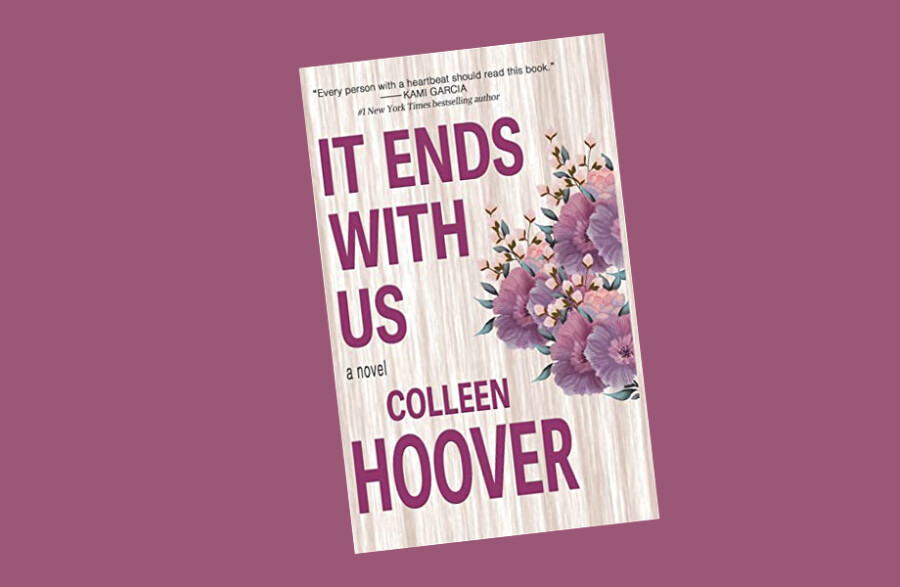
“That’s all it takes to completely change everything about a person. Fifteen seconds that you’ll never get back.”
Dear Reader,
Are you ready to unpack a tale with a serious twist? Or at least attempt to. Well- SPOILER ALERT! - this is not a love story. At least not in the way you’d expect.
‘It Ends with Us’ has certainly raised a lot of questions at the Waterstones book circle, and a relative number of eyebrows. Not only does this book appear to be in strong demand but it has found both credence and controversy in the box office! With the movie adaptation playing in Newry Omniplex throughout August and September, so far. Audiences appear to be connecting with Lilly Bloom, at least the book version anyway.
What exactly is it that makes this story stand out, you ask? It is a unique blend of the sparkly modern romance and a fictionalised account of domestic abuse. Read that again if you need to because the contrast is jarring.
When we meet Lily Bloom, she is giving off major protagonist energy. Escaping from a darker past, we get the sense that all of Lily’s dreams are about to come true. She is opening her own flower shop in a new city and the world is at her feet. Quite literally! As she meets the dashing Ryle Kincaid on a star- drenched rooftop one fateful night. Here they share their “naked truths,” beginning the sparks of a whirlwind romance. Dreamy, right?
That is until the story takes a dark and disturbing turn. Midway through the book the man Lilly Bloom is head over heels in love with, hits her.
Stylistically, this is probably one of the easiest reads of all time (I am prone to hyperbole). The writing is accessible and emotive, with journal entry flashbacks and love triangle formula to entice romance readers. You might actually forget that you’re reading. The ‘tricky’ part, and perhaps what draws the reader in, is the fact that Hoover suddenly subverts genre expectations for those of us who thought we were reading a romance.
The overarching point could be that in real-life situations of abuse it can be difficult to spot red flags. Especially when flags are masked with traditional romance and our understanding of relationships. Hoover does manage to capture the complexity of those realisations through Lily’s feelings of disarray and horrified disillusionment. She writes: “We’re both upset and kissing and confused and sad. I’ve never felt anything like this moment-so ugly and painful. But somehow the only thing that eases the hurt just caused by this man is this man.” It is as though we as readers are becoming wrapped up in Lily’s psychology and struggle. You can’t say it isn’t impacting.
What presents as a point of contention, and a rather hefty one at that, is the question of just how reflective of reality It Ends with Us actually is? Eileen Murphy, CEO OF Women’s Aid Armagh Down (WAAD), was not entirely convinced. She believes the story to be “very very far from the norm which is experienced by the women we provide services to.” Murphy further points out that “the level of risk of significant danger to women when they decide to leave an abusive relationship does not have appeared to have been considered at all. This is where stalking ending in domestic homicide, becomes a genuine possibility. We have had 20 femicides since 2020 in NI, the outcome in the book is very far from reality.”
Based on these statistics, now can you see why this is relevant? This book bee would respectfully suggest that when a story addresses the issue of domestic abuse it should do so with care. If a character takes on the burden of representation (which can happen by default) readers may understand Lily’s situation as a norm. For this reason, although undeniably a gripping read, I will give it three honey pots out of five. Lily’s heartbreak was believable. There is no doubt that Colleen Hoover knows how to write well, but does it add to a clear understanding of what women/people can really experience in domestic abuse situations? If not, is the book more for entertainment and does it project harmful views?
Or has the veil simply not been lifted?
To summarise I’d say It Ends with Us is worth the read but that you should approach with caution.
“Overall, the book was a bit of a fantasy read which I believe the vast majority of female victims wouldn't recognise as representing their experience” - Eileen Murphy/ Women’s Aid.
“A gripping read about breaking generational trauma and being brave enough to walk away from a toxic relationship” - Catherine McCardle.
“An interesting take on a woman so determined not to fall into the trap that her mother fell into, that she fails to see what enticed her to fall in the first place” -Joanne Glymond.
“Allysa was strong and made the choice to choose what was right. Even if it meant taking Lilly’s side over her brother”- Emma Grealish.