
 1 Comment
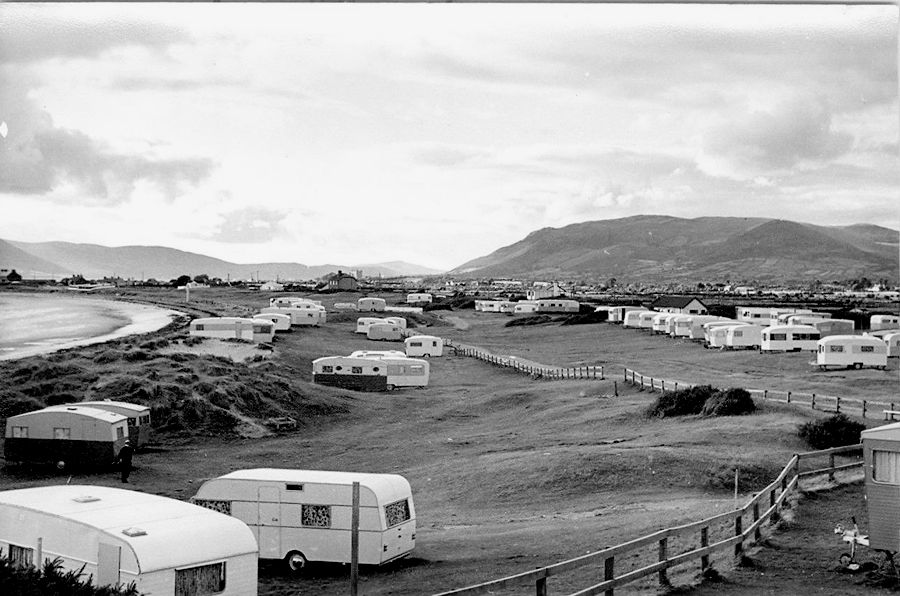
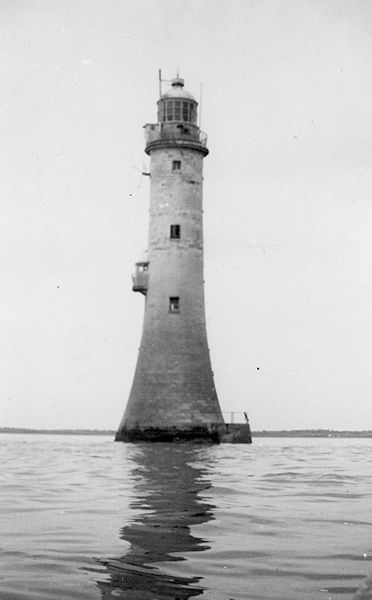
The Hugh Irvine Collection which is held by Newry and Mourne Museum contains material relating to many aspects of local history in the Kilkeel area. Born in Belfast in 1930, the son of a Presbyterian minister, Hugh Irvine came to Kilkeel in 1953 when he was appointed as a history teacher at the newly-opened Kilkeel High School. He became Vice-Principal of the school in 1962 and was Principal from 1987 until his retirement in 1993. After settling in Kilkeel, he developed a keen interest in the history, archaeology, architecture, genealogy and folklore of the area around Kilkeel, the Mourne Mountains and Rostrevor. This short article is based on Irvine’s notes on the townland of Cranfield, near Kilkeel.
The name Cranfield (Creamhchoill – ‘Wood of wild garlic’) suggests that at least part of the townland was once wooded. In 1157 Cranfield, Benagh and Ballynahatten were granted to the Cistercian Abbey, Newry by Muirchertach MacLochlainn. The Cistercians had a church in Cranfield which had a graveyard adjacent. The monks formed the townland of Grange which would appear to have been then part of Cranfield Road. The graveyard appears to have remained in use long after the closure of the church.

One of the most iconic features of Cranfield is the Haulbowline lighthouse. Completed in 1824, the light house was built to replace the 1803 Cranfield Point lighthouse which was deemed inadequate due to its poor positioning for guiding vessels along the west end of the Lough and inability to warn of the treacherous rocks at the entrance at Carlingford Lough. In the 1860s, the Cranfield Point lighthouse became a casualty to coastal erosion and collapsed. The keeper’s cottages survived and were used by the staff and families of the Haulbowline lighthouse until 1922 when modern accommodation was built in nearby Greencastle. The new lighthouse was serviced with food, water and other supplies from Cranfield Point. The boat was kept on the grass and was pulled down to the fish yard when needed. There it was loaded then rowed across the Lough to the lighthouse.
Before World War II many homes in Cranfield were virtually self-sufficient. Every farm fattened a pig and salted it. They also put down a mease of herring which totaled about 630 fish.. Wheat and oats were also grown and every farm had its own milk and butter. There seemed to be a practice of combining farm ownership with activity at sea.
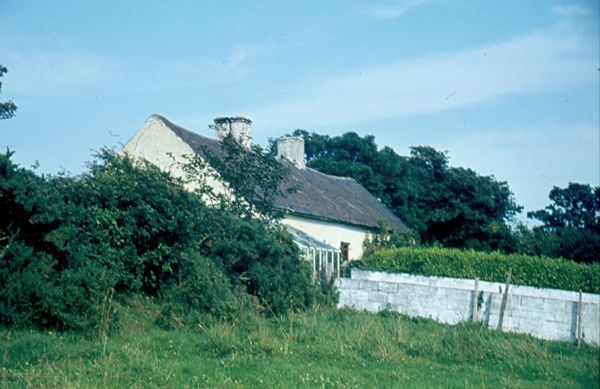
During World War II, twenty-six new airfields were constructed by Churchill’s War Cabinet to strengthen air defences. One of these airfields was sited near Kilkeel, on the Cranfield Peninsula. Land began to be requisitioned towards the end of 1941 and construction began in the early spring of 1942. The airfield was 350 acres in size and had four T2 hangers. The main runway ran NE-SW parallel to the sea and was about 1.5miles in length and 150ft wide. By 1943, the aerodrome provided two functions: the serving, maintenance and repair of aircraft and the training of airmen arriving from America in navigation, bombardment and ground to air gunnery.
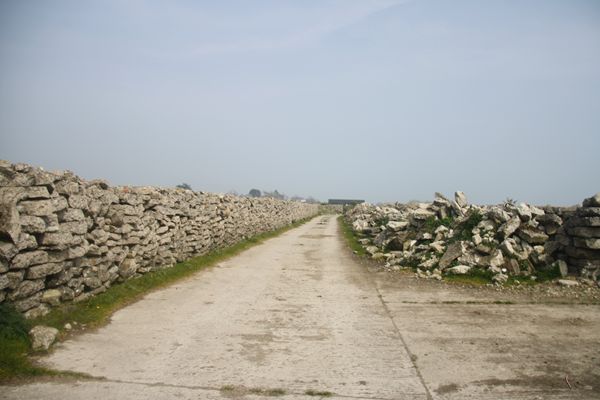
In the build-up to the D-Day Landings, the airfield was visited by General George Patten, Commanding General of the 3rd US Army. This visit led to a massive display of men, aircraft and vehicles and has passed into local folklore. Also, on 17th May 1944 General Eisenhower (the future president of the United States) flew in for an inspection of the airfield in Greencastle. The airfield was returned to the RAF in 1945 and closed shortly after. In the 1960s, most of Greencastle Airfield’s runways were broken up, and the concrete slabs were used to construct boundary walls by local landowners.
In the 1920s, the newly-formed Kilkeel Golf Club established a golf course at Cranfield on land owned by the Earl of Kilmorey. Shortly after World War II the Golf Club moved to Mourne Park with the former course becoming a caravan park. Today Cranfield and its beach is a highly popular destination for caravan holidays, attracting visitors from all over Northern Ireland and farther afield.
The Museum is currently offering free tours of the exhibition galleries on Wednesdays and Thursdays at 11.00 am. These must be booked in advance by calling our Education Officer at 0330 137 4422.
Newry and Mourne Museum is open Tuesday – Saturday 10.00 am – 4.30 pm. Please call 0330 137 4422 or email museum@nmandd.org for further information.
Please visit our new website at www.visitmournemountains.co.u