 Write a comment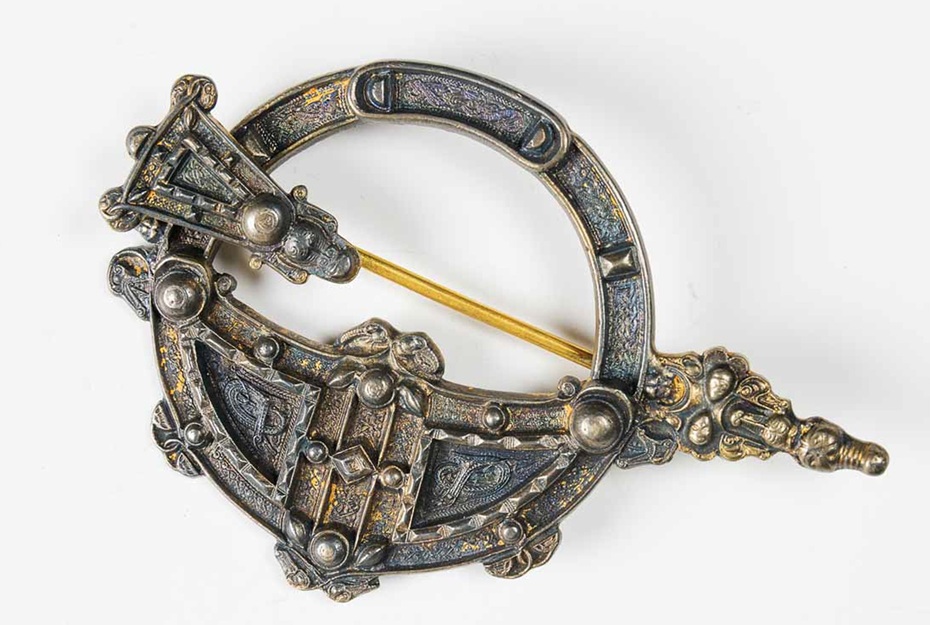
Newry & Mourne Museum’s new exhibition, Categorically Celtic - traditional design in art, politics and popular culture, traces how Celtic-inspired symbols have shaped everyday life on this island, on banners and badges, church textiles and school certificates, record sleeves, and Irish dancing dresses. On show until September, it reveals how spirals, knots, shamrocks, harps and the Red Hand move across communities and centuries, carrying meanings that are shared, adapted and sometimes contested, yet always entwined.
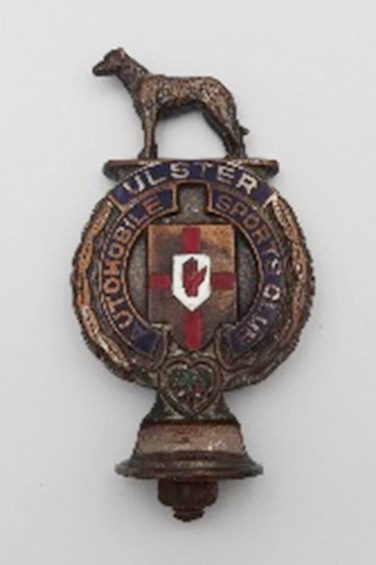
features the Irish wolfhound, the Ulster coat of arms
and a shamrock.
Newry & Mourne Museum Collection.
Celtic ornament has long been a visual shorthand for identity in Ireland. It surged again during the late 19th and early 20th century revival, when cultural groups and political movements used flowing interlace and bold triskeles to evoke heritage and hope. Yet these motifs never belonged to only one tradition. Visitors will see, for example, a Great Northern Railway (Ireland) company crest that brings together civic arms from across the island with the Red Hand of Ulster, a reminder that shared infrastructure and shared imagery linked people well before modern borders.
Religious devotion, design fashion, and national feeling often sit side by side. A delicate ciborium veil made in the Sisters of Mercy needlework school in Newry uses Carrickmacross lace to weave shamrocks into a sacred textile; nearby, St Brigid’s crosses from the Mournes and South Armagh show regional variations in a form that bridges the early spring festival of Imbolc and Christian storytelling about care and conversion.
The exhibition also explores how the same symbol can speak in very different voices. A Lambeg drum created for Queen Elizabeth II’s Golden Jubilee brings together the Red Hand, the shamrock, and flowers of the UK nations, showing a Unionist reading of Ulster identity. In another case, an Ancient Order of Hibernians sash brims with harps, shamrocks, a round tower and an Irish wolfhound, emblems of Catholic fraternal society, with similarities, in green, to the ceremonial styles of Orange tradition. Seen together, they demonstrate parallel languages of belonging built from a common alphabet of signs.
Celtic design has always adapted to new media. Handembroidered Irish dancing dresses from the 1970s, worn by champion dancers, reinterpret motifs from the Book of Kells in vivid colour and crochet; and a midcentury Irish dancing medal carries a harp and triskele. Across the gallery, visitors will encounter contemporary tattoo design from Triskele Tattoos of Castlewellan, proof that spirals and interlace remain fresh in 21stcentury creative practice.

Historical craftsmanship shines too. Replicas of the Tara Brooch by Dublin jeweller George Waterhouse tell a fascinating story: after the eighth century original was found near Bettystown in 1850, Waterhouse cleverly branded it the “Tara” brooch, linking his replicas to the High Kings to ignite public imagination. That 19th century marketing helped cement the brooch as an icon of Celtic design, cherished by people across the world.
A matchstick round tower made by a Newry man while interned in the Curragh Camp during the 1950s evokes endurance and memory through an iconic early medieval form, while a model harp made by a female prisoner in Armagh Gaol speaks to protest and identity in the language of tradition. These sit alongside Art Ó Murnaghan’s preparatory drawings for the monumental, unfinished Leabhar na hAiséirghe (Book of the Resurrection), conceived to illuminate sacrifice and nationhood.
Education and everyday life are part of the picture. A 1920 Higher Grade Certificate wraps a child’s academic achievement in interlace; Irish language badges (fáinní) signal fluency and pride; an Irish copy book from the Gaelic League and an early grammar by the Dundalk Presbyterian minister William Neilson (who preached in Irish in Newry) show how language revival and crosscommunity scholarship intertwined.
Women artists and makers also take centre stage. The exhibition features bookends from Cluna Studio, founded by Portadown’s Gertrude Grew, who reimagined Celtic forms in modern craft; and works by local makers Loretta Gallagher and Frances Bauer feature ogham lettering, spirals, and traditional symbols in contemporary craft.
What emerges is a richly layered portrait: Celtic design is a living language. It speaks in church and lodge, on sports fields and dance floors, in classrooms and concerts, in Unionist parades and Nationalist commemorations. The same harp or spiral can mean home, faith, resistance, welcome, memory or celebration, depending on who is looking, and when. Categorically Celtic invites you to look closely at the craftsmanship, to learn the stories behind familiar signs, and to appreciate how symbols connect people across difference.
Visit before September to experience this conversation across time and tradition and to find your own thread in the knotwork. Newry & Mourne Museum welcomes individuals, families, schools, and community groups; keep an eye on social media for talks and activities linked to the exhibition. On St Patrick’s Day, visitors can join a free bi-lingual tour of the exhibition, in English and Irish, as well as crafts and activities for families of all ages.
The Museum is currently offering free tours of the main exhibition galleries on Wednesdays at 2.00 pm. These must be booked in advance by calling our Education Officer at 0330 137 4422.
Newry and Mourne Museum is open Tuesday – Saturday 10.00 am – 4.30 pm. Please call 0330 137 4422 or email museums@nmandd.org for further information.
Visit their website at www.visitmournegullionstrangford.com