 1 Comment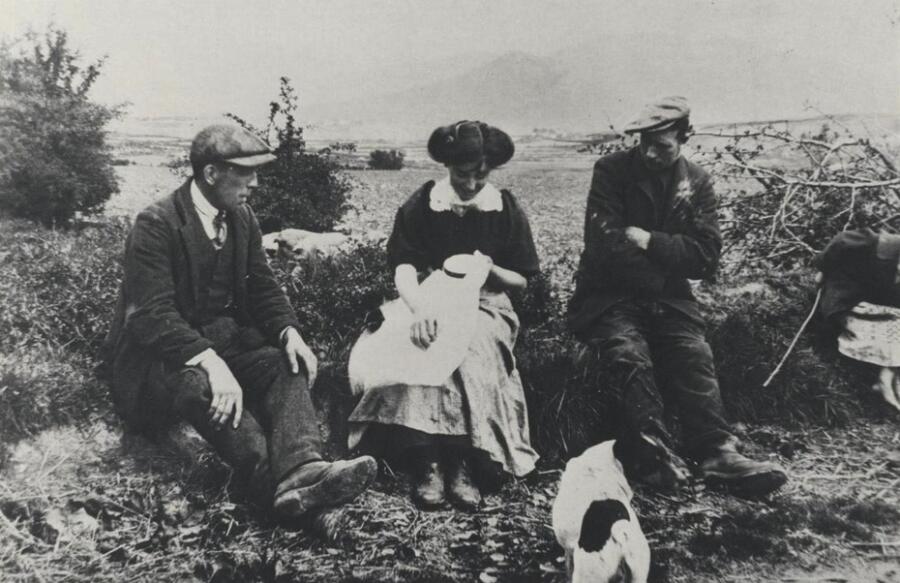
Whitework, an embroidery technique in which the stitch and the linen are of same colour, became associated with County Down and County Armagh in the 19th century when an interconnected system of industry and trade developed around the manufacture of table linen and handkerchiefs.

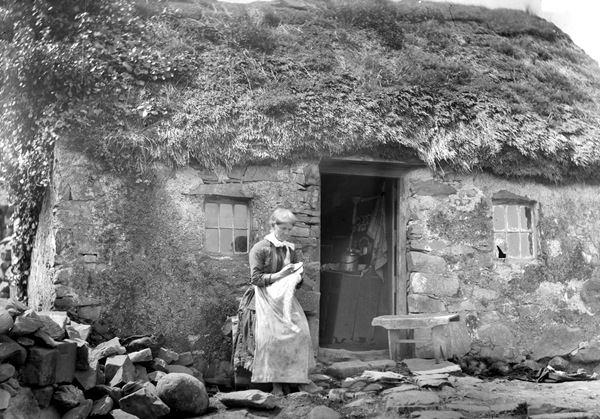
bleached flour sacks as aprons. Collection of National Museums NI.
The technique includes openwork such as scalloped edges and drawn thread work and the related cutwork, producing an open, lacy effect. Floral forms are typical of whitework embroidery, and the craft was known locally as flowering. It has been described as “simultaneously decorative and plain”.
In the late 18th century, whitework embroidery featured on garments of the fashionable elite. During the 19th century, it was produced at a lower cost to lace and the manufacture of pieces decorated with whitework took on an industrial scale.
Thousands of women were employed as outworkers in the industry in County Down producing “small luxuries” which were traded through the Belfast linen markets. The application of the sewing machine in the 1850s meant the industry underwent a centralisation of production. However, mechanisation was an uneven process, and whitework was carried out by hand in the region well into the twentieth century. Sewing and embroidery were considered womanly accomplishments, and so it was possible for women to hide the time spent on paid work. Also, home-workers were not associated with the coarse and immoral behaviour attributed to factory workers.
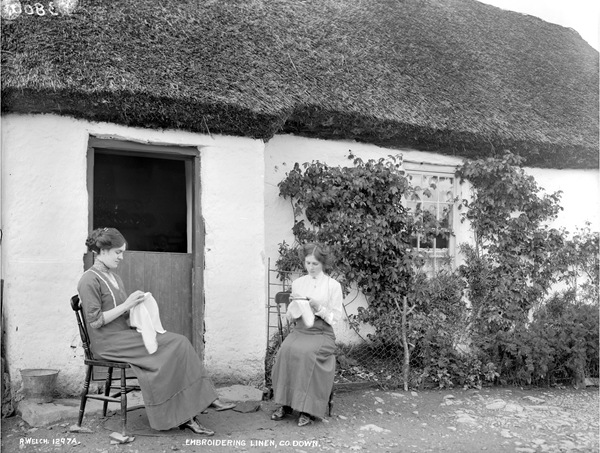
described as ‘according to Irish ideas, very well off’.
Collection of National Museums NI.
In the countryside materials were distributed through agents who were usually small shopkeepers. One such agent was Theresa Mallon, known as Teasy, who had had a shop in Mayobridge. Wilson’s on the Newry Road in Kilkeel employed flowerers from Glasdrumman and Ballinran. After the goods were examined, all work was paid by the piece, and deductions were made for any flaws, stains or late deliveries. The piece-rate was set by the manufacturer and clearly stated on an invoice dispatched with each order and agents generally received 10% commission on all the goods completed. Manufacturers included the Irish Linen Mills of Belfast, who specialised in the initialling of gentlemen’s handkerchiefs.
Schools for teaching needlework skills were set up by the District Boards and convents, but most girls learned from their mothers or sisters. The motif to be worked was stamped on the linen by the manufacturer, but sometimes a simple pencil trace on paper was given out by agents for the women to copy. A dozen small napkins could be completed in a day, and a bedspread took nearly a week to finish.
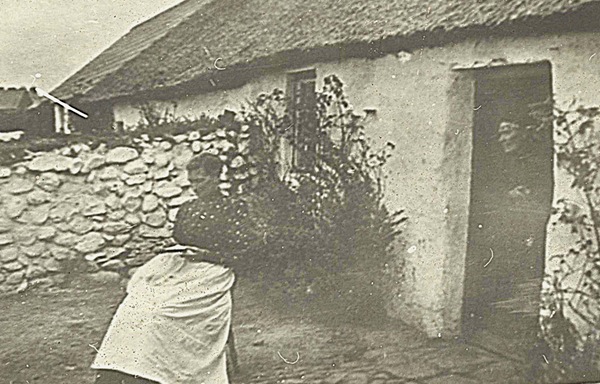
of Newry & Mourne Museum.
In 1845, reports from the Mournes boasted of ‘plenty of employment for “junior females” in flowering and needlework, earning between four pence and one shilling per day, which keeps them comfortably clothed”. The following year, the Master of the Kilkeel Workhouse handed over £4.5s. (about £260 today) to the Guardians for flowering done by inmates. In the 1850s and 1860s, the weekly earnings for embroidery ranged from 2s.6d. (£10) for young girls to 5s (£20) for an adult but could be as low as 2d (70p) a day.
Home-workers throughout the region were paid under the truck system with earnings recorded in an account book or on a ticket which could only be redeemed in the agent’s shop. Although prices were much higher than elsewhere, women could not risk taking their trade to another shop – they might not receive the best paid work, or any work at all. Home-workers were often obliged to buy articles they did not want or to make excessive purchases and gradually pay off their debt with their earnings. This gave the agent control over home-workers and women might have to take work which was not well paid.
By the 1960s the home-working system had been better regulated and County Down flowerers were working for the luxury goods market. Women were able to command 2 shillings (£2.50 today) per dozen for dots and 3s 6d (£4) for initials. They were also able to lay aside their earnings to purchase special items such as material for a wedding dress.
Newry & Mourne Museum is developing a new display of whitework and embroidery from the local area that will open in spring 2026 and would love to hear from readers with any information about this rich local heritage.