
 5 Comments

Last week Dr Myles Shortall shared his memories of his father, Christopher Shortall. This week he tells us about his own medical career in Newry.
During my career as a GP in Newry from about 1968, I have seen many changes over the years, not just with how GPs are trained, but how care is delivered to patients as well as changes in disease, and how many once common conditions have now been eradicated.
After attending the Christian Brothers School, Newry, and Clongowes Wood College, county Kildare, I studied Medicine at Queen’s University, Belfast, graduating in 1964. I then worked at the Mater Hospital, Belfast and the Ulster Hospital and, in 1968, I graduated from the newly created General Practitioner Training Scheme, Northern Ireland. This was followed by a year attached to a GP Training Practice in Lisburn. I was the first and only trainee for that period but within a couple of years the Scheme became mandatory for those wishing to enter General Practice.
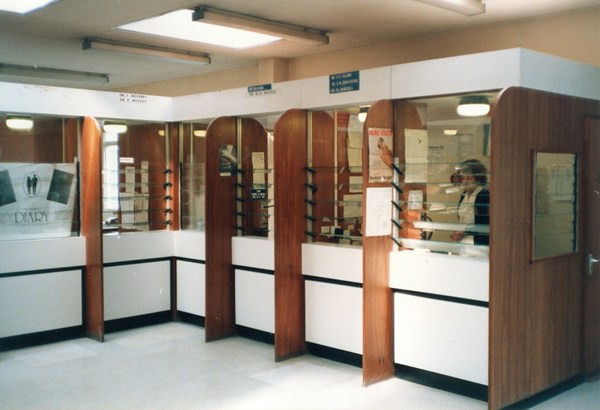
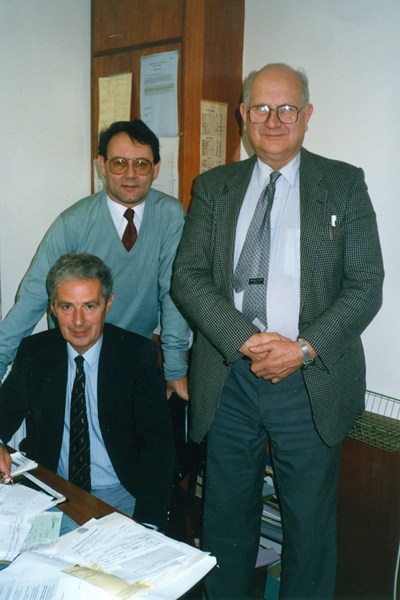
Following this there was a period in which I did locum work in England and both the North and South of Ireland. Each summer I worked with the practice in which I was later to become a partner, that of Doctors Mearns, Faloon, and Donaldson, 11 Trevor Hill, Newry. In the early 1970s all the Newry practices were relocated to the Newry Health Centre at John Mitchel Place. Of the fourteen doctors who started there, I am the only one left. They were: Drs Wilson Mearns, Sydney Faloon, Gerald Donaldson, Paddy Byrne, Derek Flood, Val Blaney, Seamus McAteer, Neil O’Reilly, Frank Mallon, Patrick Lane, John McVerry, Michael McVerry, Paddy Ward (whose base was in Bessbrook, but he also did surgeries in Newry), and myself.
Lack of car ownership meant a much higher rate of home visiting in the 1960s and 70s. When I worked in Trevor Hill we could have up to fifty house calls in a day. We were giving triple and oral polio vaccines to children in their homes as well as doing the occasional home delivery of babies. There were no mobile phones and very few people had land lines, so communication was a problem. No practice could exist without good reception staff, and in more recent times a good practice manager. In this respect we were exceptionally fortunate over the years.
In a practice of three or four GPs you did one in three or four nights ‘on call’. This meant doing your day’s work and then covering your practice until the next morning when the day’s work started again. After a Saturday morning surgery and house calls, you would be on a one in three or four rota for the weekend (including nights) and then on Monday until late afternoon. My long-suffering wife took the phone calls when I was on duty and during the night if I was away on a home visit. On the plus side, traffic was lighter then, though when the Troubles came we had problems with road blockages, explosions, and military check points, which interfered with traffic flow.
House visits were sometimes very useful for diagnostic reasons. One patient used come repeatedly complaining of headaches. They had been extensively investigated in various hospitals to no avail. Fortunately, the patient requested a home visit and as soon as I entered the house I said ‘don’t anyone light a match’. There was a strong smell of gas coming from a leak outside their front door. Once the leak was repaired there were no more headaches!
Poor living conditions existed in those days. I remember one man who lived in a corner of a room, the rest of the house having fallen in. He was in his forties with a heart condition and lay on a mattress on the floor.
With the expansion of air travel diseases spread more rapidly worldwide. Polio, diphtheria, and tuberculosis (TB) have become rare in these islands but now we are beginning to see antibiotic resistant TB being brought in from countries where the vaccination programmes are not as good. The advent of penicillin and sulphonamides eliminated a lot of diseases such as rheumatic fever, renal nephritic syndrome, erysipelas, and bacterial endocarditis. In the past we would have seen hundreds of cases of measles, whooping cough, mumps, rubella, all now relatively rare due to vaccination.
In the 1960s I remember vaccinating people against small pox. This disease has fortunately been eradicated worldwide. The vaccination was done either near the ankle or on the upper arm. It came in a little plastic tube and a bleb would be squeezed on to the skin. A very fine needle would be repeatedly jabbed into the skin through this bleb. This carried the material into the skin surface and if the vaccine had taken a reaction would occur resulting in a raised area over the following week. Eventually a scar would occur. I still have one. Other diseases I encountered among our farming patients were, brucellosis, Q fever, and farmer’s lung. These are still with us. To those pigeon fanciers out there I would remind them of the dangers of psittacosis.
I cannot leave without mentioning the part played by our local public health officers in improving air quality in Newry. For years Newry, on account of its location, had been prone to smogs and poor air quality. Every time I met my old school friend, Mr Hugh O’Neill, who was the Chief Local Public Health Officer, I would raise the problem with him. He was instrumental in getting out local Council to install air monitoring stations in the town, and when the results showed how bad the problem was, they brought in clean air regulations so that only smokeless fuel could be burnt. Traffic emissions remain a problem.
In 1994 all the Newry doctors were relocated from John Mitchel Place to the ‘Health Village’ off Monaghan Street. At this stage I was the senior partner with the Shortall, O’Neill, Radcliffe, and Torney practice. I retired in 2009, having had a very satisfying career working with excellent colleagues, both medical and non-medical, and not least of all, wonderful patients.
by Dr Myles Shortall
Entry to Caring for the Community: The Development of Medicine in Newry and Mourne is free and the exhibition runs until early September 2023. For further information please contact the Assistant Curator at 0330 137 4608.
The Museum is currently offering free tours of the main exhibition galleries on Wednesdays and Thursdays at 2.00 pm. These must be booked in advance by calling our Education Officer at 0330 137 4422.
Newry and Mourne Museum is open Tuesday – Saturday 10.00 am – 4.30 pm. Please call 0330 137 4422 or email museums@nmandd.org for further information.
Please visit our website at www.visitmournemountains.co.uk