6 Comments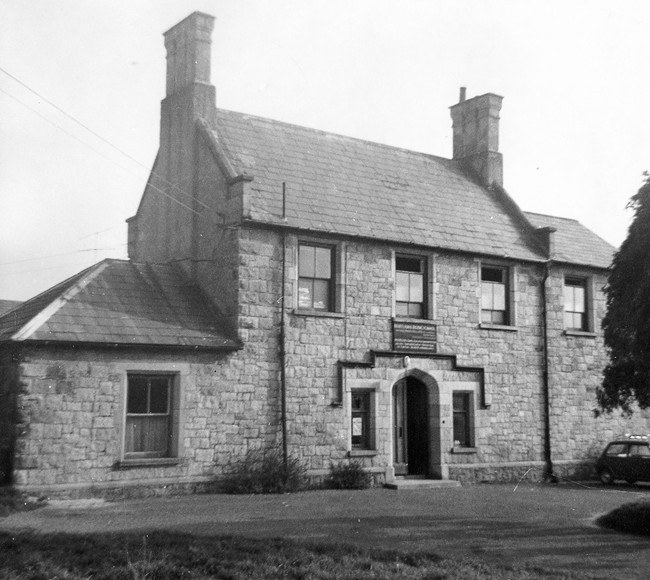
In 1839 a Poor Law Bill was passed to address the growing levels of poverty throughout Ireland. The law divided Ireland into 130 Unions, each with it’s own workhouse and Board of Guardians. Kilkeel Poor Law Union was established on 29th July 1839 and paved the way for the development of Kilkeel Workhouse.

The architect George Wilkinson, who had previous experience designing workhouses in Wales, became the architect to the Poor Law Commissioners in Ireland and was commissioned to build the Kilkeel Workhouse in 1840. Located on Newry Street, the building was designed to accommodate three hundred paupers, it’s construction was to cost £4050, with £767 for fixtures and fittings. Wilkinson believed that his “gabled roofs, elevated chimneys and mullioned windows” gave a “pleasant and picturesque appearance”. The design included cells near the wards for male and female “idiots”.
The first inmates arrived at Kilkeel Workhouse on 1st September 1841. The Workhouse was overseen by a Board of Guardians, which comprised elected and appointed members who were elected by those who subscribed to the poor law rate. The Guardians met weekly in a boardroom on the second story on the front of the building.
For inmates of the Workhouse, it was literally the last place they wanted to be. The Board of Guardians designed the initial timetable, where inmates rose at 7am and bed at 8pm. In between, inmates were never to be idle. All inmates were segregated, the Master oversaw the males and the Matron oversaw the females. The building was split, the left side of the building for males, the right for females. Families were also split. Children age 6-12 had their own section while under 5s were either in a section of their own or with the females.
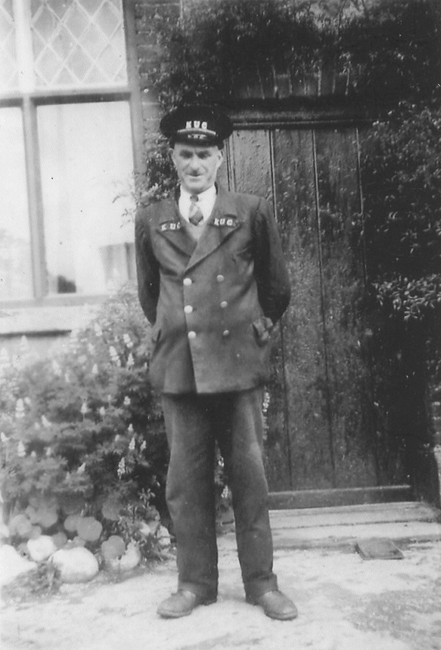
There were strict rules to follow, meals had to be eaten in silence and no wandering or communication was permitted between wards. Bad language, disobedience and waste was punished by confinement or reduced rations. There were two, occasionally three meals a day. Breakfast consisted of 7oz of oatmeal and dinner of 3.5lb of potatoes, served with a pint of buttermilk.
Work was grueling, when the inmates had completed all the work around the House, other tasks were found such as stone breaking for the men and knitting for the women. The system aimed to teach children to earn their own living. Girls were prepared for domestic service and taught sewing. Boys were taught carpentry, tailoring or shoemaking.
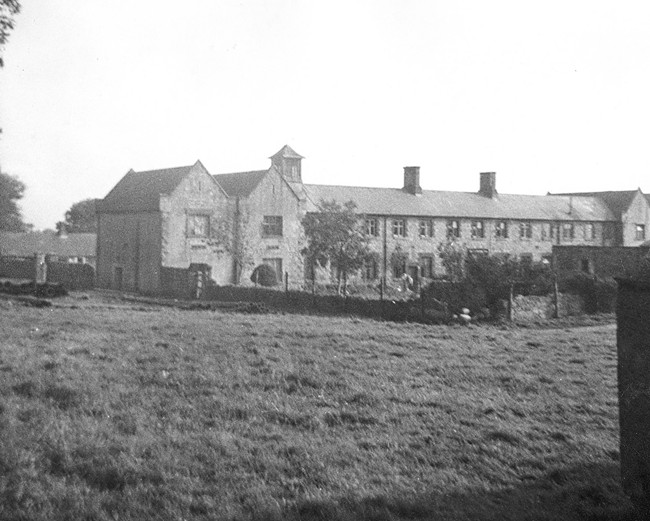
In 1845 the Great Famine had an impact on the Workhouse, leading to an increase in the number of the starving poor, but also accompanying fever cases. In 1847 a temporary fever hospital was built. Death rates were very high and land around the workhouse was used for burials.
After the number of inmates began to decline in the later 19th century, various parts of the Workhouse were put to a variety of uses including a base for the Royal Irish Constabulary and, during World War II, a Dr Barnardo’s home. Kilkeel Technical College was also housed there, and part of the building became the offices of Kilkeel (later South Down) Rural District Council.
After the dissolution of South Down Rural District Council in 1973, the Workhouse buildings were subsequently demolished. The Fever Hospital, which had become the Mourne Hospital in 1927, remained but eventually closed in 1996.
The Museum is currently offering free tours of the exhibition galleries on Wednesdays and Thursdays at 11.00 am. These must be booked in advance by calling our Education Officer at 0330 137 4422.
Newry and Mourne Museum is open Tuesday – Saturday 10.00 am – 4.30 pm. Please call 0330 137 4422 or email museum@nmandd.org for further information.