 Write a comment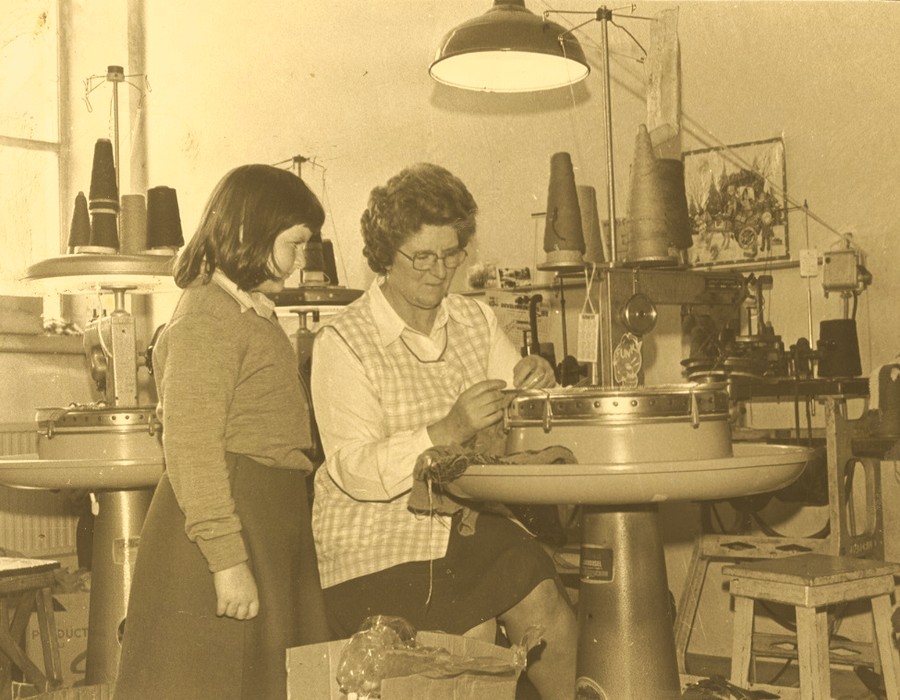
To mark World Holocaust Memorial Day on Friday past Newry Museum explore the development of the Kilkeel Knitting Factory which was established by Edith and Kurt Sekules in 1950. Before World War II the Sekules family had been part of the Jewish community in Vienna and settled in Northern Ireland in 1947. This article is based on material from Edith Sekules’ book, Surviving the Nazis, Exile and Siberia, and a recent interview with Walter, the Sekules’ son.

The post-war years saw many changes in the industrial and commercial landscape in the Newry and Mourne area. Long established businesses declined but a number of new ones were established. often by entrepreneurs arriving in the area. One notable success, which became part of the economic fabric of the Kilkeel area, was the Kilkeel Knitting Factory set up by Edith and Kurt Sekules in 1950. The factory continued to provide employment for local people until its closure in autumn 2022.
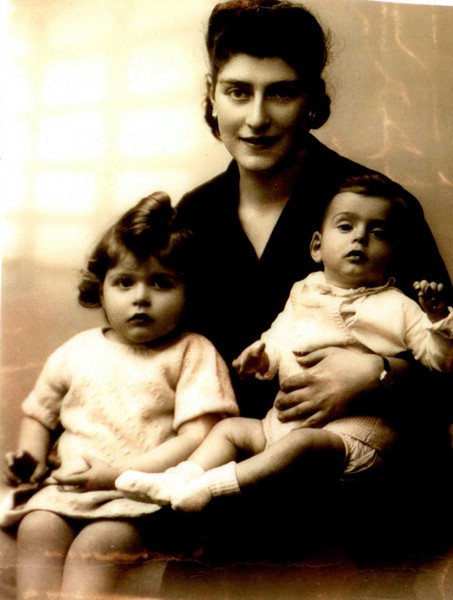
Edith Sekules was born in Vienna in 1916, the daughter of Eugen and Marianne Mendel. Both her parents were descendants of Jewish families which had emigrated to Austria from eastern Europe in the late 19th century. Edith studied catering and began work at the Hotel Bristol in Vienna in 1932 where she was to remain for six years. Among the famous guests who stayed at the hotel were the Duke and Duchess of Windsor during their controversial visit to Germany and Austria in 1937. In 1936 Edith married Kurt Sekules, a wireless engineer, whom she had met a few years before. Their first child, Ruth, was born in 1938.
During these years the political situation in Austria was worsening with the increasing dominance of the Nazis in Germany and resultant pressure on Jews. Matters came to head in March 1938 with the invasion and annexation of Austria by Hitler. Edith immediately lost her job at the Hotel Bristol, being sent home with a note stating ‘Dismissed – reason Jewish’. Like other Jewish families, Kurt, Edith and their infant daughter, attempted to leave Vienna. They were eventually able to leave for Tallin in Estonia in September 1938 where Kurt had found work. However, the outlook for Jewish families in Estonia was ominous with the invasion of the country by Russia in June 1940 and the outbreak of hostilities between Russia and Germany in 1941 meant that they became enemy aliens. In July 1941 the Sekules family, including the fourteen-month old Walter, were sent to Harku Detention Camp, near Tallin. The family were to spend the remainder of the Second World War in a number of detention camps in Siberia.
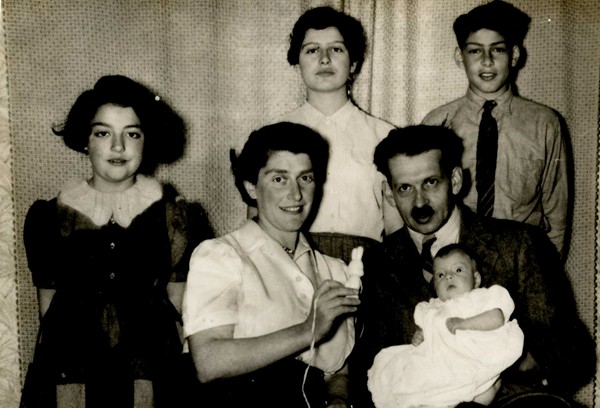
Although Walter Sekules was very young he does have some memories of the camps. He remembers being told not to go near ‘the wire’ (the boundary fence) or the guards. As a small child he posed no threat to the soldiers and he had good relations with them. Walter was ‘happy’ in the camps but he says, as a child, he didn’t know any better; food was scarce, but the internees were friendly.
In January 1947, the Sekules family, were able to return to Austria with 200 other internees. As a young child, the train journey, which took nine weeks, was very exciting for Walter. He remembers travelling in railway wagons and stopping here and there to clear snow from the railway track. He couldn’t understand why everyone got very excited about crossing the River Volga. At one point he saw two off-duty Cossacks in uniform.
Kurt and Edith had decided to join Kurt’s parents who had emigrated to Londonderry in the late 1930s. They stayed in poverty-stricken Vienna for several months before travelling to London where they met up with Edith’s mother and sister. In October 1947 they went to Londonderry.
Life was initially bleak for the Sekules family in Northern Ireland due to Kurt being unemployed. Walter attended the Model School in Londonderry which was not a happy experience for him: he had not been to school before and entered Primary One at the age of seven. He was only learning to speak English, albeit with a German accent. In 1948, he was invited to go on holiday to Switzerland ‘for people like him’ arranged by Kindertransport. He was also taken to the 1948 Olympic Games in London by his grandmother.
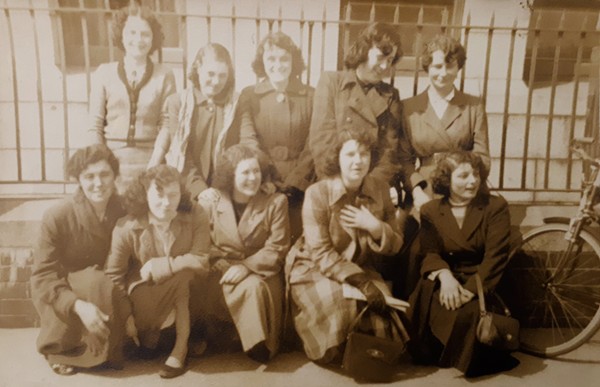
Everything became much brighter for the family when Edith was contacted by Bernhard Altmann, a family acquaintance who had had a textile factory in Vienna before the war, and encouraged her to set up a knitting factory. He helped Edith to purchase knitting machines and she and Kurt trained themselves to knit socks. They were soon producing a dozen pairs a week and an early customer was Gieves, the Naval outfitters on Savile Row in London. After considering a number of towns in which to establish a factory, Edith settled on Kilkeel in county Down. With the help of Bob Linton, the Chairman of Kilkeel Urban District Council, she acquired a loft above Graham’s carpentry shop and set up business in early 1950. Twelve knitting machines were delivered from England and Edith and Kurt began to recruit and train local women.
During the 1950s and 1960s the business continued to expand. As well as making Argyle socks, the company began to knit tartan hose worn by pipe bands and, from 1957, cashmere and Aran sweaters. The customer base also developed to include leading retailers in London, Scotland and America. In 1968, the company moved into larger premises into the former St. Colman’s Primary School.
Walter attended school in Kilkeel before going to boarding school in Brighton at the age eleven. He later studied engineering at Cranfield College, worked in Short’s aircraft factory in Belfast lectured at Belfast Tech and set up a printing business in Edinburgh.
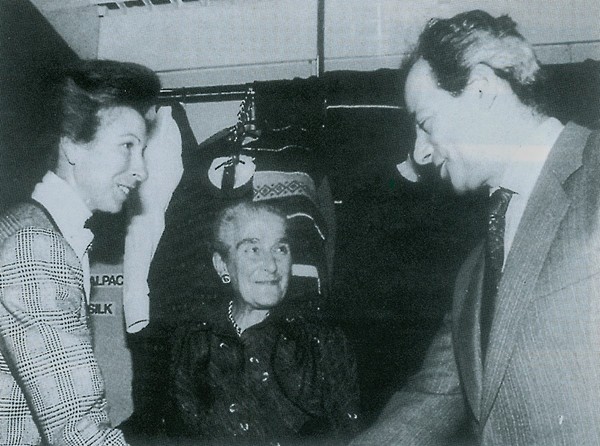
In 1981, Edith reached the age of 65 and had decided to retire. Attempts to develop the company at this time proved unsuccessful and Edith invited Walter to take an increased role in the running the factory. A high-profile order during these years was the knitting of a cardigan for the late Princess Diana in 1986. This was one of a range of five designs by Paul Costello. However, the company was not commercially viable, and Walter made it into a limited company – Tartan Hose Ltd. By this time cashmere was becoming too expensive and Walter focused on Argyle socks. The company was liquidated in 1993/4 and Walter bought out his parents’ shares.
Kurt Sekules died in 2001 and Edith died at the age of 91 in 2008. Walter continued to run the factory until it eventually closed in the autumn of 2022, but not before it had fulfilled an order for dancing socks worn by dancers at the Edinburgh Military Tattoo in 2022.
---------------
The Museum is currently offering free tours of the main exhibition galleries on Wednesdays and Thursdays at 2.00 pm. These must be booked in advance by calling our Education Officer at 0330 137 4422.
Newry and Mourne Museum is open Tuesday – Saturday 10.00 am – 4.30 pm. Please call 0330 137 4422 or email museums@nmandd.org for further information.
Please visit our website at www.visitmournemountains.co.uk