
 Write a comment
In the latest in Newry Museum's series of articles relating to their new temporary exhibition, Caring for the Community: The Development of Medicine in Newry and Mourne, Dr Donal O’Tierney shares his memories of General Practice in Warrenpoint.
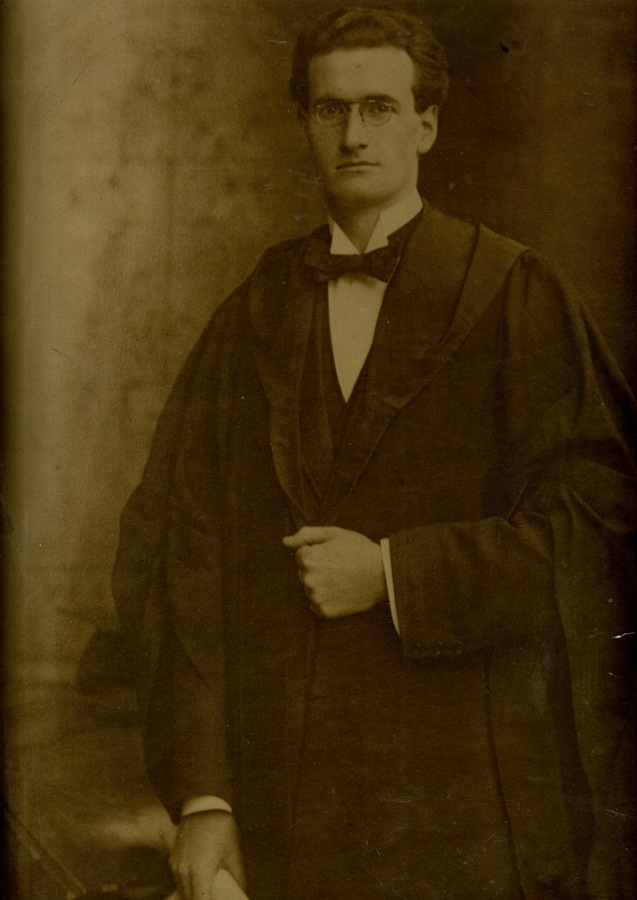
My father, Dr John O’Tierney (‘Sean’), came to Warrenpoint on 11th November 1918, at the end of the First World War, as doctor to the shipyard that was then in Warrenpoint. He was born in Cookstown in county Tyrone, in 1892 and, about 1910, he moved to Dublin with his parents and his two older brothers.

When my father came to Warrenpoint he was paid £200 per year (a handsome sum then). He had qualified in the Mater Hospital in Dublin in 1916 and later spent six months in Wexford before applying for the shipyard job. Other doctors in Warrenpoint were Dr Bell, the dispensary doctor, who lived in Coolbawn on Queen Street, Dr Glenny and Dr Mayne.
Almost immediately came the Spanish flu and my father was kept busy. He set up practice in Avoca, in Great George’s Street. He had a bicycle, then a motor bike, and finally a motor car.
In 1925, Dr Bell died and my father applied for the dispensary job. He canvassed the Poor Law Guardians and at the meeting, one councillor proposed they stop the meeting as a mark of respect following the death of the father of another of the councillors. Then someone else proposed that first they should appoint the dispensary doctor in Warrenpoint, and this was seconded. A dispute arose as to which would be taken first, but the Chairman ruled that the first proposal was not seconded and my father was appointed. The Poor Law Guardians never met again. Subsequent appointments were made in Belfast. My father then applied to take over Dr Bell’s surgery in 6 Queen Street.
My parents had five children. I was born in 1933 and went to Miss O’Hare’s Private School, St Peter’s National School, the Christian Brothers for one year and then to Clongowes Wood College in county Kildare (1945-1951), going on to do medicine at University College Dublin (1951-1957). In 1958, after a year at Baggot Street Hospital in Dublin, I returned to join my father in general practice in Warrenpoint.
My father worked from our house in 6 Queen Street, Warrenpoint, and did a short morning surgery, 9.30 - 10.00 am and then went out on his calls and did the dispensary as well in Charlotte Street. This was a separate building where he looked after those who could not afford to pay the doctor. He ate dinner at 2 pm and had two surgeries from 3.00 - 4.00 pm and 6.00 - 7.00 pm at the house and also on Saturday mornings. He was always very busy, as in addition to his dispensary job, he was Registrar for Deaths, Births and Catholic Marriages, and would take his papers for registration up to Mayobridge each Wednesday. He was also Public Health Officer for Warrenpoint Urban District Council and looked after TB patients in in the sanatorium outside Warrenpoint until it closed when the NHS was introduced. He was also doctor to Reed’s Factory and visited there every Tuesday morning.
There were two other doctors in Warrenpoint, each working from their own premises. Dr Redman in Seaview and Dr Purcell, doing locum for Dr Gilsenan. Dr Gilsenan had originally come to Warrenpoint in 1941, to work with my father. He set up has own practice at the start of the NHS in 1948. He was now ill, and employed Dr Purcell, who, in 1959, on the death of Dr Gilsenan, inherited the practice.
I joined the practice in 1958 and, when my father retired officially in 1959, I had about 2,000 patients. I had the NHS practice and also the registration of Births, Deaths and Catholic Marriages for a few years. I was able to appoint my wife as deputy to assist with registration as well as answering the phone. Also, I had the contract to look after Reed’s Factory. Gradually the surgery hours continued to expand and, as more people drove cars, patients could be brought to the practice and home visits were reduced from about sixteen a day to an average of six.
New contracts in 1966 revolutionised general practice. Doctors were paid £1,500 each year if they came together, working from one premises, a nurse was employed to take bloods and 70% of the cost of ancillary staff was paid by the NHS. After having practised in Princes Street, a new Health Centre was built in Summerhill, and all the doctors moved there in 1972; two receptionists were appointed and Public Health Services came there as well.
In about 1983, I applied for my practice to be recognised as a training practice, and this was accepted. For eight years out of the next ten, I had a trainee doctor working with me. I had to retire from training in 1993 when I was 60. The following year I applied for my pension and returned to work half time. I invited Dr Mark Murphy my former pupil, to join my practice.
In 1988 I was awarded a Fellowship by The Royal Collage of General Practitioners (FRCGP). I had reduced my work in 1994 to half time and then in 2003, at 70, I had to retire. However, I continued to work as a locum doing an average of three half days per week – up to the age of 80.
Entry to Caring for the Community: The Development of Medicine in Newry and Mourne is free and the exhibition runs until early September 2023. For further information please contact the Assistant Curator at 0330 137 4608.
The Museum is currently offering free tours of the main exhibition galleries on Wednesdays and Thursdays at 2.00 pm. These must be booked in advance by calling our Education Officer at 0330 137 4422.
Newry and Mourne Museum is open Tuesday – Saturday 10.00 am – 4.30 pm. Please call 0330 137 4422 or email museums@nmandd.org for further information.
Please visit our website at www.visitmournemountains.co.uk
by Dr Donal O’Tierney