 Write a comment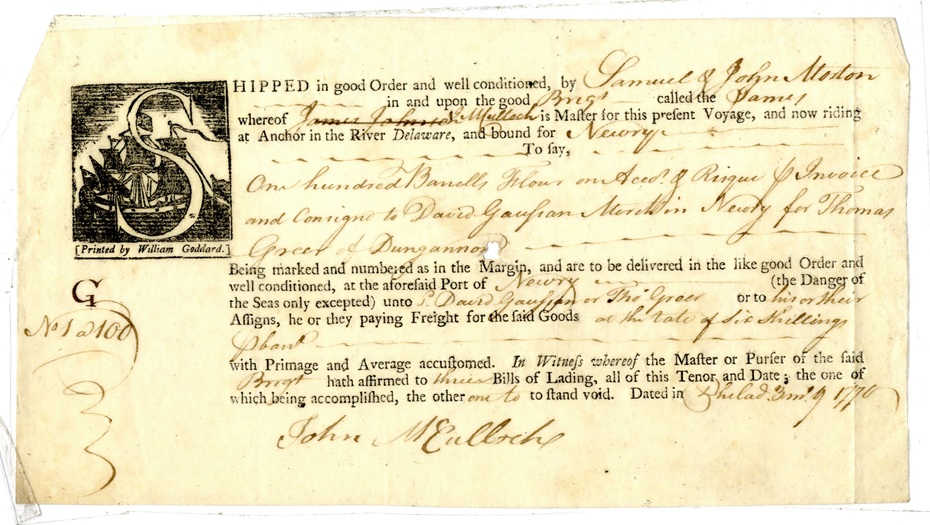
The 18th century marked a turning point for Newry as its merchants transformed the town into a thriving hub of maritime trade. This success was rooted in Robert Nedham’s policy of granting leases in perpetuity, which attracted men of capital and encouraged long-term investment.


Among the most influential were John Scott of Greenwood Park and his son Robert, whose ventures shaped both commerce and civic life. By the late 1730s, Scott’s were operating vessels such as the Elizabeth, transporting spirits and groceries. By 1750, their fleet included the New Draper and the whimsically named John and Robert. Linen exports were central to their trade, particularly to Liverpool and Chester, the latter for its annual fair. Their ambitions extended beyond shipping. In 1750, they collaborated with Viscount Hillsborough to construct a flood wall protecting the Low Ground, later developed as Hill Street. By 1756, the Scotts joined fellow merchants James McCamon, William Ogle, and James Moore in acquiring rights to the newly built Custom House, the building of which was initiated by Nedham in 1752. Robert Scott also advanced Newry’s interests politically, serving as MP for Newry from 1751 and later for Sligo in 1762.

Nedham and Chief Commissioners of His Majesty’s
Revenue in Ireland that Nedham will “on or before
the 1 May 1752 build and erect or cause to be built
and erected at his or their own expense a new house
for the use of a Custom House in Newry”. Newry &
Mourne Museum Collection
Another prominent family was the Gaussens. David Gaussen, a French Huguenot refugee, settled in Newry after fleeing France in 1685. His son, David Jr., continued the family’s mercantile legacy, operating warehouses on both the Old Quay and Canal Quay. By the 1760s, Gaussen Jr. was importing Swedish iron, fir planks, American flour, and barrels of porter, while also seeking freight and passengers for transatlantic voyages. In 1770, following the opening of the ship canal, he freighted the first large vessel from Newry, a milestone in the town’s maritime history. The Corry family also rose to prominence during this time. Isaac Corry Sr., originally from County Monaghan, established himself as a merchant in Newry by 1732. His sons Edward and Isaac Jr. formed a successful partnership, importing Narva flax for linen (from present day Estonia), Siberian iron for metalworking, and chemicals essential for bleaching and soap-making. By the mid-1760s, they expanded into transatlantic trade, supplying emigrants and freight for ships bound for Philadelphia. Their commercial success translated into political influence. Edward served as MP for Newry from 1774 to 1776, with his son Isaac succeeding him then until the dissolution of the Irish Parliament in 1800, later representing the borough in the Westminster Parliament between 1802 and 1806.
Despite prosperity, maritime trade was fraught with risk. Storms, shipwrecks, and piracy were constant threats. In 1728, the Scarbrough, sailing from Newry to Philadelphia, narrowly avoided disaster when its captain allegedly tried to wreck the ship. Passengers intervened, discovering the vessel carried less than three weeks’ provisions, nowhere near enough for the journey. Theft was another hazard, in 1740, sailor Richard Coal stole goods worth hundreds of pounds from Scott’s before absconding. Shipwrecks were tragically common, the ship Judith and Ellen was lost at Skerries in 1732, and the Lord Dunluce perished off Scotland in 1756. Privateers added to the danger, in 1760, the Dolphin and the Irish Oak were captured by French raiders. To mitigate risk, some ships were armed with cannons or sailed in convoys, but even these precautions offered no guarantees. The reputational damage from such incidents prompted some merchants like John Eccles to advertise not only their voyages but also the safe arrival of passengers, to reassure future clients.
By the close of the century, Newry’s merchant class had not only built fortunes but also reshaped the town’s physical and political landscape. Their investments in infrastructure, their ventures across the Atlantic, and their resilience in the face of maritime hazards secured Newry’s reputation as one of Ireland’s most dynamic port towns, a legacy measured not just in trade but in enduring influence.
To discover more about Newry’s rise as a global trading hub why not visit the Making Waves exhibition? The Museum is currently offering free tours of the main exhibition galleries on Wednesdays at 2.00 pm. These must be booked in advance by calling our Education Officer at 0330 137 4422.
Newry and Mourne Museum is open Tuesday – Saturday 10.00 am – 4.30 pm. Please call 0330 137 4422 or email museums@nmandd.org for further information.
Visit their website at www.visitmournemountains.co.uk