 Write a comment
The role of medics has developed over the years, from early physicians, surgeons and apothecaries to the wide range of medical professionals that make up the current National Health Service. An early doctor in Newry was Samuel Black, who set up a practice in the town in 1788. His highly influential work linked angina to ‘ossification’ of the coronary arteries.
With the introduction of dispensaries, doctors also worked as medical officers, often for most of their working lives. One example is Dr A.E. Douglas who originally came from Clones, in county Monaghan, and had become dispensary doctor for the dispensaries in Warrenpoint and Mayobridge by 1869. The Warrenpoint dispensary was in Church Street and Douglas also became the Registrar of Births, Deaths and Marriages in the town. He held these positions until his death in 1894.
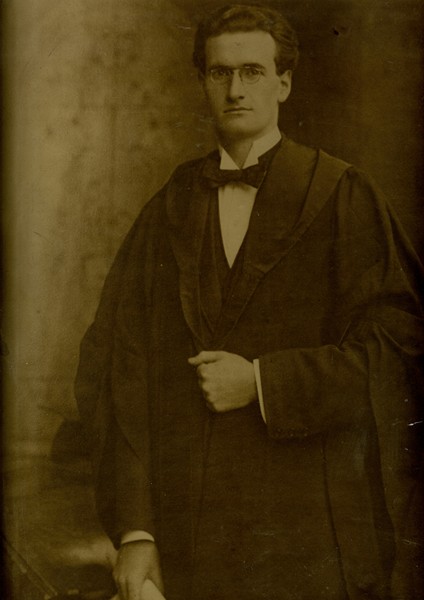
From 1851 until 1948, three doctors provided medical care for the Donaghmore and Poyntzpass Dispensary District, Dr Saunderson, Dr Samuel Mills and Dr Francis McDermott. The Newry area had its share of ‘medical families’, where generations followed the same career, such as the Flood and McVerry families, who still practice medicine in the town, and the Marshall family of Poyntzpass. Other medics with local connections have pursued specialist careers such as Professor Joseph Barcroft, who became an internationally-renowned physiologist, and Dr Hugh Magee, a dietitian.
Until the late 1800s medicine was a male dominated profession. Dr Mary McGeorge, daughter of James McGeorge, one of the Newry Town Commissioners, was one of the first women in the area to qualify as a doctor. She worked as a medical missionary in India before being lost in a shipwreck off Portugal in 1892. Among the early women medical students at Queen’s University Belfast, was Dr Elizabeth Gould Bell, who was born in Newry in 1862, the daughter of Joseph Bell, the Clerk of Newry Union Workhouse. After graduating in 1893, Dr Bell practiced in Belfast. She became involved in women’s suffrage and was a member of the Royal Army Medical Corps during the First World War. After the war she was appointed Medical Officer of Riddel Hall at Queen’s University and continued to practice medicine until her death in 1934.
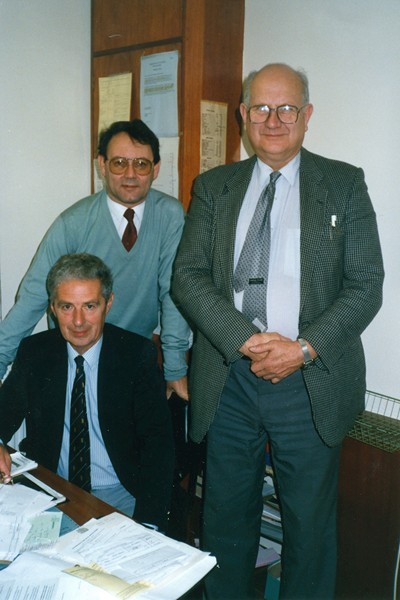
The latter half of the 20th century saw many changes for doctors in the area, not least the introduction of the National Health Service in 1948. One Newry doctor, Christopher Shortall, Surgeon at both Daisy Hill Hospital and Newry General Hospital, served on the committee responsible for establishing the new NHS in Northern Ireland.
During these years doctors continued to have their surgeries in their own homes but this began to change in the 1960s as doctors and their families began living away from their practices. One example of this development is Dr Michael McVerry, who had purchased his practice in John Mitchel Place in 1947 but moved with his family to live in Rostrevor in 1960. Further changes were made in the early 1970s when all Newry GP practices were relocated to the Newry Health Centre in John Mitchel Place. GPs moved again in 1994 with the opening of the ‘Health Village’ in Monaghan Street.
Entry to Caring for the Community: The Development of Medicine in Newry and Mourne is free and the exhibition runs until early September 2023. For further information please contact the Curator at 0330 137 4608.
The Museum is currently offering free tours of the exhibition galleries on Wednesdays and Thursdays at 2.00 pm. These must be booked in advance by calling our Education Officer at 0330 137 4422.
Newry and Mourne Museum is open Tuesday – Saturday 10.00 am – 4.30 pm. Please call 0330 137 4422 or email museums@nmandd.org for further information.
Please visit our website at www.visitmournemountains.co.uk