 Write a comment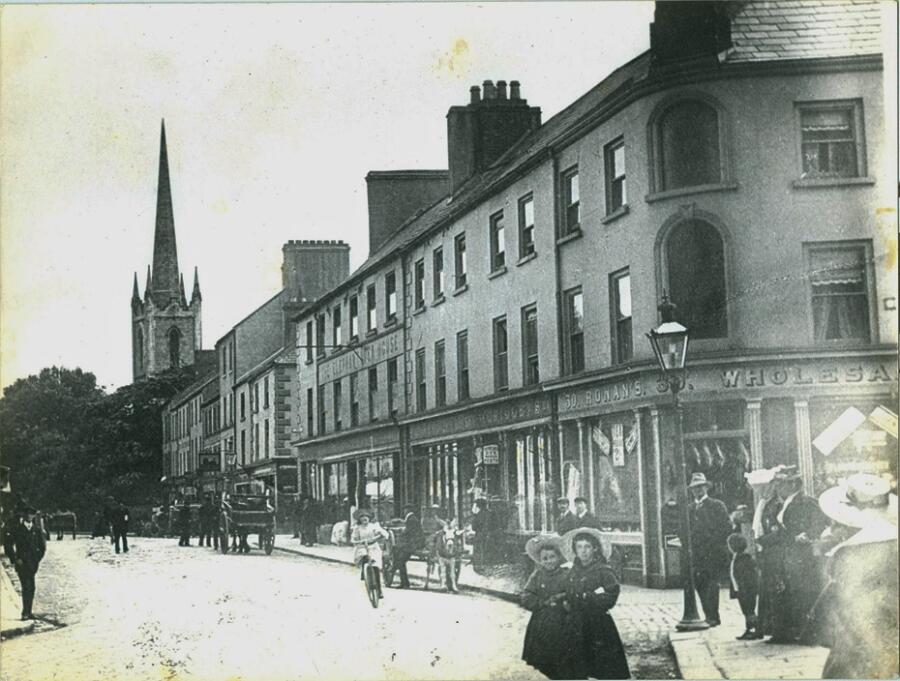
John Francis Small was born in Newry on 11 October 1852 to Arthur John Small, a local grocer and publican based on Margaret Street, and Mary Small (née O’Callaghan), the daughter of Patrick O’Callaghan of Ballymacnab, Co. Armagh. He was baptised at Newry Cathedral by Rev. Patrick O’Neill. John had two sisters: Mary Josephine (born 1854) and Helena (born 1862).

His early education began at Patterson’s Academy on Corry Square, Newry. According to Edward A. Lamb, both he and Small later attended a private school on William Street around 1864. Not long after, he continued his studies under the guidance of the Very Rev. Father Finnigan, President of St. Colman’s College, Violet Hill. From a young age, John was regarded as a precocious and studious child, with a strong passion for Greek and Latin literature. His intellectual interests were further enriched through extensive travel across the continent. By his teenage years, he had already distinguished himself academically, winning the Silver Medal of the Incorporated Law Society for placing first in his preliminary solicitor’s examination.

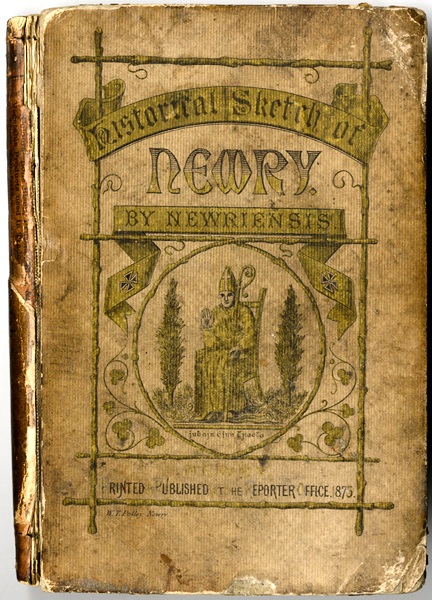
He was then apprenticed to Joshua M. Magee, a leading solicitor in Newry who also held the roles of Crown Solicitor for County Armagh and Coroner for its Southern Division. Small was admitted to the High Court of Judicature in Ireland in 1874, at just 22 years old. As he was too young to begin formal legal practice immediately, he devoted this period to writing Historical Sketch of Newry, which he published under the pseudonym ‘Newriensis’ in 1875. Probably the first major historical study of the town, the book demonstrated both his literary skill and deep local knowledge. That same year, he attended the funerals of noted Protestant nationalists John Mitchel and John Martin. The following year, he was elected a member of the Newry Literary & Scientific Society, an organisation previously presided over by William Haslett Mitchel, brother of John Mitchel.
In the years that followed, Small’s political and civic engagement deepened. In 1876, he formally began practicing as a solicitor at 26 Hill Street. In 1877, he and his father were instrumental in founding an Irish Home Rule organisation for Newry at the Imperial Hotel. These activities reflect an early and earnest commitment to Irish nationalism, a stance likely influenced by his mother’s earlier connections to Dublin’s literary circles and the Young Ireland movement.
In 1882, possibly inspired by his mentor Joshua Magee, Small stood for election as Coroner for the Southern Division of County Armagh. He was elected by 581 votes to Dr. Anderson’s 532, and the role tasked him with investigating unexplained or sudden deaths throughout the area.
A year later, in 1883, Small was elected Parnellite MP for Wexford in the British Parliament. The news was met with great celebration in Newry: at nine o’clock that evening, around 5,000 people gathered. The Monaghan Row and Church Street Fife and Drum Bands assembled at Ballybot Courthouse, then led a jubilant procession through King Street, Hill Street, Margaret Street, Water Street, Kildare Street, and back again to Margaret Street, where they stopped in front of Small’s family home. There, music played, and cheers were raised in his honour. Following boundary changes in 1885, Small’s seat in Wexford was dissolved, but he was soon elected MP for the newly created constituency of South Down, a position he held until 1886.
In 1887, following the civic-minded example of his father, who had served as a Town Commissioner from the late 1850s, Small became a Town Commissioner for Newry, a role he held for many years. After the 1899 reforms to local government, he was elected to the newly formed Newry Urban District Council. He also served on the Newry Board of Guardians, the Newry Port and Harbour Board, and the Newry Technical Instruction Committee. John Francis Small died at his Hill Street residence on 5 July 1923, aged 71, and was buried at St. Mary’s Roman Catholic Cemetery.
The Museum is currently offering free tours of the main exhibition galleries on Wednesdays at 2.00 pm. These must be booked in advance by calling our Education Officer at 0330 137 4422.
Newry and Mourne Museum is open Tuesday – Saturday 10.00 am – 4.30 pm. Please call 0330 137 4422 or email museums@nmandd.org for further information, or visit their website at www.visitmournemountains.co.uk