
 1 Comment
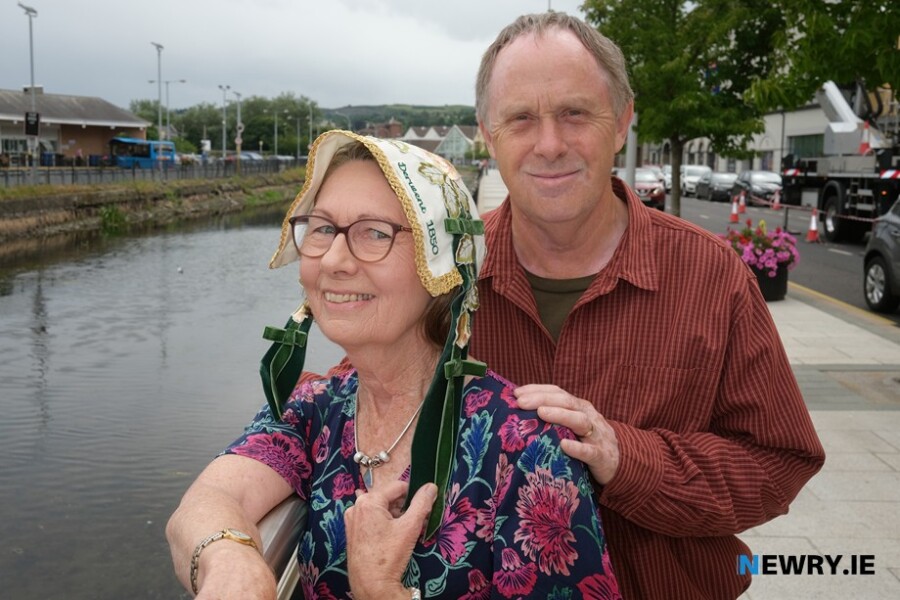
Australian woman Sue Jacques has been in Newry this past few days to find out more about her Great Great Grandmother Lucy Ellis, who left from Newry Workhouse for Australia in 1849. It all came about through a personal project by local historian Hugh McShane. While he was working on his project 'The female orphans of Newry Workhouse' in Newry, Sue came across details of the project online in Queensland, Australia. It really is a small world!

Sue explains "I guess I've always been interested in my family history. It's sort of something you pick up and put down when you have time. So I started looking into it again about 18 months ago, and there's so much more available online. I came across an advertisement with Hugh's story and that gave me links to other organisations and commemorative groups, orphan descendant groups and all kinds of things. I'm here retracing my ancestors footsteps now - Lucy Ellis and it's quite an amazing experience in a lot of ways."
Earl Grey Scheme
Hugh explains what sparked his project "My interest really began when I was doing research into the Newry workhouse and I came across this reference, a pretty vague reference, about 10 Girls given passage to Australia, and it named the 10 and then I discovered that there were another 25 after that, over a two year period. The Earl Grey scheme only lasted for two years because of funding, it was a very expensive scheme from the point of view of the Australian authorities. They paid for the passage from Plymouth to Australia. The workhouse paid for the passage from Newry to Dublin to Plymouth and paid for the travel box, the clothes all the things they had with them. It's really from that that I took an interest in this particular story, and then developed it."
Sue and Hugh took a trip to Carrickmacross Workhouse, now restored as a visitors centre something that give them a flavour of what it would have been like for the residents. A film show charts the journeys of some of the girls living there who had lives probably not unlike Lucy's.
Sue said "She left the Newry workhouse in November 1849 aged 16. She was chosen to be in the 'Earl Grey Scheme' which was sponsoring girls to come out to Australia because they needed more of a female population. The girls were indentured to work when they came out for one year.
"It was amazing how she survived that and to remain well enough to be chosen to come to Australia. I think that was really the amazing thing, especially after seeing this film in the Carrickmacross Workhouse"
Lucy's route
Lucy arrived in Australia in February 1850 travelling on the Derwent ship. Explaining her route Hugh said "She would have come from Newry workhouse via coach and horses on the Bianconi coach company travel company to Dublin, and then from Dublin, to Plymouth overnight by steamship. All the 4000 orphans from throughout Ireland who were going to Australia from the workhouses were all processed in Plymouth before they went to Australia."
Sue adds "There was probably a little bit of time between when they actually left the workhouse because they left Plymouth in November 1849. I'm not sure when they would have actually left the workhouse, it could have been a couple of weeks before they actually left Plymouth. When she got to Australia it was Port Phillip. They go to an immigration depot and they stay there until employer's come to see who's available for employment.
Bacchus Marsh
Lucy was employed by a Mr. George Hollis of Bacchus Marsh, at eight pounds for 12 months. She would have been collected by his servant or somebody like that, and it would have been a horse and buggy ride to Bacchus Marsh [northwest of Melbourne]. In today's terms, it's about an hour's journey by car, so it would have taken a fair while in a horse and buggy.
"She worked for George Hollis and about a year later, she married my great great grandfather Richard Martin, who was actually an ex convict. That was pretty common for people - it's quite fashionable I suppose you could say. People claim a convict now!" Sue said.
Lucy and Richard got married in January 1851 and had nine children and she lived in Bacchus Marsh for the rest of her life. Four of her children predeceased her. She's buried in the Hopeton Historic Cemetery in Bacchus Marsh and so are three of her children. There's no headstones but a number of years ago a granite memorial was put up with the names of those buried there.
Sue is descended from Lucy's son Richard "They named their children after themselves. She had a son named Richard Martin named after his father.
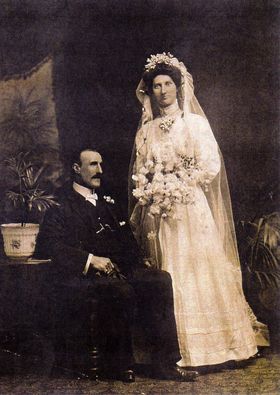
"I've got the the wedding photo of Richard and Maryanne Ellen, who he married. They had I think it was four children, one of whom was my grandfather also named Richard Martin. My grandfather did tell me a few little stories at one time. He knew the family name of Ellis. I think he was given a bit of information from his father and now and again, the word workhouse or poor house would crop up, but I think there was still a bit of stigma around it. He was probably not really telling us everything that he knew." Sue explained.
Sues Grandfather passed away in 1998, he was quite a bit younger than her grandmother and he lived to see a lot of their great grandchildren. A contrast to his own upbringing as his mother died when he was five and they all were farmed out to aunts and relatives.
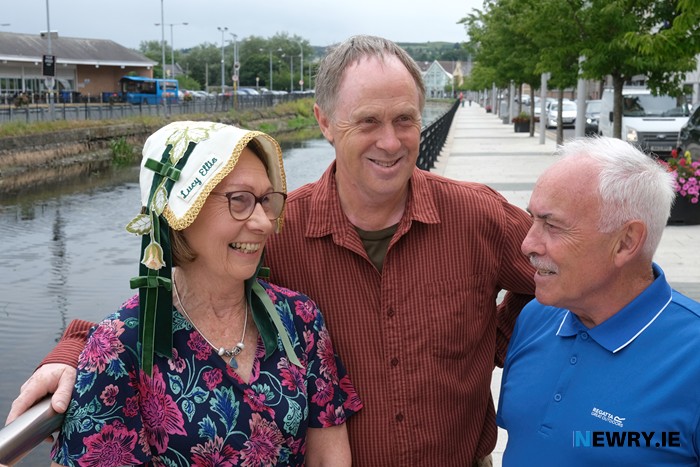
Her grandfather had two children her mother and her brother. Some of the connection presently live in Melbourne and last year Sue travelled down to the the Irish Famine Orphan Girls Commemoration in Melbourne. "One of my cousin's came to it, that was a really wonderful, very moving day because you're right on the shores of Williamstown, which is where they came in in those days." she recalls.
Sue continued "Lucy lived to 58, she died of influenza in 1891. Relatively young in terms of what we would live to now, but she had quite a tough life.
"When we traveled to Bacchus Marsh last year I found out a little bit more information about her family and one of her daughters Katherine. She lived in the Bacchus Marsh area all her life and there was a photo of her and one of her daughters also named Lucy. I've been in contact with another lady who's a descendant of that line. She's in my age group. She'd be an equal descendent of Lucy as well only coming off Katherine Baradell's line. I'm sure there's a lot of others that I'm not in contact with!"
Sue's uncle is 86 and still lives in Melbourne. He recalls as a child going up to Bacchus Marsh to visit an old lady but doesn't recall her name. Sue explained "Katherine Barradell lived till 92 ish and she lived in Bacchus Marsh all her life, so I'm betting it could have been her, which would have been his father's sister."
She continued "My mother passed away in 2015. We knew about Lucy, but we didn't know a huge lot like I do today. All we knew was that she was an orphan immigrant and she came to Australia on the Derwent at age 16. That's pretty much all we knew and the town where she came from.
"That's all we knew until I was in contact with Hugh whos had the vision of the bonnet and the travel box. Even though I still haven't found out what happened to Lucy before the workhouse. I really now feel like I know, what it was like for her living in the conditions that they lived in. Those little cottages out on the hillside, it was pretty difficult circumstances."
Sue added "They were just desperate and even though the poor house or the workhouse might not have been a good choice, when we look at it today, at least it was a roof over their head and it was dry and they had food. In the end, she took a chance that was given to her and just took that step. None of us would be here except for her taking that brave step."
Bonnets
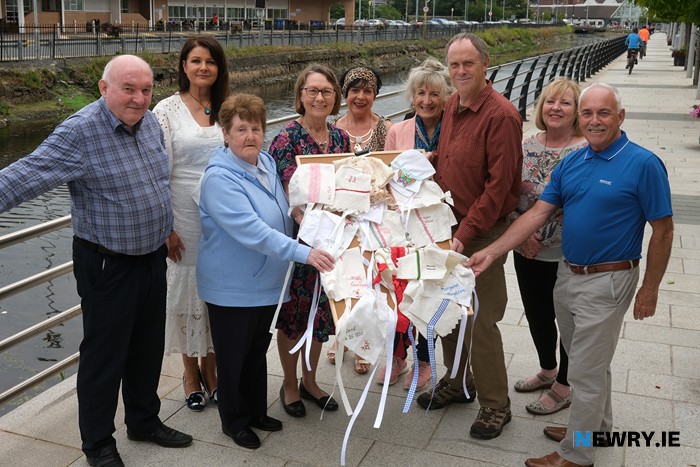
A group of women and local womens groups have embraced the project here and have taken to making bonnets for each of the girls that left from Newry. Sue herself has also made bonnets for the Newry girls who arrived on the Derwent.
Hugh explains their inspiration "There's an artist in Australia called Christina Henry and she has this scheme where she has these bonnets that commemorate the convict women who went to Australia. She is trying to get a bonnet made for all the 28,000 convict women that went to Australia and she has included the famine orphans in that. I then transferred that idea to here"
See more at rosesfromtheheart
See the Hugh McShane History Facebook page