 Write a comment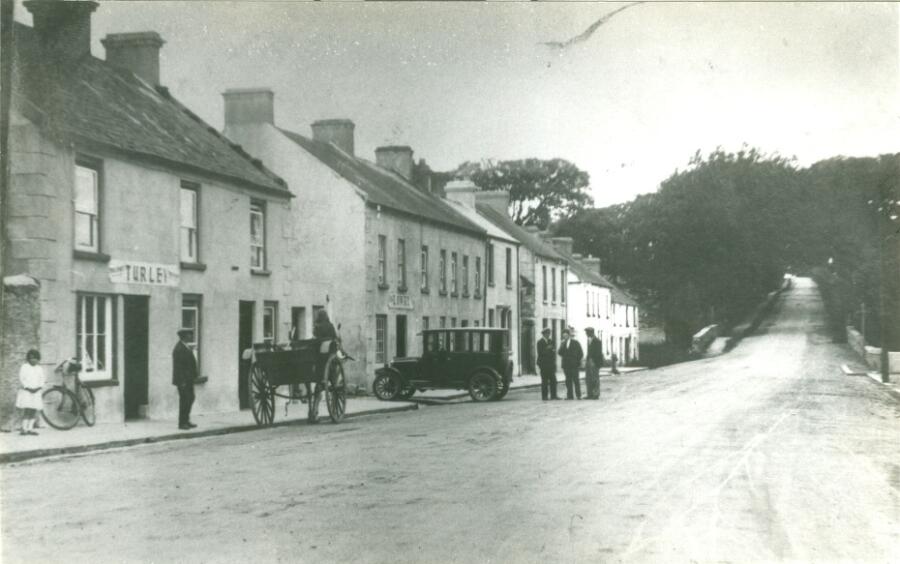
There has been a fair in Hilltown for hundreds of years. The Northern Whig newspaper in October 1886 reported the following: ‘Hilltown - this important fair was held yesterday. As usual, there was a large show of stock of all kinds, the greater portion of which were of prime quality. The attendance of dealers was numerous and included a good number of English and Scotch dealers.’
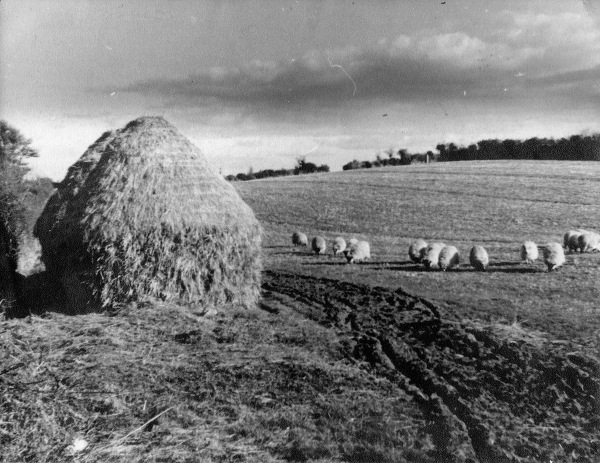
and mountains to look after animals. There would also be plenty of time for festivities
known as ‘Booleying’. Newry and Mourne Museum Collection
The street fair at Hilltown was one of the best of its kind in the north of Ireland. Flocks of sheep were brought to Hilltown Fair from Donegal, Antrim, Derry and Tyrone, as well as from all parts of Down and Armagh. The event usually started at about ten o’clock in the morning and continued to four o’clock in the afternoon. There were cattle, sheep, pig and horse markets, with donkeys and goats also for sale. This was a social occasion and, when business was completed, people stayed well into the night to make new and old acquaintances; dice were thrown, music played, and ballads sung.
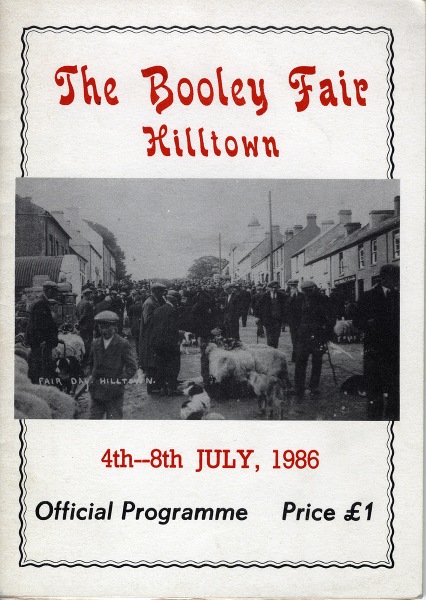
celebrate memories of the Hilltown fair. Farmers and dealers
were drawn to the village on the north side of the Mourne
Mountains, from places like Donegal and Drogheda. The fairs
had their heyday before World War I. Newry and Mourne
Museum Collection
In the late 1940s there had been a call to abolish street fairs and for them to be removed to fair greens. According to the Frontier Sentinel of 22nd December 1949, at a previous meeting of Newry No.1 Rural District Council, a letter from Reverend E. H. Ferguson of The Manse, Hilltown had been submitted, protesting the condition of the railings and church entrance during the fair. A memorial signed by fifty-two residents of Hilltown and district called for the continuance of the event stating that holding the fair was a practice which had been followed since 1612 when a Royal Charter was granted to the Prince of Iveagh, an historical name for the Magennises of Rathfriland, to hold a monthly fair there. Mr. S. Murphy moved that no action be taken, but that a concrete footpath be laid from the Manse to McCracken’s entry.
The Booley Fair festival was launched in the summer of 1986 as a celebration of rural traditions and to revive bygone days for everyone to enjoy. The Newry Reporter reported on the origin of its name: ‘In parts of Sixteenth Century Ireland, cattle were the principal form of wealth among the poorer farming people. In the summertime the cattle were driven to pasture in the hills and moors, where people built cabins of sods, roofed with heather. These were known as Booley huts. Everyone looked forward to summer in the mountains because there was little to do except herd cattle, and there was plenty of time for enjoyment. Any festivities they would have engaged in would have been known as “Booleying”. In the Hilltown area, cattle gave way to sheep in the early part of the Nineteenth Century’.

success the festival enjoyed many years ‘Booleying’ and reviving
rural traditions. Newry and Mourne Museum Collection
Skills such as blacksmithing, stone cutting and butter making were on show, and there were competitions involving rope twisting, tossing the sheaf, and jam and bread making. There was plenty of socialising with singing, poetry, music and dancing. And of course, there was an open livestock fair. From the Irish News 10th July 1986 ran the following ‘Down village comes alive with the past. Not since the coming home of the victorious Down team in 1960, has the market town of Hilltown seen such crowds and excitement as that of the Booley Fair which ended last night.’ The festival was revitalised a few years ago and is now known as ‘Back from the Booley’ which takes place this year from 21st to 26th August.
The Museum is currently offering free tours of the main exhibition galleries on Wednesdays at 2.00 pm. These must be booked in advance by calling Education Officer at 0330 137 4422.
Newry and Mourne Museum is open Tuesday – Saturday 10.00 am – 4.30 pm. Please call 0330 137 4422 or email museums@nmandd.org for further information.
Visit their website at www.visitmournemountains.co.uk