 Write a comment
In the mid-1850s, Newry had many industries and businesses and was a prosperous town. However, this prosperity was ill divided. When the Sisters of Mercy arrived in Newry in 1855 they began working with the poor and destitute, both young and old, by visiting the poor and sick in their own homes. They set up a House of Mercy for destitute and vulnerable women and set about building an educational legacy that continues to this day.
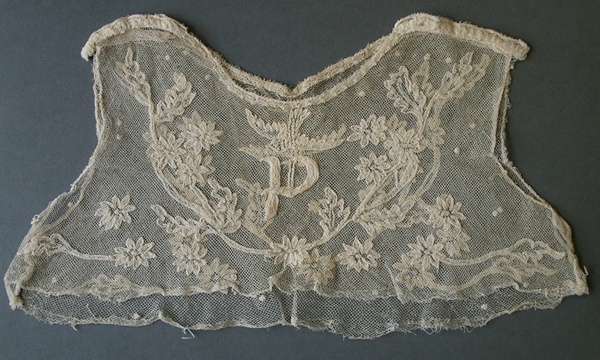
In 1855 an Industrial School was opened in Canal Street for women, young and old, to earn their living, where they were taught basic educational and needlework skills. This would become the Sewing and Lace School, renown for the excellence of its work. In 1906 it employed 60 women producing Limerick lace flounces, veils, scarves, curtains, babies’ robes and vestments, as well as satin-stitch embroidered monograms and lettering on handkerchiefs and embroidered cushions. Patrick Keenan, a school inspector in The Irish Quarterly Review (1856) commends the work of the Sisters and believed that they “conceived the idea of education of adult females’’.
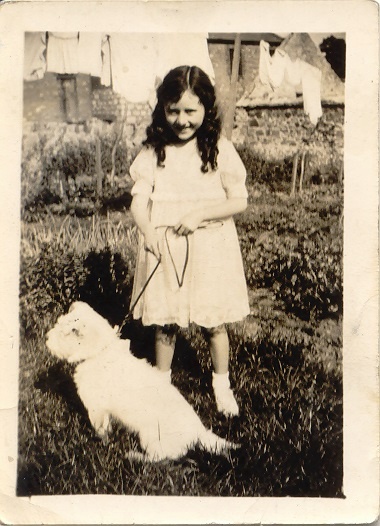
As there were already schools run by the Convent of Poor Clares for the poor children in the town, Bishop Blake would only allow another school for girls over twelve. The Sisters of Mercy set up a night school in 1865, where women and girls working in the mills received sewing and lace making experience, but more importantly an education in basic reading, writing and mathematics.
Bishop Blake’s successor, Dr JP Leahy approved the building of a new National School in Canal Street, which opened on the 24th of May 1869. In 1876 a property adjoining the House of Mercy was procured for use as an infant boy’s school.
Mother Emmanuel Russell was instrumental in opening an intermediate school for the higher education of Catholic girls. On the 21st of November 1887 it opened with nine pupils and a fee of fifteen shillings per quarter. It would later become known as Our Lady’s Grammar School. The school initially operated in rooms on a lower floor of the convent. Such was its success that they quickly became too small for the number of pupils attending. All the pupils who entered for the intermediate examinations in 1894 were all successful, obtaining passes and prizes.
A new building was opened on the 18th of July 1895, by the bishop, the Most Rev Dr McGivern. Designed by architect Mr Brown of Kilmorey Street and built by Denis Neary, it contained both the new intermediate school and the national school. The large upper schoolroom was separated from the room used as a national school by three sets of folding doors and could be made into one room 120 feet long by 30 feet wide, accommodating almost as many as the new Town Hall. The lower room contained classrooms and cloakrooms. At the opening event, the young ladies of the school provided a programme of entertainment. Afterwards prizes were distributed for highest marks for the year and examinations in Latin, arithmetic, politeness and domestic economy, mathematics, drawing and geometry, algebra, music, German and Christian doctrine.
In 1918 a new department for boarders was opened. By then the general course of study included book-keeping, business methods and office routine, and shorthand typewriting. Pupils were prepared for examinations and also for the bank, post office and teaching professions.
The expansion continued with the building of St. Joseph’s Public Elementary school on the site of the old Newry Foundry on Edward Street. It opened on the 25th of April 1935 and could accommodate 300-400 senior children and infants.
On 28 February 2014 an event to confirm Newry’s ‘Greatest Historical Icon’ was held in Newry Town Hall. The winners, the three Russell sisters were championed by Sr Perpetua McArdle, a retired principal of Our Lady’s. They, along with the Sisters of Mercy radically improved the opportunities for young women in Newry. Their legacy continues in the continued success of their primary and grammar schools
The Museum is currently offering free tours of the main exhibition galleries on Wednesdays at 2.00 pm. These must be booked in advance by calling our Education Officer at 0330 137 4422.
Newry and Mourne Museum is open Tuesday – Saturday 10.00 am – 4.30 pm. Please call 0330 137 4422 or email museums@nmandd.org for further information.
Visit their website at www.visitmournemountains.co.uk