Write a comment
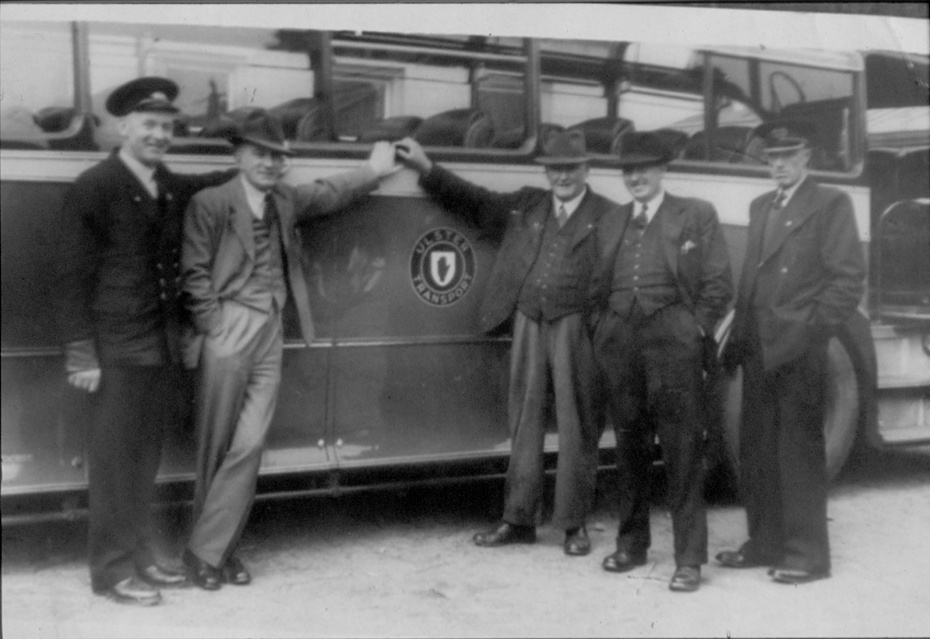
From horse-drawn charabancs to familiar bus services, public transport has helped connect communities across the Newry and Mourne area for generations. This week, Newry and Mourne Museum looks back at the people, companies and changes that shaped those journeys.
Before buses became a familiar sight on local roads, passengers travelled by horse-drawn charabanc. Common in the late 19th and early 20th centuries, these open-top carriages took their name from the French char à bancs, meaning “carriage with benches”. Motorised versions replaced them after the First World War, before giving way to buses in the 1920s.
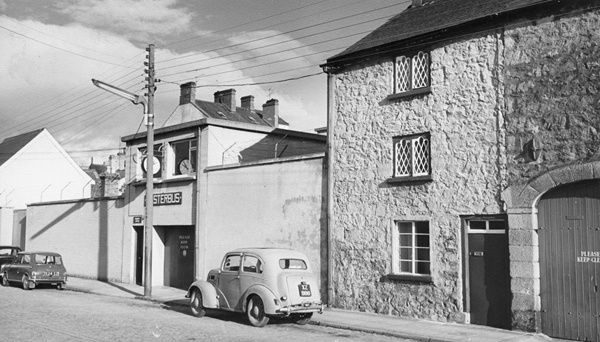
£1·7M, was officially opened in November 1999.
Newry and Mourne Museum Collection
Fuel restrictions during the First World War forced many bus companies to return to horse-drawn vehicles. After the war, road passenger transport expanded as operators bought motorised buses and added services. Ex-servicemen helped establish a number of these early businesses. Among them was Jack Bannon, who had served in East Africa and went on to help set up Newry’s Frontier Bus Company in the early 1920s. Most journeys were local, usually no further than Kilkeel or Dundalk, with the occasional run to Belfast.
Another familiar local name is McAnulty’s Yellow Line coaches. Founded in 1819, the business began with horse-drawn carriages and drays before moving into motor charabancs in the 1900s. When the Warrenpoint–Rostrevor Horse Tramway closed in 1915, Hugh McAnulty spotted an opportunity. He bought a charabanc to take passengers from Warrenpoint railway station to their destinations. By 1928, he had several buses and was advertising “The Yellow Line Motor Service”. Today, the business remains in the hands of the seventh generation of the McAnulty family.
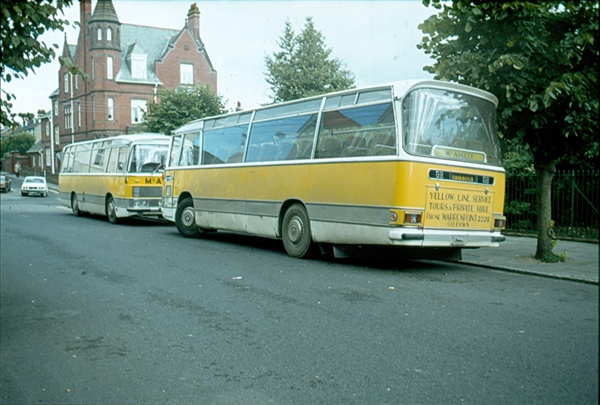
to this day offering private hire, tours, excursions as well as working alongside the
local Education Authority on providing “Home to School” Transport in Northern
Ireland. Newry and Mourne Museum Collection
Railway companies also entered the bus business, helped by the Railways (Road Vehicles) Act (NI) of May 1927. Licensing for routes, buses and staff followed in August 1928. No new bus services could then be established, so operators looking to expand had to buy existing services.
In 1932, three railway companies - the Belfast and County Down Railway (BCDR), Great Northern Railway (GNR) and Northern Counties Committee (NCC) - proposed integrating road and rail transport in Northern Ireland. The Belfast Government accepted their proposal, leading to the Road and Railway Transport Act of July 1935 and the Northern Ireland Road Transport Board (NIRTB).
Further change came with the Transport Act of 1948, which established the Ulster Transport Authority (UTA), bringing together the NIRTB and the BCDR. In 1967, transport legislation reorganised the system following a reduction in the railway network. Road and rail operations were separated, and the Northern Ireland Transport Holding Company (NITHC) replaced the UTA.
Ulsterbus began running bus services that April, with Northern Ireland Railways following in 1968. Citybus, established in 1973 under the same legislation, was rebranded as Translink Metro in 2005. The NITHC has operated under the Translink name since 1996.
The story also has a tragic chapter. During the Troubles, 17 Ulsterbus employees lost their lives, and more than a thousand buses were destroyed. Today, Ulsterbus continues to operate across Northern Ireland, with 22 stations and 1,100 buses, a very different network from the days of horse-drawn benches and occasional trips to Belfast.
The Museum is currently offering free tours of the main exhibition galleries on Wednesdays at 2.00 pm. These must be booked in advance by calling their Education Officer at 0330 137 4422.
Newry and Mourne Museum is open Tuesday – Saturday 10.00 am – 4.30 pm. Please call 0330 137 4422 or email museums@nmandd.org for further information.
Visit their website at www.visitmournegullionstrangford.com