
 1 Comment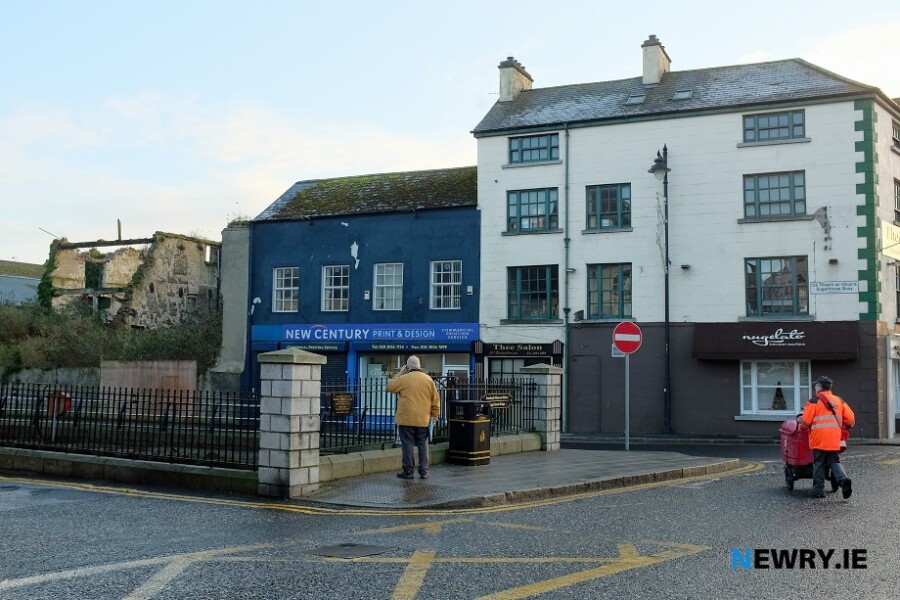
A reader believes it is now time for Newry to deal with past wrongs concerning the slave trade and Newry's involvement in it. The reader believes a good start would be to rename Sugar Island and consign the statue of John Mitchel currently at John Mitchel Place to the musuem, accompanied with a explanation of his life.
A Story
Aboagye wakes up, his pillow is wet. His head hurts. His tummy hurts. He gets the familiar smell of KOKO with Bofroat (traditional Ghanian breakfast), cooking from the kitchen, usually his favourite breakfast. Today, it’s making him feel sick. Haniah checks her son is getting ready for school and notices immediately that he is not well. ‘Me dofo’, you are sick, we need to see the Doctor, no school today’! ‘No Mama’, please, its Friday, I am getting my prize today. Mrs. McGinn said the Headteacher will be giving it to me at Assembly’. I’m sorry me dofo’ you are sick, no school today. Haniah is sad to see her son disappointed. She knows how much this prize means to her him. ‘I will telephone Mrs. McGinn, she will understand and rearrange your prizegiving. She is a good teacher and will do this for you’. Aboagye is heartbroken, however, dresses quickly as his Mam has managed to get an early appointment at the Doctor’s.

Every sound is hurting Aboagye’s ears and head as they walk to the Doctor’s surgery. He normally enjoys the hustle and bustle of morning time and associates the liveliness with his experience of morning time in Accra, Ghana, where his Grandparents live. Normally he is excited and enlivened by the sounds and colours he sees around him; it makes him want to write about how he sees the people and places. Aboagye thinks about his prizegiving again and feels a sadness in the pit of his stomach that he will not be at school today. This prizegiving is important to him. His essay is about his Grandparents’ home in Accra describing his family, cousins, and friends. Titled ‘Accra’ Mrs McGinn said it educated the class about how being different is good and everyone is equal and has value. Aboagye particularly liked it when Mrs McGinn said he has the potential to be a great writer someday. It made his insides grow bigger.
Whilst walking past ‘St. Colmans Park’, Aboagye notices a tall statue looking down on him. ‘Who is that man’, he asks. A man called John Mitchell, his Mam replies. ‘Who is John Mitchell’? Haniah considers her reply for a moment, ‘A great Newry man who supported the slavery of Black people like us’. Aboagye feels a heavy feeling like a big stone in his stomach. He knows about slavery.
After seeing the Doctor and getting medicine for tonsillitis Mother and Son walk home past Sugar Island. ‘Why is this called Sugar Island’? Aboagye asks his mam. Haniah considers her reply for a moment, ‘Long time ago a great Newry Family called the Needham’s brought ships full of sugar here from the West Indies’. The Needham Family imported Slaves from Africa to harvest the sugarcane on their plantations in the West Indies’, ‘They took people from Ghana Mama? ‘Yes me dofo’, Haniah replied, that was during the Colional Age. Aboagye knows about colonialism. ‘So, like land Pirates’. ‘Yes, mo dofo, Land Pirates’. Aboagye suddenly experiences a heavy feeling all over his body. He calls it ‘that feeling’. He does not know where it comes from but every now and again, he feels it. When this happens, it makes him sad….and lonely. Mother and son walk silently home.
Regeneration and Legacy
Our reader was inspired to write following an article on Newry.ie on the proposed regeneration of the area in Newry known as Sugar Island. It would be keeping in best practice, going forward, to acknowledge the legacy of colonial influences in this area by publicly acknowledging the harm this legacy has caused and continues to cause to our shared communities.
In order not to blame anyone country or institution I have drawn together some examples of both historical and current abuses against groups of people by those who see themselves as superior and therefore entitled to cause harm to others. The ‘harm’ is different in each case and depends of the unique culture and or attitudes of the perpetrators.
Starting with examples of good practice first….
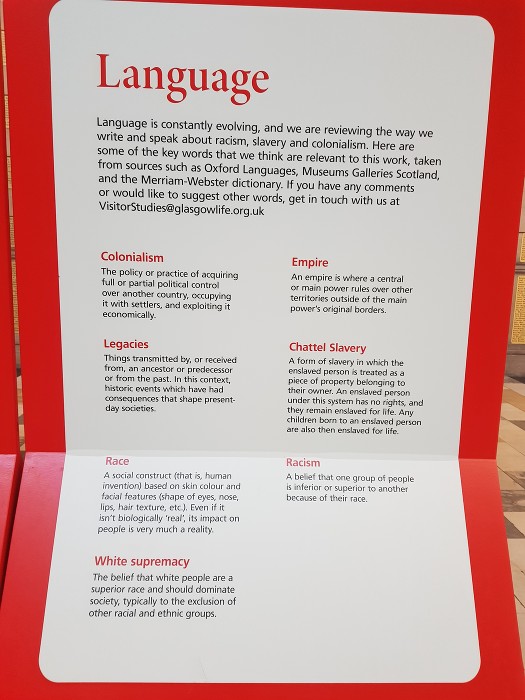
Kelvin Grove Museum in Glasgow is one place that has addressed this issue. By highlighting the destructive attributes of legacy and acknowledging the divisive and hurtful nature of same it enables people to reflect and in the best-case scenario to be unashamedly ashamed of our colonial past. The large display just inside the front doors of the museum considers and supports the mindful education of ‘racist language’ and ‘hate’ and engage in non-participation of same. It is encouraging to see an honest account of how the grand building of the museum and a lot of its contents were made possible from the unpaid labour of enslaved labour.
Another good example of 21 Century democracies addressing legacy is Scotland’s ‘rematriation’ of the House of Ni’isjoohl Totem Pole to the indigenous people of Nisaga’a Nation, Canada, earlier this year. More amazingly the return of the pole had been agreed and signed off by the Scottish Government in less than a year.
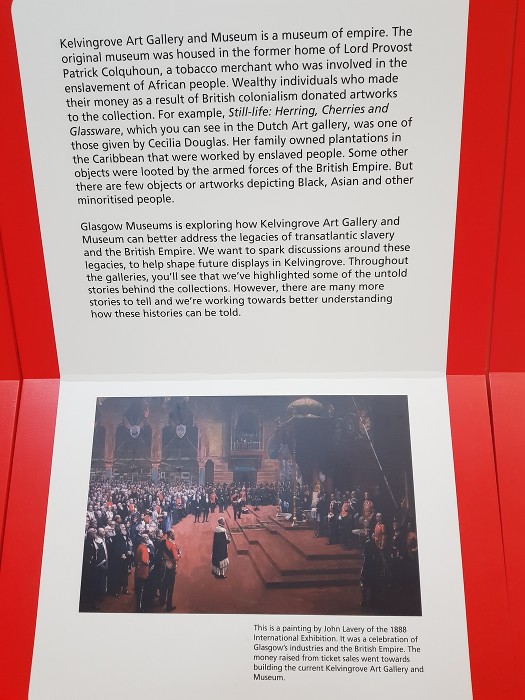
The slave trade in Great Britian around the time of the Industrial revolution enabled a few to profit immensely while causing a massive human cost to enslaved peoples in the USA, and the families and communities of same who were left without their loved ones in west Africa.
Acknowledging the truth validates the victims. Promotes healing and recovery. Has the potential to promote collective emotional growth, working towards improving inter community relations. Or simply a better world.
Recent history
Below are some examples of how Institutions / Governments are dealing with legacy of abuse in our more recent history.
The Republic of Ireland are journeying through their legacy of historical abuses and how they are addressing the crimes committed against Mothers, babies and children in the State / Religious institutions from the 1920’s to 1980’s. There is a mechanism of Redress for Survivors / Victims which is ongoing. Redress in the modern fashion being a full and open public investigation, accountability, compensation and finally a memorial and apology to all who have journeyed through these institutions and their families.
Religious Institutions on the Island of Ireland, Great Britian, Europe and the World are being brought to account for the many horrendous crimes of abuse towards people and children who were at the time societies most vulnerable. Bizarrely, our religious institutions like some Governments often demonstrate an obstinate begrudging attitude to redress in the modern fashion as mentioned above. Thus, causing immense suffering for survivors / victims and perpetuating a cruel legacy which reverberates negatively across our shared humanity.
Another current example of Government displaying a complete disrespect / disregard for historical crimes committed against women and families is the way the Kingdom of Denmark is actively obstructing redress by the Inuit women and their families. During the 1960’s The Government of Denmark employed registered Doctors to insert oversized contraceptive devises into the vaginas of 12 year old girls without explanation or consent from the girls or their families. This has caused and continues to cause untold suffering for the First Nation people of Greenland. You and I understand this to be Eujenics. Again, rearing its ugly head in 20th century Europe. There is an action currently from these brave women and their families to exert redress from the Danish Government. Naja Lyberth, a clinical Psychologist is leading this effort on behalf of her brave Innuit sisters against the Danish Government. She has spoken of a ‘silence’ from the Danish Authorities and the Government of the Kingdom of Denmark. In the BBC Documentary 100 lives which gives an account of the women’s’ journey. A Danish politician acknowledges the practice and says ‘we will have an enquiry’. The programme then shows an archive of medical files. ‘Millions of medical files are here’ the politician says. ‘We cannot possibly search through so many files and some may be lost’. A response we have heard before. Validation and redress, in the modern fashion, although it can never undo the harm caused to others, it can assist in healing and recovery.
So, whether the abuse is from the colonial era or the 20th / 21st Century. It is still abuse.
Whether abuse is by Governments, Institutions, or individuals, it is still abuse
Whether abuse is based on gender, age, social class, or people who have cultural and or religious difference it is still abuse.
If you google how to address abuse and historical abuse you will be given a wealth of information about how to protect yourself and deal with the perpetrator.
Time for positive change
We are all agreed that abuse is wrong. Putting right the harm caused by historical abuse should be a priority by communities, when we encounter it. Most often it is the ordinary people like you and me who can effect positive change. Sorry or Kafra in Ghanian, is a word we rarely hear from the people who have benefitted most from the labours of enslaved peoples. Those people are rarely at the front line or helm of positive change. Change is most effective when it comes from the grassroots. I suggest now is Newry’s time for positive change. By all means place John Mitchell in the museum with the information about his life alongside the old name of Sugar Island along with an explanation of same.
I am hopeful the next step a progressive community like Newry Mourne and Down will address in changing the above placenames will happen in a respectful, inclusive debate on when, not how, this will happen. We owe it to past generations. We owe it to future generations.
Aboagye wakes up and smells KOKO and Boforat coming from the kitchen. He is hungry. The pain has gone from his eyes and head. He is happy that Mrs McGinn has postponed his prizegiving until next week. He feels soft and warm inside and outside. Happy. But there is something else. It’s a feeling like Sherbert fizz. In his tummy. He knows about this feeling; it gives him energy and makes his mind pop. Aboagye has been thinking about his next essay for Mrs. McGinn. He gets out of bed and sits at his keyboard ...