 Write a comment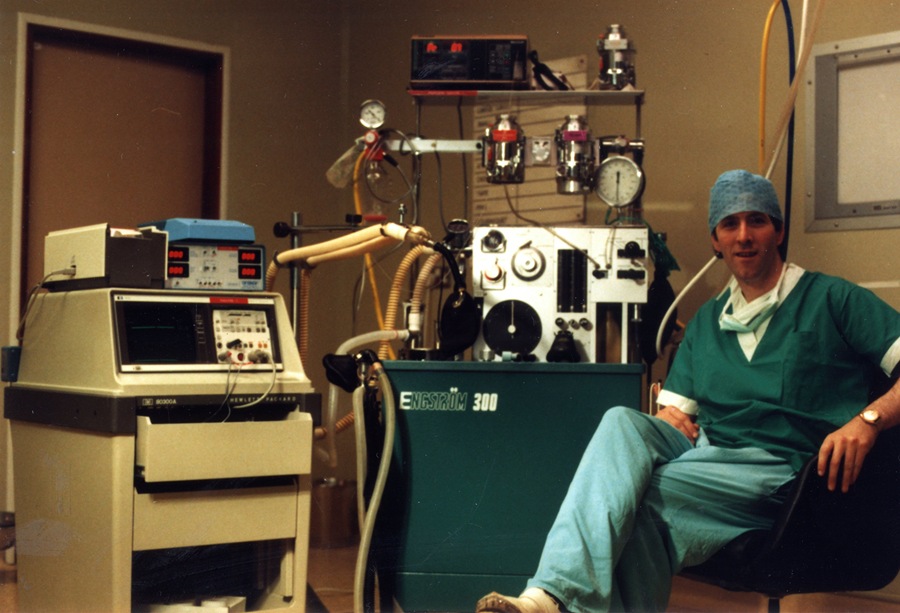
This is the first in a series of articles written by former medical professionals, patients and museum staff as part of Newry and Mourne Museum’s new temporary exhibition, Caring for the Community: The Development of Medicine in Newry and Mourne. These articles are edited versions of those which can be read in the exhibition booklet which is available free at the Museum. This week's is from Bessbrook man John Davis.

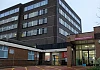
Before working in Daisy Hill Hospital I was employed in the Ardmore Hotel, but it was bombed on three occasions and the hotel closed. I applied for a job as a medical orderly at Daisy Hill Hospital and soon got word to start.

The first ward I worked on was Male Medical. I then worked in Male Surgical for two years. There were four wards and a side ward, with four patients to a ward. Sister Quinn and Sister O’Callaghan oversaw the wards. Each morning I would come in to the ward and Sister Quinn would say ‘John have you all the patients out of bed and sitting on their chairs?’ I would say, ‘Yes Sister’, then race around and get all patients up.
I was then moved to Casualty where I spent five years. I remember Christmas Eve 1973, I was putting a splint on a patient and heard the fire horn and wondered what was happening. Then I heard the fire horn again, and the phones started to ring. At that time there was only one resuscitation area and two couches for patients in Casualty. The ambulance arrived at the door of Casualty and I went out to the ambulance and was absolutely horrified by what I saw. There had been an explosion, and Casualty was absolutely packed with patients. It was an awful day, it changed everything, patients were sent home to free up beds.

There were numerous other incidents we had to deal with in Casualty including The Miami Showband Massacre. Mr Blundell was the theatre consultant surgeon on that night and he operated on one of the band members and worked tirelessly through the night with his house surgeon to save him.
Then there were further Troubles incidents including the murder of the Reavey brothers and the Kingsmill Massacre, both in 1976, and the Narrow Water bomb in 1979. You learned to cope with these incidents, and everyone knew their job and what to do. Those were dark days and I witnessed many terrible things. There was no such thing as counselling for staff then, and we all dealt with it in our own way and by talking to each other.
It was important that we all stuck together and worked together as a good team, and for there to be a good social life to the hospital. We ran concerts and dances for the nurses and their families to keep morale up. We also did a lot of fundraising and raised money for the diabetic clinic and the outpatient’s department; there was a lot of good camaraderie among the staff.

Amidst all the gloom, there were funny incidents as well. I know it was the talk of the hospital the day I flew off to Belfast in a helicopter. It was a military Wessex helicopter based at Bessbrook, then Europe’s busiest heliport. We had to transfer a patient to the Royal Victoria Hospital in Belfast and I was getting on board helping with the stretcher and was in the tail section of the helicopter, and before I knew it we were airborne. The nurse said to me ‘John you are on call for Casualty and Theatre’, and I looked out the door of the helicopter and I said, ‘Well, I am not jumping out 20 feet, let’s go flying’. We landed at Musgrave and from there we were transferred to the Royal Victoria Hospital. We arrived in Casualty and settled in the patient.
The doctors and nurses at Daisy Hill saved a lot of lives. The staff were very experienced and up to date with their technology. They developed an expertise in dealing with trauma, such as gunshot wounds. We were very quick at setting up Casualty. We checked the machines every day, from the defibrillator to the ventilator to the packages (sterile dressings) to the intermediate trays that held instruments. Everything was left ready for an emergency, which could be anything from a road traffic accident, a bee sting to a Troubles related incident.
I retired in 2001 and enjoyed working in Daisy Hill Hospital, many of the permanent staff at that time had been there for thirty or forty years, and everyone knew each other, and we were like a big family.
Entry to Caring for the Community: The Development of Medicine in Newry and Mourne is free and the exhibition runs until early September 2023. For further information please contact the Assistant Curator at 0330 137 4608.
The Museum is currently offering free tours of the main exhibition galleries on Wednesdays and Thursdays at 2.00 pm. These must be booked in advance by calling our Education Officer at 0330 137 4422.
Newry and Mourne Museum is open Tuesday – Saturday 10.00 am – 4.30 pm. Please call 0330 137 4422 or email museums@nmandd.org for further information.
Please visit our website at www.visitmournemountains.co.uk/museums/newry-and-mourne-museum