 Write a comment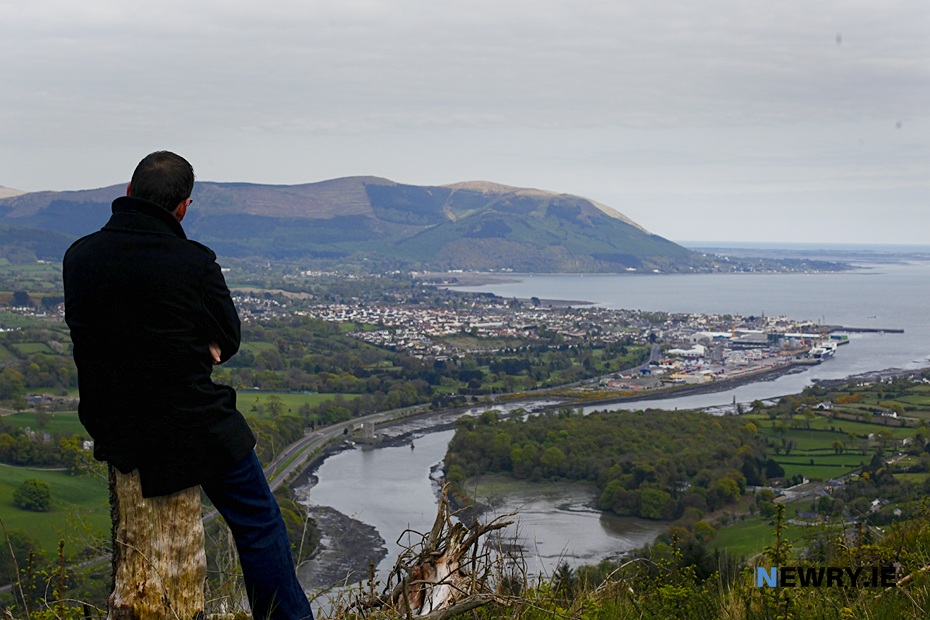
A pioneering cross-border Citizens' Jury is just days away from delivering recommendations that could help shape the future of Carlingford Lough.

Thirteen ordinary residents drawn from communities on both sides of the Lough have spent two intensive weekend sessions hearing from scientists, business leaders, port authorities and local voices as part of the first-ever Citizens' Jury for Carlingford Lough. Randomly selected to reflect the local population, the jury members have been grappling with one of the most pressing challenges facing the area: how to protect the Lough's natural habitats while keeping local livelihoods healthy. The final session is taking place this Saturday, 28 February, in Rostrevor.

At their opening session, jury members heard from Robert Walsh of the Northern Ireland Marine Task Force, who outlined the range of activities on the Lough, its ecological health and existing opportunities for public engagement. By the end of that day, the group had drawn up the questions they most wanted answered, covering governance, water quality, monitoring transparency, protection and enforcement, economic activity and the area's cultural and heritage traditions.
A fortnight on, the jury sat through a full day of evidence from ten speakers. Conor Patterson CEO of Newry and Mourne Cooperative and Enterprise Agency and President of Newry Chamber of Commerce was among those giving evidence on the economy and livelihoods of the area, alongside David Holmes, Chief Executive of Warrenpoint Port, and Colleen Dowdall and Mark Cumming of Warrenpoint, Burren and Rostrevor Chamber of Commerce. The science of the Lough was covered by Sarah McClean, Head Scientist at the Loughs Agency, Sandra Woods, a local resident and diver, and Heidi McIlvenny, a marine scientist from Queen's University Belfast. Community stewardship and access were addressed by Colum Sands of RARE, Francis Donnelly from Carlingford Sailing Club, and Tiziana O'Hara of Co-operative Alternatives.
Jury members put questions directly to each panel before the session wrapped up with a structured process designed to help the group make sense of what they had heard, find common ground and prepare for this weekend's deliberations.
Suzie Cahn, Project Director at iCommunity: Shared Practices Hub and Shifting Tides, said: "It was incredibly energising to see jury members come together from both sides of the Lough and from all walks of life. Unlike traditional top-down consultations, a citizens' jury puts decision-making power in the hands of the public. It shows what's possible when people are trusted with the time, space and information to tackle complex issues together."
On Saturday the thirteen jury members will meet in Rostrevor for their final session, where they will deliberate among themselves and draw up their recommendations. Those recommendations will then be passed on to policy makers and stakeholders, backed by a process described as independent, evidence-based and rooted in the communities most affected.
Rebekah McCabe, Head of Northern Ireland at Involve, said: "This Citizens' Jury represents a new way of safeguarding Carlingford Lough for the long term. It brings together ordinary people from both sides of the border to examine the evidence carefully and develop recommendations grounded in shared responsibility and real community mandate. In a place where ecosystems cross jurisdictions and governance can fall between the cracks, this kind of cross-border stewardship is not just innovative, it is essential."
Anyone wanting to follow the process, send a message to the jury or get a copy of the recommendations once published can find more information at the project website: sites.google.com/involve.org.uk/carlingfordlough