 Write a comment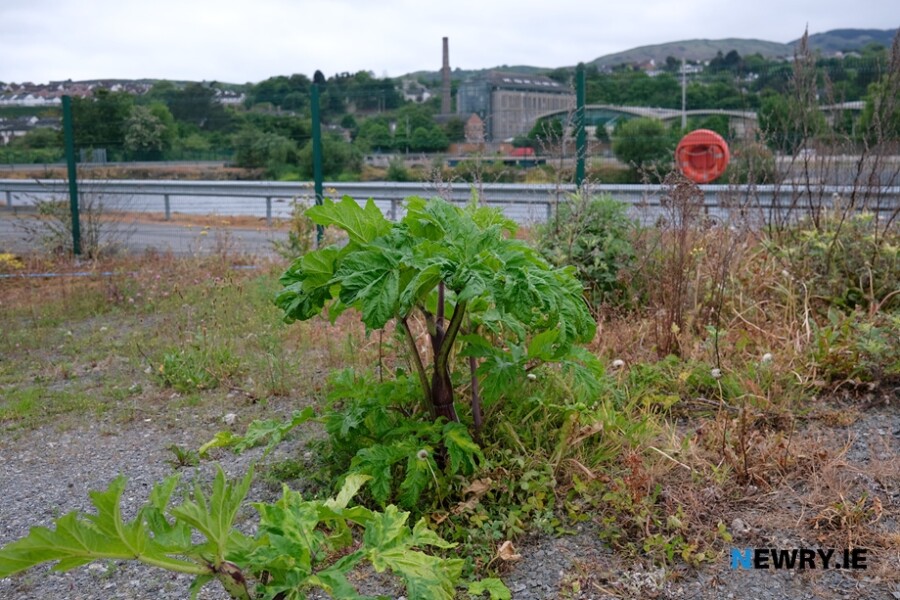
The Newry City Park was once again the main topic of conversation at last night's Council Sustainability & Environment Committee meeting where a report was approved that sought to "seek approval to treat invasive species, for example Giant Hogweed and Japanese Knotweed, at Albert Basin with herbicide separately from the existing weed control programme."
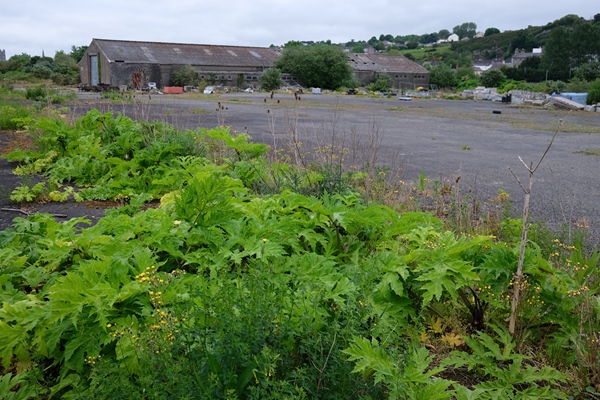
Currently the Albert Basin site of the proposed Newry City Park is proliferated with the invasive Giant Hogweed and Council Officers in the report 'Treatment of invasive species across the Council estate' say they need to treat the hogweed and several incidences of Japanese Knotweed on the site with glyphosate herbicide as manual control methods are too labour intensive and with access to and the dangers of the plants they claim it is not practical. The report was necessary as Council have agreed to working towards phasing out their use of glyphosate.
The paper put before Councillors explained "The report will also provide Members with an update on meeting the Council's objective to phase out completely the use of herbicides containing glyphosate for controlling weeds and invasive species on Council property and highlight the significant operational challenges from the overall reduction of herbicides when managing invasive species."
In Jan 2020 Council agreed "to undertake a 12 month review with a target to phase out completely the use of herbicides containing glyphosate for controlling weeds and invasive species on Council property within 3 years or as soon as possible." In the interim, Council have managed to reduce Herbicides containing glyphosate (Roundup) by 75% from 498 litres of Roundup in 2019 to 125 litres in 2023.
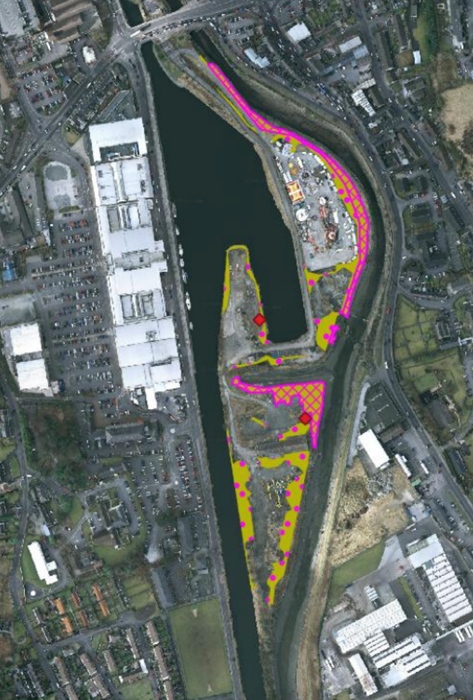
pink and Japanese Knotweed marked with a red dot.
The report explains that adhering to the 75% reduction has caused significant issues with control of weeds and invasive species on their properties, putting an increased pressure on manual resources who instead have to strim or hand weed etc, something they say stops grounds maintenance staff from doing other duties.
"There is an acute risk to the Newry City Park project at Albert Basin from the proliferation of Giant Hogweed. The amount of Hogweed has spread significantly since 2022. Ecologists have advised that the presence of Giant Hogweed could cause a significant constraint to the construction programme and have advised that management options are considered as quickly as possible to extend the treatment regime to prevent the plant going into seed this year, further exacerbating the problem."
Council have looked at other methods for treatment including flaming, acetic acid manual weeding but say these are more labour intensive.
The report explained "Officers are seeking approval for separate treatment of Giant Hogweed at Albert Basin under a targeted Invasive Species Management Plan to avoid potential delays to the Newry City Park project.
"It is proposed that during 2024 the Council will identify all areas affected by invasive species and put in place a Council wide Invasive Species Management Plan with estimated require volumes of herbicides containing glyphosate."
Pitted against each other
The Mournes Councillor Jill Truesdale said the reduction of glyphosate issue and the park "was a hard won battle by Alliance so to see them pitted against each other is disappointing" Newry City Councillor Doire Finn took exception to the remark saying "I think colleagues across the chamber and cross party can take credit for that".
Accusing the Council of letting the Albert Basin site decline for years, Cllr Truesdale said "the council have a social media post up at the minute, because this week is invasive species week, and it's commendable and it's very informative and it has links into report invasive species when you find them, but it fails to list letting a derelict site decline for years until the situation is out of control, which is what this looks like to me."
Speaking from experience she added "Giant hogweed is horrible stuff and even though I was brought up in the countryside, I knew to avoid it. Last year, I still burned my hand. It was a horrible burn and every time the sun shone on it, it would flare up again so I know how awful it is. But if this was passed in 2020 how has it been allowed to get out of control as the council have been a custodian of the site for decades."
Spread significantly
Conor Sage, Assistant Director, Sustainability replied "That area was treated in October 2023 or elements of it were treated in October 2023. I think due to the reduction we have it was probably more limited than it had been in the past. The consultant's report for the project has demonstrated that the amount of particularly Hogweed has spread significantly over that period of time, the last two years."
Risk to the Park?
Cllr Finn asked "In relation to the acute risk to the park project could you maybe explain just a little bit more on that and it is I suppose the eradication of the Giant Hogweed taking years. Is that something that we need to be concerned about in terms of the project moving forward, I suppose to get a better idea of the risk"
Mr Sage replied "the proliferation of the invasive species throughout the site, obviously that poses concerns to the contractor who's coming in, from an environmental point of view, they're going to have to look at the options for removal of the plants whenever the time comes and they mobilise onsite. The less of it we have on there, the more it is controlled, the less impact there will be financially on the project and on the programme, to actually go in and take it out.
"Removal and excavation of knotweed and hogweed is also quite an onerous process and it's treated as contaminated waste. It has to be removed by licensed contractors and disposed off in licensed facilities. I think that's really the pressure. The more of it there is, the the longer it's going to take and the more potentially it could cause a challenge in costings"
Difficult to control without glyphosate
The Mournes Councillor Henry Reilly explained "unless you have the option of glyphosate, it will be very, very difficult to control them. And it's very important for the public to know that there are millions of gallons of glyphosate used in the UK every year in the farming industry, and most people will recognise that you don't go into a field that's been sprayed with glyphosate for 24 hours and certainly any tests I was ever involved in my time in the department in the science service, there's virtually nill residue after 24 hours."
Councillor Willie Clarke added "We do have to get on top of this and I think the recommendation is a sensible way forward"
Following a show of hands a majority of Councillors agreed to accept the Council Officers recommendations to "approve the use of herbicides containing glyphosate for controlling invasive species at Albert Basin outside of the current allocation for normal weed control and the development of an Invasive Species Management Plan for the Council Estate."