Write a comment
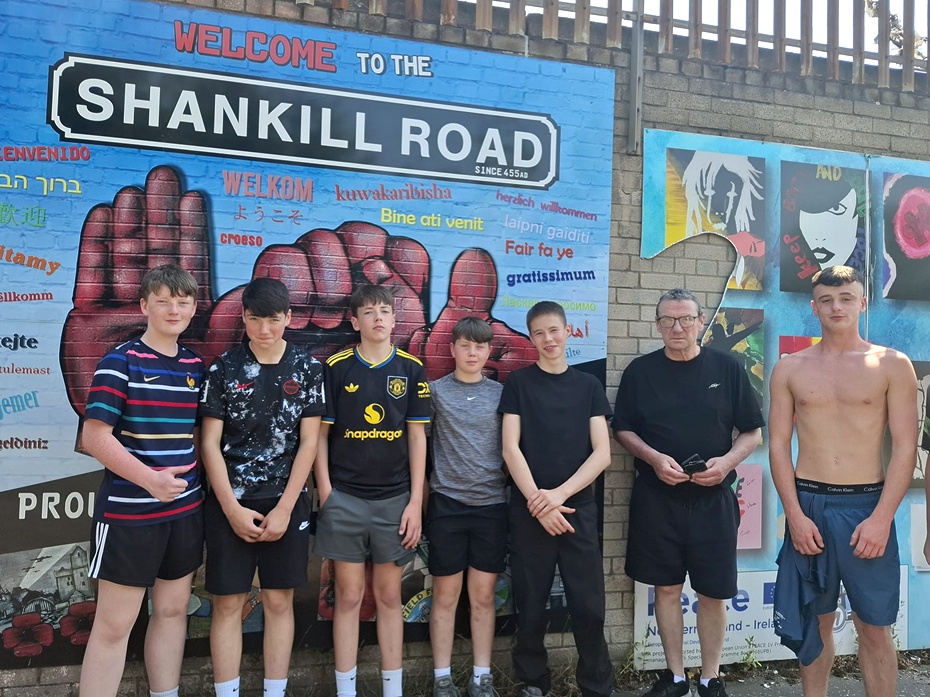
A group of young people from rural County Louth has travelled to Belfast to learn about the history of the conflict and how communities there are working towards peace and reconciliation. The visit was organised through the Community Restorative Justice Ireland Newry/Armagh PEACEPLUS Engagement, Wellbeing & Signposting Project, an initiative supported by PEACEPLUS, a programme managed by the Special EU Programmes Body (SEUPB).

John Connolly, Lead Coordinator with Community Restorative Justice Ireland Newry/Armagh, said the trip was a valuable experience for those taking part. "The Belfast visit was a really worthwhile experience for the young people. They got to see places they had heard about and learn about the history behind them. What was important for us was that the young people were able to see different aspects of Belfast and hear about different experiences. They were encouraged to ask questions and have open discussions about what they were seeing," he said.
During the visit, the group travelled through areas of West Belfast, taking in a number of significant locations including the Eileen Hickey Museum, Milltown Cemetery, memorial gardens, Bombay Street, murals and the Peace Walls. At the Eileen Hickey Museum, the young people were given a guided tour and saw a collection of material connected to the history of the period, with the opportunity to ask questions and discuss what they were seeing. At Milltown Cemetery, they learned about the history of the site and the many different people buried there, offering a further insight into the impact the conflict had on families and communities throughout Belfast.
Seeing the murals, memorial gardens and Peace Walls formed a significant part of the day, giving the young people an understanding of how the history of the conflict continues to be remembered within communities and reflected in the physical landscape of the city. Organisers were keen to stress that the visit was not intended to focus on one side of the city's history alone. Instead, the young people were encouraged to consider different aspects of that history and to recognise that people from different communities carry different experiences, memories and perspectives. For many, it was their first time seeing the Peace Walls, murals and memorials in person, giving them the chance to ask questions and form their own understanding of what they encountered.
Connolly added that taking young people out of their own communities and offering experiences of this kind is an important part of the project. "Taking young people out of their own communities and giving them opportunities like this is a big part of the project. It helps build confidence and gives them the chance to learn about history and peace in a way that is much more real than simply reading about it," he said.
The Belfast trip forms part of a wider programme of activities being delivered through the PEACEPLUS project, which aims to engage young people living in rural County Louth, improve wellbeing, build confidence and provide opportunities to learn, develop new experiences and gain a better understanding of the communities and society around them. Community Restorative Justice Ireland Newry/Armagh will continue to deliver activities and opportunities for young people throughout rural County Louth as part of the project.