
 Write a comment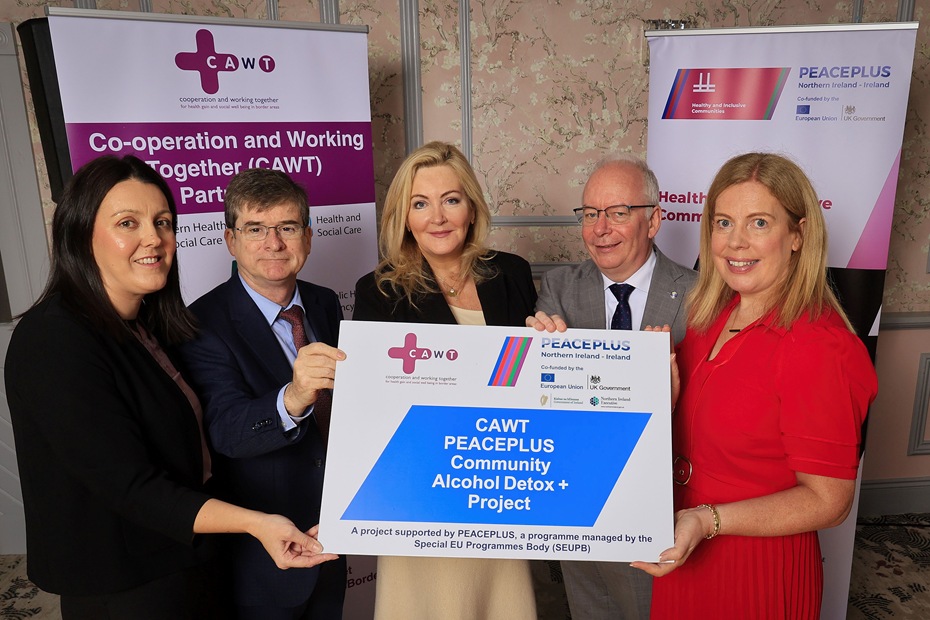
A new €8 million cross-border project has been launched in Monaghan to support 1,000 people impacted by alcohol dependence and their families across the border counties.


The Community Alcohol Detox + Project (CAD+), led by the Co-operation and Working Together (CAWT) Partnership, will offer home and community-based alcohol detox programmes to those assessed as ready to detox, followed by post-detox community-led support. A harm reduction programme will also be offered to those not yet ready for detox through alternative community-based programmes.

The project is supported by PEACEPLUS, a programme managed by the Special EU Programmes Body (SEUPB), and involves five partner organisations working with community and voluntary sector organisations. It aims to improve health and wellbeing, provide wraparound and aftercare support and education, and offer tailored support to help address broader societal issues.
Health Minister Mike Nesbitt MLA said: "The Community Alcohol Detox+ project aligns with a key aim of my Department which is to help reduce the harms to individuals, families and communities caused by substance use."
Through a cross-border collaborative approach, CAD+ offers a unique opportunity for both jurisdictions to share and co-operate in enhancing existing addiction services in the Western and Southern Health and Social Care Trust areas and in the HSE border counties.
Minister for Public Health, Wellbeing and the National Drugs Strategy, Jennifer Murnane O'Connor TD said: "Addiction continues to have negative impacts on people, families and communities, so I am delighted to support the launch of the Community Alcohol Detox + project (CAD+) as part of the PEACEPLUS programme."
SEUPB Chief Executive Gina McIntyre said: "CAD+ will meet a key PEACEPLUS target by addressing the socioeconomic issues that continue to undermine the health and well-being of our citizens in Northern Ireland and border counties of Ireland."
It is anticipated the project will lead to a reduction in the number of inpatient detox and alcohol-related hospital admissions, and help prevent unnecessary repeated referrals between addiction and mental health services.