
 Write a comment
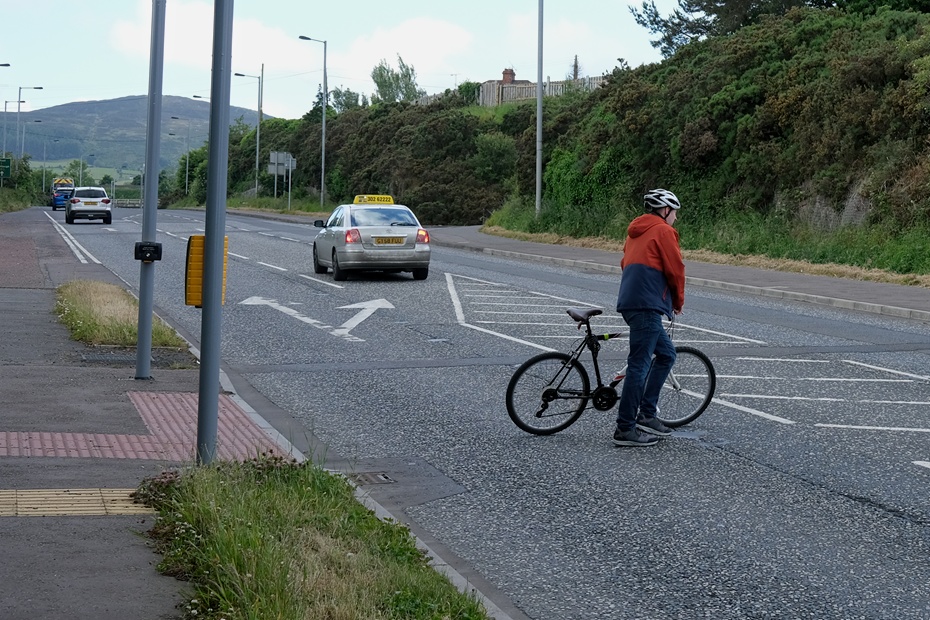
Infrastructure Minister Liz Kimmins has set out her Department's plans to encourage walking, wheeling and cycling in towns and cities in the north by making them the easiest and most enjoyable travel option for shorter journeys within our towns and cities.
ADVERTISEMENT

The plan entitled “Everyday Active Travel: The Urban Delivery Plan” outlines the Department's plans to deliver improvements for pedestrians and cyclists within urban towns and cities over the next decade and beyond. Newry features in the plan with the four priority routes detailed below. It also includes priority routes in Warrenpoint, Downpatrick and Newcastle with future routes in Kilkeel planned.
The Warrenpoint route will link the Narrow Water Bridge with Warrenpoint town centre - From A2 Warrenpoint Road/Mound Road Rounabout to Church Street via Newry Road, Meeting Street and Charlotte Street.
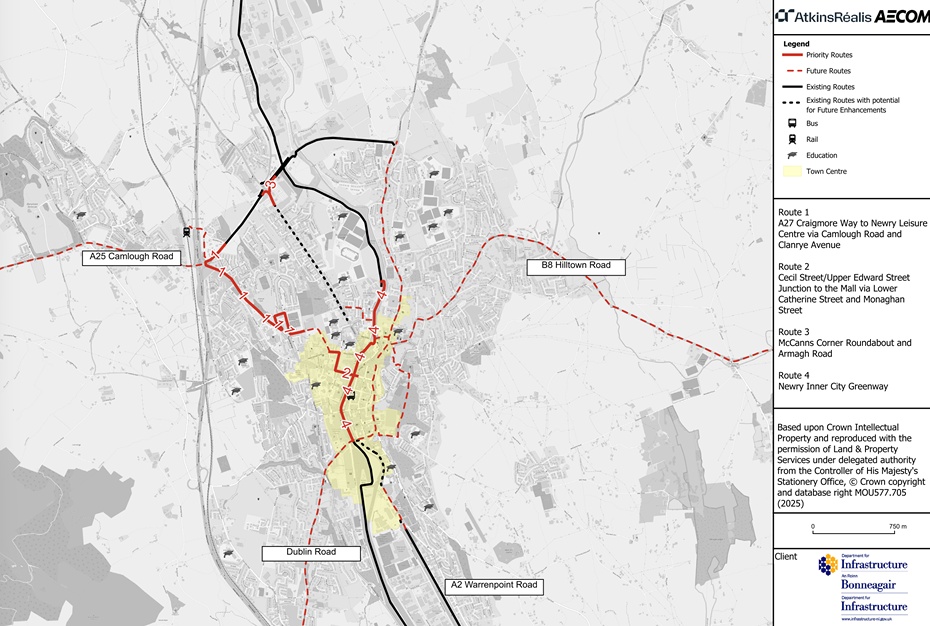
Route 1 - A27 Craigmore Way to Newry Leisure Centre via Camlough Road and Clanrye Avenue
This is one of the more unusual options continuing the current route on Craigmore Way up to Camlough Road Roundabout and down the Camlough Road towards Newry before veering left down Pig Hall Loanan, Helen's Terrace and Clanrye Avenue.
Route 2 - Cecil Street/Upper Edward Street Junction to the Mall via Lower Catherine Street and Monaghan Street
This route is a continuation of route 1 but starting at the Cecil Street/ Upper Edward Street Junction and ending at The Mall/ Bus station and directly on to the Newry Inner City Greenway (route 4)
Route 3 - McCanns Corner Roundabout and Armagh Road
This is the least ambitious of the four but concentrates on safer negotiation of the Fiveways roundabout from the Carnbane Way, Craigmore Way or Armagh Road. Sadly the current cycle route on the Armagh Road from Fiveways to Barrack Street which is in serious need of upgrade and safety improvements isn't included in priority plans but rather it has 'potential for future enhancements'.
Route 4 - Newry Inner City Greenway
This route will be the biggest game-changer in the city and is currently being forwarded. It will link the Newry Canal Towpath through the city to the Carlingford Lough Greenway.
In addition to the four routes above other areas are marked as 'future routes' or 'Existing routes with potential for future enhancement'. The timetable for priority routes is 0-10 years while timetable for future routes is 10+ years!
The Plan identifies over 140 kilometres of priority routes to be delivered throughout the north in the next 10 years, connecting over 280,000 people to key everyday destinations including 118 schools, 33 town centres and 17 public transport hubs. The priority programme represents investment of between £140 million and £280 million, based on the current estimated average cost per kilometre of delivering high-quality active travel infrastructure.
The Plan also identifies almost 1,000 kilometres of additional corridors for future delivery beyond the priority programme, providing planners and developers with a long-term vision for a more sustainable transport network within our towns and cities. Development of these routes over time will deliver an increasingly connected network, allowing active travel to become a serious practical alternative to the private car for many shorter journeys.
The design of schemes within the Plan will be people-centred, with the aim of creating places that are welcoming and accessible to all and will focus on the provision of high-quality infrastructure, appropriate to the situation, with safety at its heart.
Stakeholder and community support is critical to delivering successful active travel schemes. As each scheme is developed the DfI emphasise that meaningful engagement with communities will help identify local needs, highlight potential challenges, and ensure that the schemes brought forward are well used and valued.
Commenting on the publication of the Plan, Minister Kimmins said: “Walking, wheeling, and cycling are great ways to incorporate physical activity into our daily lives, and getting out in the open air is good for our general wellbeing too. By investing in cleaner and greener transport options, we can create healthier, safer, and more vibrant communities, where everyone’s journey matters.
“Achieving this will take time but by getting the infrastructure right and investing appropriately, I believe that we can deliver a better, more sustainable future for all.
“Public engagement has played a significant role in shaping this Plan. Consultation has shown strong support for prioritising connections to schools, town centres, and public transport, as well as clear endorsement of our people centred and safety focused design principles. Valuable local knowledge has also helped to shape the routes included in this plan and will help to ensure that the schemes we bring forward for delivery in the coming years meet the needs of local communities.
“While this a Plan for urban settlements, I am also committed to making active travel in our rural towns and villages more attractive and accessible and will ensure that a fair allocation of active travel funding is directed towards pedestrian enhancements for the benefit of rural communities.”
Everyday Active Travel: The Urban Delivery Plan is available to view at www.infrastructure-ni.gov.uk with Newry, Mourne and Down District Council area detailed.