
 Write a comment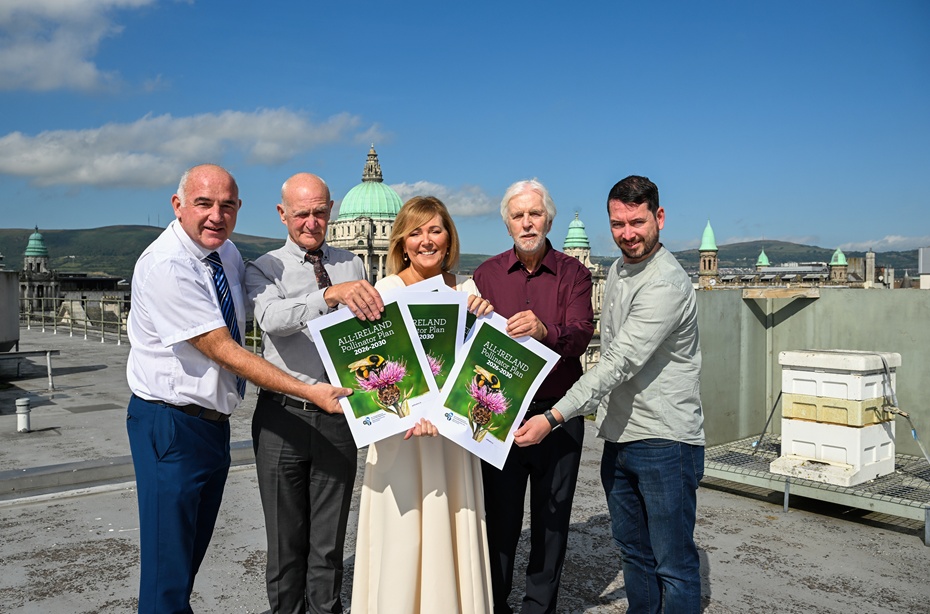
The Housing Executive has signed up to the All-Ireland Pollinator Plan 2026-2030, demonstrating its commitment to protecting and enhancing biodiversity in the north. The plan, implemented in 2015, is coordinated by the National Biodiversity Data Centre and is supported by 129 partners including councils, public bodies, businesses and landowners on the island of Ireland.
In line with the plan's vision to create a landscape where pollinators can find food and shelter every 200 metres, the Housing Executive's Grounds Maintenance teams have been adopting pollinator-friendly management of its sites to create a more climate resilient environment. As part of the Housing Executive's Corporate Sustainable Development Strategy and Action Plan, Grounds Maintenance teams are transforming how they work with green spaces to enhance local biodiversity and improve declining ecosystems.

Working in a way that is more nature positive includes reducing mowing in selected areas to support pollinators, identifying grasslands for wildflower meadows and planting 7,000 trees annually to create and enhance habitats for native species. It also includes protecting waterways by treating weeds and moss with non-chemical methods, and identifying land for Sustainable Urban Drainage Systems, helping to reduce surface water flooding and improve water quality.
Jennifer Hawthorne, Director of Housing Services at the Housing Executive, welcomed the announcement. She said, "We are delighted to become an official partner of the All-Ireland Pollinator Plan 2026-2030. After recently adopting new nature positive strategies, this partnership showcases our commitment to improving the ecosystems and natural environment around us, essential for the pollinators that we all depend on." Hawthorne said, "Through effective Grounds Maintenance management, we are protecting and creating habitat dense grasslands and planting thousands of native trees. Specific hedge cutting maintenance is also protecting and creating wildlife corridors, while manual weed control treatment is reducing harmful chemicals entering our water courses." She added, "All these actions are beginning to make a real difference to our pollinator population. It will be exciting to see this work enhanced through the All-Ireland Pollinator Plan as we all come together to make our communities a place where our pollinators can thrive."