Write a comment
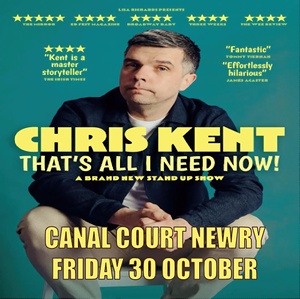
A former Gaelic footballer from Burren who had to have a pacemaker fitted at just 20 years of age is encouraging others to take part in a charity walking challenge after discovering how the simple act of walking has transformed her physical and mental health following her heart condition diagnosis.
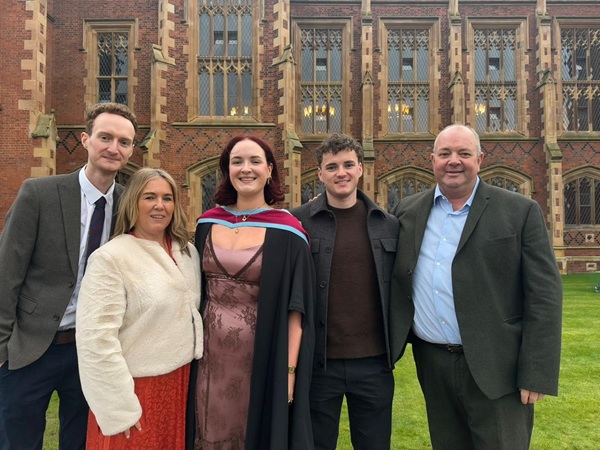
Health. She is pictured with her family on graduation day.
Caoimhe Loughran was fit and active throughout her youth, playing Gaelic football and basketball to a high standard and training every night of the week for multiple teams. But at 17, things started to change when she began suffering from exhaustion and a fast heart rate, feeling as though her heart was pounding through her chest. People started commenting on how pale she looked and how dark her eyes were, but no one could understand why she simply wasn't well.
The now 23-year-old admits it was a difficult journey at the start as she felt she was being ignored. "I did have quite a long battle with trying to get heard unfortunately, I do feel I was dismissed for being a woman with the belief that my symptoms were down to my menstrual cycle or the pill," she said. "I was told I had anxiety on numerous occasions as well. It was all just quite difficult to navigate to be honest, and I just felt like no one was listening to me."
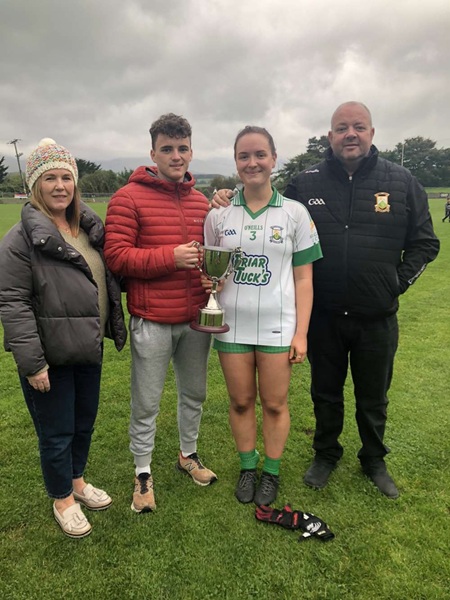
Mary’s Burren GAA
When Caoimhe was 17, the palpitations started to get much worse and more frequent. She had to stop playing sport and was put on medication including beta blockers, with heart monitors picking up extra heartbeats. But when her GP referred her to a cardiologist, there was a long wait. The Covid pandemic in 2020 certainly, she believes, stalled her diagnosis.
Caoimhe had also just started university studying nutrition, bringing added pressure to her life. "For the first two years I was not 100 per cent. I was medicated, and I was just struggling to live a normal life like all my friends who were happy and healthy," she said. "I had stopped all my sports and was becoming less and less active. I just knew I was unwell."
In September 2022, during the first week of her placement year, Caoimhe collapsed at work, completely passing out and breaking her glasses, losing a tooth and getting a bulge on her head. It was then that her doctor decided to fit an Implantable Loop Recorder to see what was happening and possibly get a diagnosis. She remembers being told not to worry and that she'd have it removed in three years with nothing happening and no need for any other device.
However, just two months later in December, episodes in her sleep forced Caoimhe to have a pacemaker implanted. "I was sleeping one night and my heart was stopping in my sleep. I remember when I woke up the next morning, I had loads of phone calls from the hospital saying you need to come in right away," she explained.
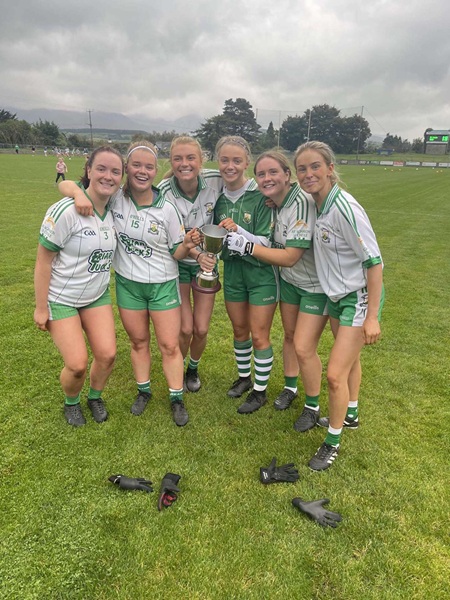
St Mary’s Burren GAA
Caoimhe had been diagnosed with Heart Block. The heartbeat would generate from the top but when it got sent to the bottom it wouldn't fire back up, creating a break in the circuit with pauses between beating. "When I was sleeping that particular night it was getting progressively longer, the first pause was maybe four seconds, and then the next pause was like 11 seconds and then the next 20 seconds," she said.
Doctors theorised that if they didn't intervene, she probably would end up just not waking up as it could potentially pause too long and not start beating again. "That was obviously very difficult to hear, I mean at that time I was only 20, it just was crazy. You never really expect anything like that to happen, especially when you are so young," Caoimhe said.
She was diagnosed with a condition called Sick Sinus Syndrome or Sinus Node Disfunction. The MRI showed that structurally her heart was normal with no scarring, but electrically her heart was all over the place. "When I was told I had to have a pacemaker I just felt so vulnerable to be honest," she admitted.
The Co Down woman always felt pacemakers were for older people and was naturally greatly concerned for her future. "It's quite a heavy thing to be told when you're so young and have lived a generally normal and healthy life until that point," she stressed. "I was given a British Heart Foundation book 'Living with a Pacemaker,' and I remember on the front was a gorgeous elderly lady, and I just felt like an alien."

fitted at just 20 years of age.
That whole month of December in hospital was very difficult as she was on a ward with elderly people. "I was very angry at that time, why is it happening to me. I'm so young," she said. Caoimhe got her pacemaker put in on 22 December and was discharged on Christmas Eve 2022 after 13 days in hospital. "It really was the worst time of my life, I was so low, even when I got discharged, I was very depressed. I had so many questions about my future and children that I would love to have in the future."
Throughout her cardiac journey, Caoimhe's family have been a great support mechanism. She credits her mother, father, siblings and boyfriend for giving her the strength to have a positive outlook on life. She's no longer on medication and simply has an annual check-up with her consultant. While team sports are no longer possible as she was told contact sports would not be viable with her device, Caoimhe is enjoying still being active by walking and cycling.
"I still have a small bout of symptoms occasionally, but I have to say ever since I got the pacemaker implanted my quality of life has drastically improved," she said. "I'm not doing my sports unfortunately. So that side of my life is gone, but I love walking, cycling and things like that. I have thought about coaching, that's something I'd love to do."
Graduating in summer 2024 was a milestone as Caoimhe was asked to give the student speech at her graduation ceremony. "It was such a proud moment for me not only to be graduating but just thinking that I could have died the year before," she said. She continued to throw herself into her studies and completed her Masters in December in public health, specialising in heart health, directly because of everything she had been through.
"I am so committed to make a positive difference with research, evidence-based recommendations and guidelines, always just having the patient at the centre of the service and the work is something that I feel so strongly about. I'm trying to look at it that this was always supposed to be my path, and I'm up for it," Caoimhe added.
Now 23, Caoimhe wants to turn her experience into a positive and help others. Ahead of Heart Month in February, she is encouraging people to sign up to the British Heart Foundation's Walk for Hearts. "I felt really alone at the start of my heart disease journey. When I saw the Walk for Hearts event on social media, it immediately spoke to me," she said. "It gave me the chance to raise money for life-saving research while also helping my own physical and mental health."
For Caoimhe, it was also about taking back some control. "Getting diagnosed so young felt like my whole life was out of my hands but signing up to Walk for Hearts was the first time I chose to do something positive with my condition," she explained. "When I connected with the online community, I realised I wasn't alone, there were others walking for their own reasons, whether in memory of loved ones or because of their lived experience. There was power in that."
Caoimhe said walking opened up conversations in her community about heart disease, which felt really important. "What really kept me going was reminding myself why I was doing it. Every mile meant more funds for research that can change lives, just like mine has been changed. Even with a pacemaker, I feel lucky to be here. I've survived and taking part in this challenge is my way of celebrating that."
Fearghal McKinney, Head of British Heart Foundation Northern Ireland, said walking is a great way for everyone to weave exercise into their daily routines and help look after their cardiovascular health, especially during the winter months. "If you are one of the 230,000 people in Northern Ireland living with cardiovascular disease and you are able to exercise, walking could be especially helpful, as it is low impact and you can build up slowly at a pace that's suitable for you. However, it's important to speak with your own doctor for personalised advice," he said.
This Heart Month, the British Heart Foundation is encouraging everyone to take part in their Walk for Hearts fundraising challenge, to walk 28, 50 or 100 miles during February. Participants can sign up from now until 14 February. To find out more, visit bhf.org.uk/walkforhearts