Write a comment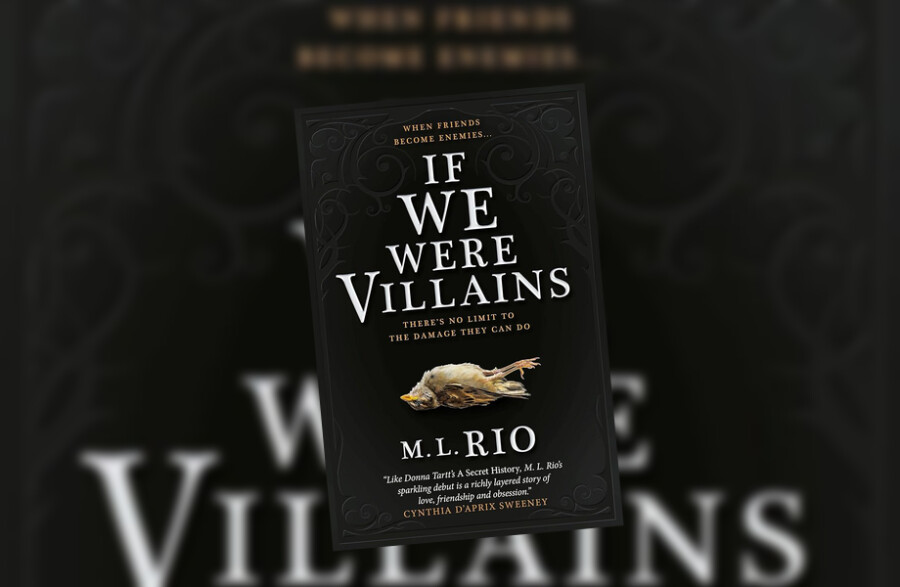
‘Once upon a time, us. We did wicked things, but they were necessary too - or so it seemed’.

Dear Reader,
In the words of Lady Macbeth, “screw your courage to the sticking place”, for If We Were Villains might just chill you to the bone.
This book was utterly Shakespearean, in all the best ways. It made quite the bubbling cauldron, with a pinch of Gossip Girl, a dash of Sherlock Holmes and a gigantic portion of theatrical tragedy. Welcome, dear reader, to a world of dark academia, beautiful autumn ambiance and a seriously intriguing mystery that borrows from the stage.
At the Waterstones book circle, the September selection was appointed by a voting system. Our little democracy then gathered together with steaming cups of tea and some pumpkin-coloured French Fancies - Mr Kipling’s finest. The traybakes were indeed sweet and the environment cosy. At this point the alignment ends- because If We Were Villains draws forth a discussion of rather unsavoury sorts.
We meet Oliver Marks at the end of his decade long sentence, for murder. One he may or may not be responsible for taking part in, one ill-boding night in 1997. The circumstances of the murder are vague, to say the least. When Oliver is finally persuaded to reveal his true testimony, we are transported back in time to The Dellecher Classical Conservatory- an elite university for the most dedicate disciples of William Shakespeare. This old fashioned, red bricked structure is a living theatre of sorts. In the ‘tower’ our troupe of seven, act out a strange amalgamation of real life and Shakespearean stage politics.
Their personalities are formed and usurped by the characters of the plays, with the sweet Wren, vengeful Alexander and seemingly ‘expendable’ Filippa falling into the actual role of supporting cast. A strong sense of contention is born between Meredith, James and the disturbingly tyrannical Richard. Whilst Oliver- our plays ‘sidekick’- appears to take the role of passive narrator, until he himself becomes deeply immersed. Together, these players embody a serious degree of “misshapen chaos of well seeming forms” (Romeo and Juliet).
The students live betwixt and between fiction and reality, with secret invitations and improvised night time performances (which this Book Bee would love an invitation to). From the very outset Oliver questions “whether art was imitating life or if it was the other way around”. Indeed, Rio shatters the theatrical Fourth wall- a conceptual barrier between any fictional world and reality (Oxford English dictionary). The resultant psychology is dangerous, explosive and eventually deadly.
If We Were Villains is a clever story, exposing what happens when intense academic pressure is mixed with personal rivalries, a cult-like environment and an abundance of substance misuse. It is toxicity at its finest, and most elaborate.
Now, if you found the teeny-weeny snippets of Shakespeare in this review at all irritating or pretentious, firstly I do not apologise, they were great craic to write. If you really hated them then this book may not be for you. Shakespeare’s dialect does act as somewhat a second language to the characters. So, prepare yourself for that, “and once more unto the breach, dear friends” (Henry V). I would say that if you have mixed feelings on our iconic playwright, don’t let that deter you. The modern-day aspect of the drama is great.
Read if you love a good theatrical tragedy and would enjoy a morally grey mystery, with a serious amount of flair.
For this Book Bee I feel it would be doing the book a disservice to give it any less than a four out of five-honey pot rating. It was addictive, indulgent and reminiscent of all the hot-headed passion and compulsiveness of a Shakespeare play.
Personally, I loved it! Although it’s possible that I’ve just been as effectively indoctrinated as the characters.
Here is how some of our resident book clubbers summarised the book:
Emma Grealish- ‘A love between two people that stopped before the relationship could start’.
Joanne Glymond - ‘A fun book exploring the cost of self-fulfilling prophecies and the length you would go to for what and who you love’.
Catherine McCardle - ‘An exciting escape into a world of drama, and the drama keeps on giving’.