
 Write a comment
A total of £291.3million in Direct Payments has been issued to 98% of Northern Ireland farmers today 1 September, providing a much needed boost to farming families and the rural economy in this very challenging year.
Dr Jason Foy, Head of Area-based Schemes Division, said: "I am pleased to announce another record payment performance for DAERA, with £291.3million having issued to 23,420 farmers (98% of eligible applicants) on 1st September. Payments have commenced six weeks ahead of the traditional October date again this year, to help farm businesses who rely heavily on this vital annual payment."
Dr Foy continued: "Despite challenging budgetary pressures, a linear increase of 2.32% has been applied to the Basic Payment Scheme payments in 2023. This increase in funding will be welcomed by farmers."
Annual funding for agricultural support in Northern Ireland has been guaranteed by the Treasury until the end of this Parliament. Within the available budget, it has been possible to apply an increase of 2.32% to the value of BPS entitlements in 2023. This one-off increase applies to 2023 payments only and equates to an average of approximately £250 extra for each farmer. Depending on the size of their claim, some farmers will receive more than this amount and some farmers will receive less.
Payments will continue to be released following successful validation checks for the small number of remaining applications. Farm Businesses are reminded that, to ensure prompt payment, they should check that their contact details and BACS information are up to date.
For 2023, payment letters will be issued via the DAERA Messaging Service. However, if an agent completed the Single Application on behalf of the Farm Business, the payment letter will be issued by post for the 2023 scheme year.
DAERA Messaging Service is a secure way for DAERA to communicate with our customers, who will receive a notification email with a link to the 2023 Single Application Payment Letter in the DAERA Customer Portal. The DAERA Customer Portal can be accessed by completing a verification process using Government Gateway/ NI Direct Account credentials.
As DAERA continues on its move towards a more modern digital service, there will be an increase in the use of the DAERA Messaging Service as a tool for communication with customers. In the case of multi-member businesses, DAERA would encourage all business members to register with an NI Direct Account to enable businesses to make full use this service.
1 Comment
Visitors from across the dairy sector and beyond gathered in Bessbrook outside Newry to receive a guided tour from Darren McCormick of his dairy farm and hear about the measures Darren is taking to farm more sustainably.
The farm visit took place as part of the EU Sustainable Dairy Programme which is a multi-country European Milk Forum initiative with the aim of highlighting the positive role of the dairy sector for climate action and the environment and facilitating the knowledge transfer between the member countries.
Attendees heard about the various research programmes that the McCormick farm has participated in including the Carbon Audit Pilot Programme, which Darren was one of the first 50 farms in Northern Ireland to take part in. The programme involved the collection of data to determine the farm’s carbon emissions and is an important step in the sector’s obligation to meet targets under the Climate Change Act. Visitors had the opportunity to put questions to Darren and received a guided tour of the farm.
Darren said: “The main focus on our farm is producing high-quality milk, and as the fourth generation on the farm, it’s important to safeguard the land for future generations, including my own children. We recently took part in the Carbon Audit Programme and the Soil Nutrient Health scheme, the data from which has informed our on-farm practices with regards to nutrient management and is guiding us in implementing mitigation measures to lower our carbon footprint.
“Looking to the future we’re planning to invest in solar panels to power the farm through renewable energy and we’re exploring opportunities to use digital technology to monitor and manage herd performance.”
Ian Stevenson, Chief Executive of the Dairy Council NI commented: “The McCormick farm is an excellent case study showcasing the successful knowledge transfer partnerships in place between our dairy farmers and business development institutions such as CAFRE and DAERA. Working with scientists to inform their research and charting a path forward for the sector towards reducing emissions, increasing efficiency and building resilience is a central plank of the dairy industry sustainability journey.
“In addition to producing high quality, nutritious milk, Darren is lowering his emissions through calving at 2 years old, the use of Low Emission Slurry Spreading techniques, an efficient breeding programme and nutrient management.”
Darren farms in partnership with his parents Raymond and Elizabeth and is the fourth generation on the farm in Bessbrook, just north of Newry. Spanning over 200 acres including conacre, the farm contains a 2 hectares wetland which is home to a variety of local wildlife.
As part of the Soil Nutrient programme Darren received soil and LiDAR analysis of his farm and surrounding areas which detailed where the most likely nutrient run-off areas are. The analysis showed that Darren’s Ph, P, and K levels were optimal and to apply lime when required.
A contractor applies slurry by dribble bar and knowing the soil nutrient levels are optimal has allowed Darren to cut his artificial fertiliser usage by half – which has both economic and environmental benefits.
Fields are reseeded with a high sugar grass mix and he stitches nitrogen-fixing clover into his swards to feed the grasses and reduce the need for artificial fertilisers further.
The McCormicks rear their own replacement heifers with approximately 40 replacement heifers a year. Artificial insemination is used with sexed semen on the main herd.
To view the existing sustainability information from the dairy sector, visit the Dairy Council NI website www.dairycouncil.co.uk.
Write a comment
Two teams from a Crossmaglen school are competing for a place in the final of the ABP Angus Youth Challenge, a year-long agri-skills development programme for 14-15 year olds.
The teams from St Joseph’s High School, Crossmaglen are amongst the 31 school teams that took part in the semi final exhibition held in the Logan Hall, Balmoral Park last week. The teenagers had to pitch their ideas and knowledge of farming and beef production to a panel of judges in the hope of being one of four teams to make the final stage of the competition which is organised by the meat processor ABP and Certified Irish Angus. The Royal School, Armagh also took part.
Commenting on the event, George Mullan, Managing Director of ABP in Northern Ireland said, “We are delighted to see such a range of young people from all over the province taking part from both urban and rural communities. Our exhibition offers ambitious teenagers a chance to share their interests and views on agriculture and red meat production with us and other leading representatives of our industry.”

Those that get through to the final stage will win a mini herd of calves to rear and will be able to pocket the proceeds from their sale to ABP. One overall winning team will also win a further £1,000 cash prize for their school or club. As part of their finalist development programme, they will be challenged to work on research assignments relating to sustainability with the support of a CAFRE mentor and take part in an international study tour with ABP.
Certified Irish Angus Producer Group’s General Manager Charles Smith added, “alongside ABP, we are committed to developing the next generation of young people who want to work in agriculture and food. The ABP Angus Youth Challenge is supporting and promoting pathways into further education and employment in our sector. It highlights the various roles and opportunities that exist and it is helping raise the profile of this exciting career choice in schools.”
Awards were also presented to the outgoing Class of 2022 finalists. St. Killian’s College Carnlough were the Overall Winners and the recipients of £1,000 for their school. Runners up were Down High School and the Individual Achievement Award went to Orlagh Donaghy from St. Louis Grammar School Ballymena.
Write a comment
The Nuffield Farming Scholarships Trust have launched the new Nuffield Farming Next-Gen Nuffield Scholarship, which will be made available to young people aged 18-24. A pilot scheme for the programme will run in 2024 and be open to those in Northern Ireland with a demonstratable interest in the dairy industry.
Two successful applicants will be selected by the Northern Ireland Nuffield Farming Association to take part in a fully funded, 30-day dairy sector study programme in the UK. The programme aims to give young people the opportunity to develop their understanding of the industry while also building networks and future opportunities.
Applications for the Next-Gen Scholarship are open and will close on 31 January 2024. Interviews for shortlisted applicants will take place in early February 2024 and scholarship recipients will be announced by the end of that month.
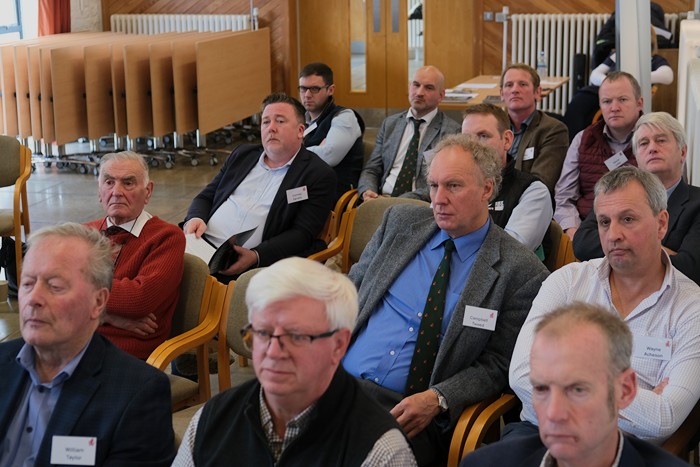
The study tour is supported by the Nuffield Farming Dairy Group and will provide an overview of the UK dairy industry and Nuffield Farming. Next-Gen Scholars will stay on dairy farms with Nuffield Scholars, join a dairy tour in North Wales, and visit more than ten other dairy businesses. They will also be assigned a mentor and give a presentation about their experiences at the 2024 Nuffield Farming Conference, which will be held in Belfast.
Following a successful pilot programme, the Next-Gen Scholarship will be made available to young people across the UK in a variety of sectors, with up to six Scholarships awarded each year.
“Our new Next-Gen Scholarships aim to develop young talent within the industry,” explains Rupert Alers-Hankey, Director Designate of the Nuffield Farming Scholarships Trust. “It is an exciting initiative for Nuffield Farming and forms an important part of our commitment to leading positive change in agriculture.
“We hope that taking part in the programme will enable young people to establish themselves in the industry, while also getting a flavour of all that Nuffield Farming has to offer. Launching our pilot programme in Northern Ireland is particularly special as the Nuffield Farming Conference returns to Belfast in 2024.”
The Nuffield Farming Scholarships Trust (NFST) provides funding to passionate people with the potential to make positive change in food, farming, horticulture and rural industries. The Trust offer two opportunities that are awarded annually.
Prospective applicants for the Nuffield Farming Next-Gen Scholarship can find out more about the process and start their application on the Nuffield Farming website
Write a comment
The Department of Agriculture, Environment and Rural Affairs (DAERA) have released results from the June 2023 Agricultural Census.
The statistics provide estimates of crop areas and numbers of livestock on active farm businesses on the survey date of 1 June 2023. In the main change in most areas has been slight with just poultry showing a marked increase with an alteration in animal health factors contributing to the change.
The statistics are compiled from a survey of farm businesses augmented by administrative data (source from the Animal Public Health Information System (APHIS), cattle tracing system). In response to COVID-19, the data collection for the Farm Census has moved entirely online since 2020. In 2023 the survey included- the addition of some questions modules to help answer specific policy queries. A large response was achieved from the online-only collection and focussed telephone follow-up. This has enabled detailed farm census statistics to be produced.
The main changes between June 2022 and June 2023 are:
Total area farmed: The total area farmed (excluding common land) was approximately one million hectares (1,042,318 hectares), similar to 1,043,270 hectares in 2022.
Cattle: Total cattle numbers have increased by less than 1% to 1,673,345. The number of both beef and dairy cows remained relatively consistent (236,082 beef and 319,346 dairy cows).
Sheep: There was a decrease of 2% in breeding ewes compared to 2022, with numbers decreasing to 973,718. Overall, the total number of sheep recorded was approximately 2 million, which was a 3% fall from June 2022.
Pigs: Total pig numbers recorded in June 2023 decreased by 85 to 682,339 compared to June 2022.
Poultry: Total poultry numbers on farms at June 2023 increased by 24% from 2022 levels with 25.6 million birds recorded. An alteration in animal health factors, which positively affected production, drove the change in the sector. Total number of laying birds saw an increase of 11% whilst broiler numbers increased by over 31% and other poultry by almost 294% compared to June 2022.
Crops: The total area of crops grown in Northern Ireland in 2023 was approximately 47,777 hectares, a decrease of less than 1% from 2022. The total area of cereals (31,803 hectares) grown in 2023 decreased by 3% from 2022. Wheat crops decreased by 45 to 8,309 hectares, Winter and Spring Barley decreased by just over 3% and 2% respectively, while Oats decreased by 3% from 2022, at 1,922 hectares.
Write a comment
The Dairy Council for Northern Ireland has launched a new Fact Book highlighting the role that data plays in dairy farming in helping the business become more efficient and sustainable. One of the farmers in the book is Bessbrook farmer Darren McCormick whose story highlights the work being done at farm level to tackle emissions.
The McCormick farm is approximately 200 acres, including conacre, and is situated at Kingsmill, Bessbrook. The farm includes around two acres of wetland which is home to a variety of local wildlife.
Darren’s case study focusses on his participation in the Carbon Benchmarking Programme and the Soil Nutrient Health Scheme and how the knowledge gained has contributed to his on-farm decision making.
In the past 33 years the carbon intensity of milk production has decreased from an average of 1,927 grams of CO2 equivalent per kilogram of Energy Corrected Milk (ECM) in 1990 to 1,214 grams in 2021, with milk production expanding by 92% in that time frame.
The publication centres around the theme ‘Data in Action’, highlighting the important role data plays across the dairy sector in making informed decisions to boost sustainability, lower emissions and improve efficiency. The drivers for collection and use of accurate data sets by supply chains have never been greater with legislative targets, customer requirements, formal business reporting, sustainable financing and progress by other market operators all coming into focus.
The Fact Book was produced as part of the EU Sustainable Dairy Campaign, a multi-country European Milk Forum promotion programme to highlight the positive role of the dairy sector for climate action and the environment.
Chief Executive of the Dairy Council NI Ian Stevenson commented “As we mark the end of the EU Sustainable Dairy programme with the launch of the sixth and final Sustainable Dairy Fact Book, we can reflect on the leadership and progress made to date and highlight the hard work and dedication of farmers and dairy processors in tackling climate change.
“Over the past six years, these publications have been a vehicle for sharing stories from across the dairy supply chain, profiling 12 local farmers, sharing initiatives from the three main dairy processing companies and featuring cutting-edge research and scientific knowledge from AFBI, CAFRE and DAERA.
“The outlook is positive for the future sustainability of the sector. Our farmers and processors are following evidence-based guidance from the Department and from knowledge and research institutions such as CAFRE and AFBI, investing in new technologies, dedicated sustainability resources and implementing new processes all with the aim of being more sustainable.
“However, as a sector we are aware of the challenges ahead in relation to achieving net zero and lowering emissions and funding support will be needed from government to drive enhanced investment in sustainability initiatives. There doesn’t need to be a trade-off, both sustainability and profitability should, and can, live in coexistence.”
The fact book spotlights the recent collaboration between DCNI and the RSPB on the publication of ‘A Short Guide to Nature Positive Dairy Farming’. This report is the first of its kind and provides a comprehensive roadmap towards nature friendly practices within the dairy sector.
One chapter outlines the success of the carbon modelling Arc Zero programme led by Professor John Gilliland OBE, which aims to measure and manage carbon flows at an individual farm level, improving efficiency and in turn profitability on farm.
The dairy sector in Northern Ireland makes a huge contribution to the local economy, worth almost £1.5 billion annually and sustaining the livelihoods of around 3,200 dairy farming families and over 2,200 employees of dairy processors around Northern Ireland, producing nutritious, high quality and affordable food with our farmers acting as custodians of the natural environment.
To view the 2023 Fact Book, visit the Dairy Council NI website www.dairycouncil.co.uk
Write a comment
Newly appointed DAERA Minister Andrew Muir has said he is committed to delivering across the full remit of his Department for the good of everyone in Northern Ireland.
Speaking during his first week in office at the Department of Agriculture, Environment and Rural Affairs, Minister Muir said: “DAERA has an extensive and diverse portfolio, which impacts upon us all, including responsibility for protecting and improving our natural environment; farming and food production; animal and plant health; fishing and forest regeneration. It also plays a crucial role in supporting our rural communities.
“I plan to focus on the full remit of the department, seeking to implement policies and strategies that benefit our climate and environment, while supporting our economically and socially significant agriculture, food and fisheries sectors alongside our important rural communities. I intend to listen to, engage and strive to work with stakeholders and partners in every part of Northern Ireland including North / South and East and West. Together, we can achieve a lot.”
Minister Muir said his immediate focus will be on working across government and with other partners to find appropriate responses to the immediate environmental and agricultural challenges we face.
He added “The situation we witnessed on Lough Neagh last summer is both a manifestation of those challenges and a reminder that we need to urgently deliver change. Whilst I am fully committed to protecting our environment and working across government, partner organisations and stakeholders to ensure our waterways are healthy for biodiversity, the public and for animals, it is clear that it will take many years, if not decades for the lough to improve and recover, there are no quick fixes here.
“We need to keep our focus on the longer term, ensuring that the Executive adopts policies and programmes needed to deliver the challenging targets for reducing carbon emissions that the law now requires. It is important that we all recognise climate change as a priority when allocating budgets.”
Minister Muir continued: “I also want to reassure our farming and fishing communities of my commitment to working with them as they take the steps needed to reduce their carbon footprint and supporting them to enhance the natural and marine environment that I know they care so deeply about. I passionately believe that, working in partnership, we can deliver real improvement while also promoting economic resilience, financial sustainability and a responsive supply chain. This sector is of paramount importance to our economy, food security and of course, will be critical in helping us to achieve our environmental obligations.
“There are so many other challenges that I know I will need to address, not least the devastating impact of bovine TB on our farms and economy.
“It is a privilege to take on this responsibility and I look forward to working with partners and stakeholders as well as the wider community as we together join in the goal of safeguarding our environment, addressing climate change and ensuring our economy can grow sustainably.”
Write a comment
Ulster Bank and the Royal Ulster Agricultural Society have kickstarted the countdown to the 155th Balmoral Show which this year takes place from 15-18 May at the Eikon Exhibition Centre.
Ulster Bank remain as principal sponsor of the show – marking a fifteen-year partnership between the organisations.
New attractions at this year’s Balmoral Show include a kids’ farm, a mini Land Rover experience and sheep dog trials sitting alongside the usual mix of livestock classes, food exhibitions and funfair attractions.
2024 will also see the introduction of a new Sustainability Village. As the agri community begins to farm more sustainably, the Sustainability Village will house a host of companies who have already made the switch and are working in areas such as renewable energy, efficient energy solutions, environmental causes and recycling and waste reduction. Ulster Bank colleagues will also be exhibiting in the space with information on Lombard, green finance propositions, and green mortgages.
Operations Director at the Royal Ulster Agricultural Society, Rhonda Geary, said the Sustainability Village was just one of a number of new initiatives visitors can expect at this year’s event.
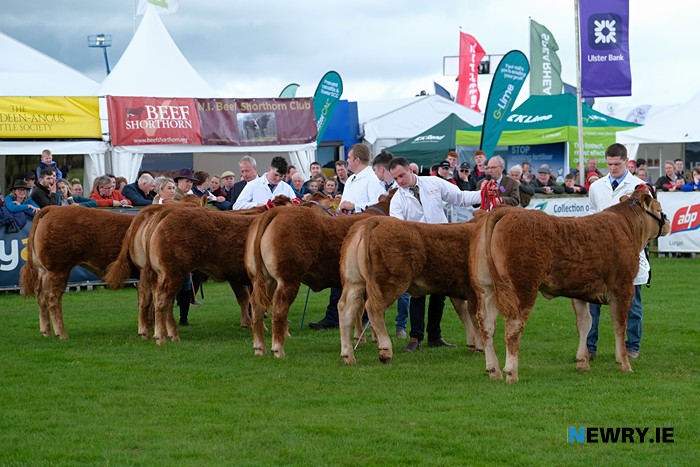
“With just four months to go until we open the gates at Balmoral Park, plans are already underway to deliver a truly world-class event and ensure that the 155th Balmoral Show is bigger and better than ever. We are particularly excited by the new Sustainability Village and the platform this will provide for companies to engage with visitors, farmers, and food producers, to showcase the opportunities that exist for businesses incorporating sustainability into their day-to-day operations.
“Thanks to the support from our principal partners at Ulster Bank, we have been able to add more exciting attractions to the programme and we are confident that we can build on previous events and put together four fantastic days of entertainment and enjoyment for the 110,000 visitors expected to attend the Balmoral Show.”
Mark Crimmins, Head of Ulster Bank, NI said he was looking forward to working with the RUAS once again to deliver this year’s Balmoral Show.
“2024 marks the fifteenth year of Ulster Bank’s title sponsorship of the Balmoral Show and we are proud of the role we have played in making this the biggest event in the Northern Ireland agri calendar.
“While the show represents a great day out and a fantastic showcase for agrifood firms, Ulster Bank’s support for this sector extends well beyond the four-day event. Year round, we support farming businesses and have a range of financial solutions to help them thrive. Our teams of Relationship Managers will be on the ground throughout the show to engage with farmers about how we can best help them meet their objectives and offer support through what is undoubtedly a challenging time for the sector.
“Through our parent bank NatWest, we have access to a wealth of knowledge and resources to help agrifood firms with all aspects of their everyday banking and encourage them to farm more sustainably, protecting this important industry for future generations.
“To this end, we are pleased to work with the RUAS in the development of the Sustainability Village and look forward to engaging with customers on how they can build more ambitious plans within this space.”
Early bird tickets for this year’s event are already available to purchase online and the details of livestock competition entries, show opening hours, and the full programme of events will be available on the Balmoral Show website
For more information about how Ulster Bank can support your business needs, visit www.ulsterbank.co.uk
Write a comment
The Department of Agriculture, Environment, and Rural Affairs Minister, Andrew Muir, has announced the opening of the £267 million Single Application and Map Service along with the Entitlements Transfer Service. These services are crucial for farm businesses, as they offer funding for Direct Payments, which serve as the primary source of income for many local farmers.
Minister Muir stated, "I am pleased to declare the commencement of the 2024 Single Application and Maps Service and the Entitlements Transfer Service. This substantial funding package, totaling £267 million, plays a vital role in supporting the resilience of farm businesses. It underscores our dedication to farming families and the rural economy throughout Northern Ireland."
Highlighting the importance of timely action, the Minister urged all farmers to apply early to avoid potential penalties.
The 2024 Single Application and Maps Service, and Entitlements Transfer Service applications can be submitted via DAERA’s Online Services starting from 1 March. To prevent late claim penalties, Single Applications must be submitted by 15 May, with the final submission deadline set for June 10. Entitlement Transfer applications must be submitted by 2 May.
The Single Application facilitates claims for various schemes including:
Farmers are encouraged to use the Single Application and Map Service to report any land changes in 2024 promptly to ensure timely payment processing.
For assistance with applications, farmers can reach out to DAERA’s Advisory Service helpline at 0300 200 7848 or email areabasedschemes@daera-ni.gov.uk. Additionally, a web-chat facility within the application provides instant advice during the application process.
Throughout the application period, farmers will receive DAERA Messaging to confirm the completion of their Single Application and Entitlement transfer submission, ensuring a secure, convenient, and environmentally friendly process.
Farmers are advised to regularly check their emails for communications from DAERA Area-based Schemes and ensure their registered email address is up to date. Registration for a DAERA online account is available at: DAERA Online Services.







 |
 |
 |