
 Write a comment
A €9 million funding initiative to support the development of the all-island bioeconomy in the agriculture and marine sectors has been jointly launched by DAERA Minister Andrew Muir and DAFM Minister Charles McConalogue.
The bioeconomy encompasses sectors that conserve, use, process, distribute or consume biological resources from land and sea including agriculture, horticulture, forestry, food processing, construction, packaging, chemicals and organic waste sectors and land and marine ecosystems.
Funding is composed of €7 million from the Irish Government’s Shared Island Initiative, £1.5 million from DAFM, and £0.5 million from DAERA.
As cross border collaboration is a key requirement for applicants under this funding opportunity, InterTrade Ireland is supporting both Departments to aid applicants with their partner search through offering an online partnering platform and supporting the hosting of in-person networking events.
The scheme will support the integration of bioeconomy innovation and solutions in the agriculture and marine sectors across both jurisdictions on the island of Ireland.
The Shared Island Bioeconomy Demonstration Initiative will advance sustainable opportunities on an all-island basis from biomass produced from both land and marine areas through the development of innovative, higher added value biobased products and solutions, with clear climate and environmental benefits.
DAERA Minister Muir, said: “I am pleased to welcome the opening of this call, which provides a great opportunity for innovators to cooperate with the aim of providing concrete and demonstrated examples of biobased innovation to help drive economic, environmental, and social benefits as well as support climate change mitigation and adaption.
“This initiative will provide an excellent opportunity to foster innovative collaborations which will be crucial in delivering climate action and supporting a greener economy through biobased solutions.”
Both jurisdictions on the island are facing similar climate and sustainability challenges, have similar agri-food, land use and marine activities, and stakeholders in these sectors have developed substantive cross-border collaborations. The initiative will support agri-bioeconomy innovation in Northern Ireland and blue bioeconomy innovation in Ireland with very significant cooperation and collaboration required and innovation and knowledge sharing expected in funded projects reflecting the ambitions of the Shared Island Initiative.
Minister McConalogue stated: “The bioeconomy has significant potential to improve the environmental, economic, and social sustainability of the agri-food and marine sector by offering diversification opportunities, new bio-based business products and value chains, while reducing the use of fossil-based inputs. This new Shared Island initiative provides significant funding for primary producers, businesses, and innovators to work together to demonstrate new scalable, commercial bioeconomy solutions for the agri-food and marine sectors across the island of Ireland.
“A key action in Ireland’s Bioeconomy Action Plan 2023-2025 is the development of pilot demonstration facilities so that we can move the wide range of opportunities developed through research and innovation into real world settings. This €9 million programme resourced through the Shared Island Initiative, my own Department and the Department of Agriculture, Environment and Rural Affairs Northern Ireland will be a crucial element in delivering on this and I encourage all stakeholders to consider the Call being opened today”, he added.
Applications must be submitted online through the DAFM Application Submission Portal at: dafm.flexigrant.com with a closing date of Friday 7 June 2024 12pm (noon). There is no facility for late applications.
Supported by InterTrade Ireland, call information sessions will be run by DAFM and DAERA and details on these events are provided on 22 March at Dundalk Institute of Technology and 19 April at AFBI Hillsborough.
Write a comment
Last week the Rural Health Partnership’s Toplink Farming Group travelled to the Phoenix Park Dublin to Áras an Uachtaráin, where they had the great privilege and honour of meeting the President of Ireland, Mr Michael D Higgins. The group were greeted at the Áras by staff of the President’s Office, and were treated to a lovely afternoon tea and a guided tour of the magnificent house and grounds. However the highlight of the day was meeting President Michael D Higgins. President Higgins personally greeted each one to the Áras, and after the official photographs he spent time chatting to the group about farming.
Speaking after the visit, Majella Gollogly Development Officer with the Rural Health Partnership said, “ We are absolutely thrilled and humbled that President Higgins, the President of Ireland made time in his schedule to meet our Toplink Farming Group. This has truly been a memorable day, and one that we will chat about for many months to come”
Before leaving and whilst having a group photograph taken in the beautiful gardens of the Áras the group members gave a great rendition of “The Boys from the County Armagh”
The 29th February 2024 will certainly go down as a special day in the calendar of the Rural Health Partnership when their Toplink Group met the “The Top Man” the President of Ireland, President Michael D Higgins,
Write a comment
Loughgilly man John Henning has been appointed the 37th President of the Royal Ulster Agricultural Society, (RUAS). John joined the Society as a member in 1979, was elected to Council in 1995 and has served on the Council Show Stewards, Sheep and Show Safety committees. He has also held the role of Chairman of the Cattle Committee and was elected twice as Chairman of the Winter Fair Committee.
Having stewarded at the Balmoral Show and Winter Fair on over 65 occasions, John's expertise in the ring has proved invaluable to the Society in recent years. The 2024 Balmoral Show will not only mark his first engagement as President of the RUAS, but also his 30th consecutive year as an exhibitor.
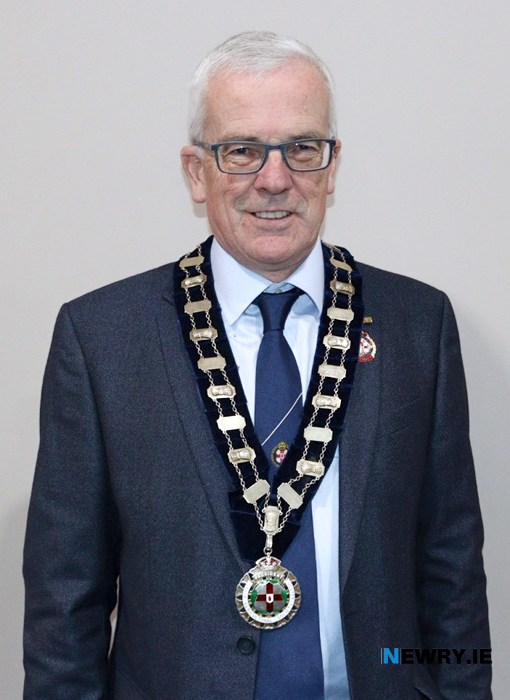
Originally from Loughgilly near Markethill, he grew up on a dairy farm and from here developed a passion for cattle. John alongside his wife and fellow Society member Ann, built their own herd of Aberdeen Angus cattle in Maghaberry which they show regularly.
From 1978 until 2016, John's name was synonymous with Danske Bank (formerly Northern Bank) particularly within the agribusiness division, and his career and voluntary roles have seen him meet industry leaders and producers from across the province.
Speaking about his appointment, John commented "It is a huge honour to be elected President of the Royal Ulster Agricultural Society. I attended my first Show almost sixty years ago and have been actively involved with the Society in various roles since 1979. It's a pleasure to succeed my good friend Mrs Christine Adams as President, and I look
forward to working with all the Council and staff as we celebrate 170 years of the RUAS. I cannot wait to welcome everyone to this year's Balmoral Show from Wednesday 15th to Saturday 18th May at the Eikon Exhibition Centre".
Write a comment
Rural communities in Northern Ireland are being encouraged to apply for a slice of the 50 million Euro Rural Regeneration and Social Inclusion Investment fund.
Upper Bann MP Carla Lockhart, who is the DUP's Environment, Food and Rural Affairs Westminster spokesperson, welcomed the PEACEPLUS funding programme announced by Stormont Agriculture Minister Andrew Muir.
The Rural Regeneration and Social Inclusion Programme aims to create a more cohesive society through an increased provision of shared space and services in rural areas. This will result in strategic investment, designed to allow rural communities to thrive and reach their full economic, social and environmental potential.
Aimed at social, economic and environmental projects Ms Lockhart said “I would encourage eligible organisations to submit an application. The EU-funded programme aims to create a more cohesive and inclusive society through the increased provision of shared space and services within rural areas.“As a result, rural communities will benefit from social enterprise, the development of green infrastructure, and increased tourism. Improved access to key services will also enhance health and wellbeing in rural areas.”
The PEACEPLUS programme is designed to support peace and prosperity across Northern Ireland and border counties, building on the work of the previous PEACE and INTERREG programmes.
On the opening of the scheme, Agriculture Minister Andrew Muir commented: “This funding focuses on social, economic and environmental projects which contribute to the creation of healthy and inclusive communities in rural areas. The programme will support rural community development, sustainable regeneration and social inclusion through improved access to key services, social enterprise development, development of green infrastructure to improve health and wellbeing, and rural and tourism enterprise to deliver significant and sustained contact between diverse rural communities.
“I am pleased my department is working in partnership with the Department of Rural and Community Development in the Republic of Ireland and the Special EU Programmes Body (SEUPB) in providing funding for this investment area under the PEACEPLUS programme. This partnership means we can achieve much more in terms of contribution to the creation of more resilient, vibrant and prosperous rural communities where people want to live, work, visit and invest.”
Further details are available on the peaceplussupport.seupb.eu website. The closing date for applications is 5.00pm on Thursday, 23rd May 2024.
Write a comment
The current wet weather may result in farmers needing additional cash to cope with the extended winter.
That was the message from Senior Agriculture Manager, Cormac McKervey, at an event hosted by Ulster Bank this week ahead of its principal sponsorship of this year’s Balmoral Show which returns to Balmoral Park in around 4 weeks’ time.
Members of the Guild of Agricultural Journalists and other stakeholders joined senior figures from within the bank for an update on a number of key issues facing the local agri-food sector and to learn more about Ulster Bank’s commitment to the industry.
Senior Agriculture Manager, Cormac McKervey, and Ulster Bank’s Chief Economist, Richard Ramsey, updated media, and other invited guests, on the overall health of the local food and farming sectors and provided an outlook on other related economic issues.
They were joined by Ulster Bank’s Head of NI, Mark Crimmins, who encouraged those in the audience to tap into the bank’s knowledge and connections to the agrifood sector and asked for their support as Ulster Bank plays a role in tackling climate change and grasping the opportunities presented by a new, greener economy.
During his opening remarks, Mr. Crimmins said: “The agri-food sector is a crucial component of our local economy and as such, we remain committed to supporting farmers in what has no doubt been a challenging period for them.”
Cormac McKervey, Senior Agriculture Manager, Ulster Bank, said: “12 months ago this sector was dealing with financial pressures brought about by rising input costs and falling milk prices. Despite some of the financial burdens easing, many farmers are still operating in challenging times particularly the weather.
“Continuous high rainfall throughout late 2023 and early 2024 has had a worrying impact and will cause difficulties for lambing and calving, for arable farmers trying to plant spring crops, and interrupt the fertilising schedule for those involved in silage production. All of this may cause cash flow issues and we will be engaging with those customers and identifying where we can provide additional support to alleviate some of the more upfront cost pressures.
“TB continues to be a major source of stress for the sector – both mentally and physically – and we would like to see the planning process improved to help with continuous investment in the sector.
“That said, there are shoots of optimism and it’s important that farmers don’t lose sight of opportunities. Land and livestock prices remain strong and stable and falling grain prices have helped farmers livestock farmers to maintain or increase their margins. It has been a difficult time for arable farmers with the double whammy of poor weather and lower prices. It’s encouraging to see so many farmers make use undertake the carbon audit and DAERA is doing a good job directing and supporting farmers along the path of transition. It’s also encouraging to learn that many of CAFRE’s agri courses are oversubscribed, ensuring a strong pipeline of farmers in the future.”
The gap between farmer borrowing and farmer deposits has closed over recent years. The debt level remains below £1bn for the 8th successive quarter while deposits are slightly over £600m. The bank remains keen to lend to the sector.
Slight fall in Ulster Fry Index but still second highest on record
After the sector update, Richard Ramsey presented his annual Ulster Bank Ulster Fry Index which indicates that the average price of all ingredients making up the traditional cooked breakfast plate decreased slightly in the 12 months to the end of February, following last year’s record rise.
Tea saw the biggest price increase in the index with a rise of 6% throughout the previous 12 months, however this was slightly offset for brew lovers with a 7.1% fall in milk prices. Rises were also recorded in pork sausages (2.5%) eggs (3.2%) and sliced loaf (1.4%)
Other items which have come down slightly in price since last year’s Index was released include bacon (-2.8%) butter (-7.6%) and coffee (-1%).
Overall, the Ulster Fry Index sits at just 0.9% lower than the 2023 figure which saw the highest increase recorded since Ulster Bank began tracking the index in 2007. The previous highest rise came in 2009, just after another recession and cost of living crisis.
Richard Ramsey says that while food inflation has eased slightly, it is still causing a real concern for households.
“We know that food makes up a significant proportion of household spending and is also one of our most important economic drivers in terms of the local food and drink industry. So, understanding how the price of these popular food items change offers a useful insight into the state of typical household finances and also the overall health of the agri-food industry.
“What the Ulster Fry Index is telling us is that while the price of everyday household essentials such as butter and milk have fallen, they are still a long way off their previous positions, and this is continuing to put a squeeze on consumer spending powers.
“While it may appear to be good news initially, the reality is that many of these price decreases are too small and insignificant to fully register at the checkout and it’s clear that many households are still struggling to contend with ongoing cost pressures on what would be considered as basic, everyday household items.
Write a comment
Agriculture Minister Andrew Muir MLA, has announced payments totalling £9.4m to Environmental Farming Scheme (EFS) participants have begun.
Minister Muir said: “I’m delighted to say that 93% of claims for the 2023 EFS payments were made yesterday. The remaining claims will be processed and paid as soon as possible. This additional £9m brings the total amount paid through EFS since 2018 to support biodiversity, water quality and climate mitigation to £66m.
“As a result of this scheme, over 58,000 hectares of key priority habitats are favourably managed, and over the last six years, 1000 km of hedges have been planted or enhanced, 2,700 km of waterways protected and half a million trees planted.
“I am determined to support our farmers and the wider agriculture industry and this scheme is a great example of how we can work together to help each other deliver and implement a range of environmental measures and sustainable farming practices to improve biodiversity, water quality and respond to climate change.”
In addition, EFS claims for 2024 can now be submitted. Claims are submitted using the DAERA Single Application and Maps Service, which opened on 9 April 2024 for most agreement holders. Some businesses will need to wait until 29 April 2024 to submit a claim as their agreements are being updated after they made a claim reduction, or after an inspection.
EFS participants must submit a claim each year on their Single Application. Capital items such as fencing must be completed and claimed for in year 1, and the amount maintained must be also claimed in years 2 to 5. Participants are encouraged to complete work as soon as possible as extensions cannot be granted for poor weather.
Online training is now available for EFS Agreement Holders whose agreements started on 1 January this year. The training is compulsory and must be completed by 30 November 2024. Information on how to complete online training is available at: www.daera-ni.gov.uk/publications/online-training-efs-agreements-guidance-documents.
Those submitting a year 1 claim are reminded that a compulsory Claim Confirmation will be required in December this year. This allows EFS agreement holders to make reductions to the amount claimed on the Single Application where necessary, or to confirm that all the work claimed for in the spring has been completed.
As EFS is a five-year agreement, work claimed and paid on must remain available for inspection at any time during this period. Failure to comply with the terms and conditions of the scheme may lead to penalties and recovery of any payments made.
Write a comment
Agriculture Minister Andrew Muir is urging Farm Businesses who have not yet submitted their 2024 Single applications to take action before midnight on Wednesday 15 May.
Minister Muir said: “Submitting a Single Application is one of the most important tasks for farmers each year. To date, over 14,000 farm businesses have completed their submission in 2024 and I would encourage the remaining farmers to complete their application without delay. The online application service is available 24 hours a day, 7 days a week.
“Completing applications before the 15 May deadline will avoid late claim penalties and allow my Department to issue prompt payments from 2 September.”
Farm businesses that have not yet applied are urged to do so now to avoid late claim penalties and to allow enough time to check that their information is accurate.
Applications submitted between 16 May and 10 June will incur financial penalties.
The Single Application is used to claim any of the following schemes:
Basic Payment Scheme (BPS)
Young Farmers’ Payment (YFP)
Regional Reserve Entitlement allocation or top up (as a Young Farmer or New Entrant)
Environmental Farming Scheme (EFS)
Farm Woodland Premium Scheme (FWPS)
Farm Woodland Scheme (FWS)
Forest Expansion Scheme (Annual Premia)
Small Woodland Grant Scheme (SWGS), or
Protein Crop Scheme
Farmers should also use the Single Application and Map Service to notify DAERA of any changes to their land in 2024.
Single Application should be submitted via DAERA’s Online Services at: www.daera-ni.gov.uk
Information and guidance are also available at: area-based-schemes
Farm businesses will receive a DAERA message to confirm submission of their Single Application. With the move to digital communications, it is important that farm businesses ensure that DAERA hold the most up to date contact information for them. Businesses can update contact details via DAERA Online Services account or contact the Business Changes team on 0300 200 7848.
Write a comment
Slieve Gullion Councillor Oonagh Magennis has said revelations that calls to the charity ‘Rural Support’ have doubled within the past year was deeply worrying.
The Councillor explained “Rural support supplies impartial guidance for farmers and farm family members in support of their farm business and personal well-being.
"The charity states that it has seen an increase of 40% in calls in the last three to four months and a 98% rise in the past year, with many callers seeking counselling”.
Oonagh continued “With challenges in agriculture ranging from soaring feed, fuel and fertiliser costs to an ageing population and bovine tuberculosis (bTB), farmers can feel the pressure.
"There are very real concerns about the impact of bovine TB and the emotional, physical and financial impacts this devastating disease has on our farming community.
"The welfare of livestock is a key priority for farmers, and the frustration, exhaustion and stress a TB breakdown causes can be traumatic.
"Short term and more importantly long term targeted mental health support for those hit by disease outbreaks is essential. I would encourage any farmer feeling under pressure to seek help and support”.
Concluding Cllr Magennis said that rural mental health and well-being needed to be a top priority.
“I like many have deep concerns about how isolation, poor public transport links and a lack of digital connectivity have all contributed to "poor mental health outcomes" for all rural communities. Rural mental health and well-being must be a top priority”.
Write a comment
Holstein NI secretary John James Martin from Kesh in County Fermanagh has been awarded an MBE (Member of the Order of the British Empire) for services to Agriculture in the King's Birthday Honours List 2024.
John Martin’s distinguished career in the Northern Ireland dairy industry spans more than 30 years. His career started in the former Milk Marketing Board for Northern Ireland, and in 1997 John was appointed field development officer for the UK-based Holstein Friesian Society, now known as Holstein UK.
Shortly after joining the Holstein Friesian Society John became secretary and treasurer of the NI Holstein Friesian Breeders’ Club. In 1999 he was instrumental in the successful amalgamation of the NI Holstein Friesian Breeders’ Club and the NI Holstein Club. Holstein NI is celebrating its 25th Anniversary this year
John has shown unrelenting dedication and has been integral to the development of the club with his meticulous attention-to-detail. He is a great ambassador for the Holstein cattle breed and agriculture in Northern Ireland.
John has organised numerous competitions and events in Holstein NI’s annual calendar, including trips to shows and farms throughout the UK, Ireland and Europe. Through his leadership Holstein NI has forged strong cross-border links with the Irish Holstein Friesian Association.
Thanks to his organisational skills, Holstein NI Open Days (2016 to 2019) and a ‘post covid’ outdoor auction and BBQ in 2021, have raised over £122,500 for a number of local charities.
John Martin is a founding member of the Pedigree Cattle Trust and represents dairy farmers on the Animal Health and Welfare Stakeholder Forum. Both organisations are focused on improving herd health and eradicating diseases such as TB and BVD.
John is a level-headed, practical, forward-thinking individual who thinks outside the box for the greater good of the dairy industry and the farming community.
In 2015/16 the NI dairy industry was in crisis due to an over-supply of milk derived by the abolition of quota in the EU. John headed up a group that recognised the measures introduced by the EU were not addressing the problem. The group devised a production reduction model in February 2016, and after lobbying local and national government and politicians, this proposal was adopted by the EU Commission in July 2016 and subsequently rolled out to dairy farmers a few months later.
The reduction in milk production which followed as a result of the scheme allowed the markets to stabilise, and as a direct result, dairy farmers benefitted from a more sustainable milk price.
Farmers reacted positively to the voluntary scheme, not only in NI, but throughout the European Union, where over 44,000 farmers applied to reduce their milk production.
The ‘Milk Production Reduction Scheme’ not only improved the market for dairy farmers in Northern Ireland but those across the globe.
Farming can be a lonely occupation and during the Covid pandemic many farmers found themselves isolated, especially during the lockdown periods when social interaction was prohibited. Others were suffering financially due to the closure of livestock markets and escalating fuel and feed costs, or because of movement restrictions and the destruction of their herds due to an outbreak of bovine TB.
John Martin is a mentor and ‘point of contact’ for members of Holstein Northern Ireland. Over the years, and especially since the onset of the pandemic, he provided a sympathetic and listening ear for dairy farmers and is recognised by many as a ‘wise counsel’.
John Martin is married to Vanessa, and the couple have five children. He is a highly respected individual who works selflessly and tirelessly for the benefit of the membership of the Holstein NI Club and the dairy industry in Northern Ireland. His contribution is purely on a voluntary basis.






 |
 |
 |