 Write a comment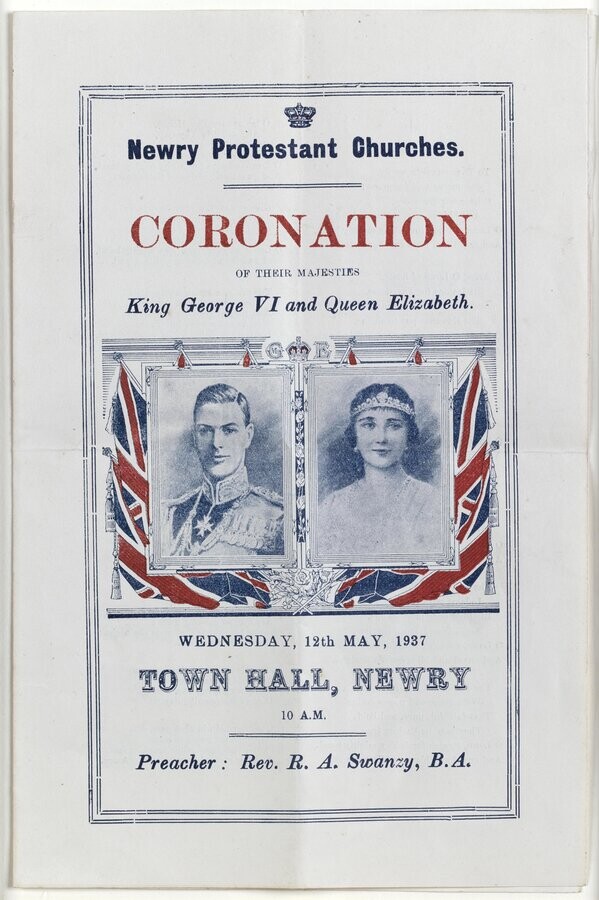
To mark the coronation of King Charles III on 6th May this article highlights some of the artefacts in the Museum Collection from the four coronations which took place in the 20th century.
Coronation ceremonies have taken place in Westminster Abbey since 1066, with the crowning of William the Conqueror. The coronation of King Edward VII and Queen Alexandra in 1902 was the first in 64 years, since that of his mother Queen Victoria. An invitation was received by Viscount Newry and Mourne, who later became the 4th Earl of Kilmorey, whose seat was at Mourne Park, near Kilkeel. The invitation bears the scheduled date for the coronation, 26th June, but the ceremony was postponed until 9th August as the king was taken ill with appendicitis a few days before the event and had to have an operation. By the time the coronation took place, many of the visiting foreign dignitaries had returned home.
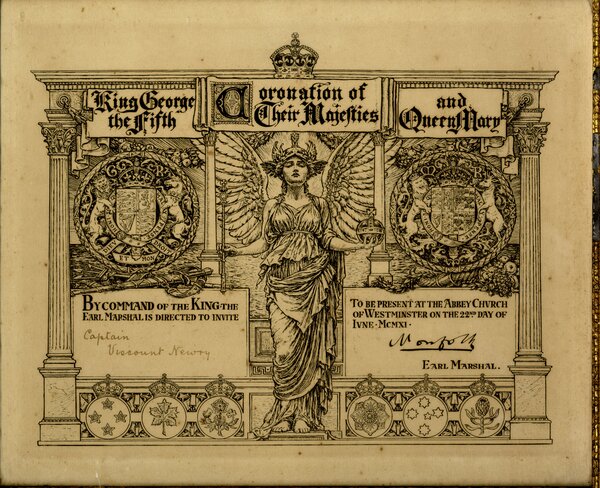
Viscount Newry and Mourne was also invited to the coronation of King George V and Queen Mary in 1911. He is addressed as Captain Viscount Newry on this occasion as he had become a captain the 1st Life Guards (the ‘Blues’) in 1907. He became the 4th Earl of Kilmorey when his father died in July 1915. All arrangements for coronations are made by the Earl Marshal and his Coronation Committee on behalf of the Crown. This role dates from medieval times, with the dukes of Norfolk holding the role by hereditary right since 1672. The invitation is in its original frame supplied by the famous London gallery, Arthur Ackermann Ltd. Founded in 1783, the gallery was put into ‘hibernation’ in 2011.
Part of the celebrations in Newry to mark the coronation of King George VI and Queen Elizabeth in 1937, was a service at the Town Hall organised by local churches. This leaflet from the service is on display in Gallery 3 at Newry and Mourne Museum. Other celebrations in the town included the lighting of a beacon on Chequer Hill.
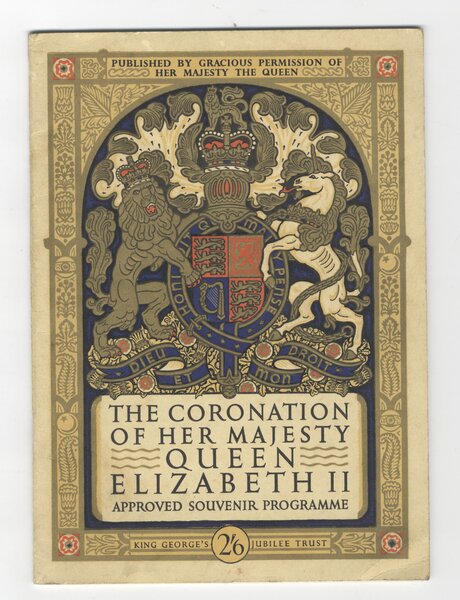
The coronation of Queen Elizabeth II was the first to be televised and was broadcast live on 2nd June 1953. It is credited with popularising television, with more than 20 million watching the service, outnumbering the radio audience for the first time. An approved souvenir programme was published, containing information on the procession and order of ceremony. Coronations in the 20th century were often marked with memorabilia and inexpensive souvenirs, such as ceramics, chocolate, tobacco tins and coins.

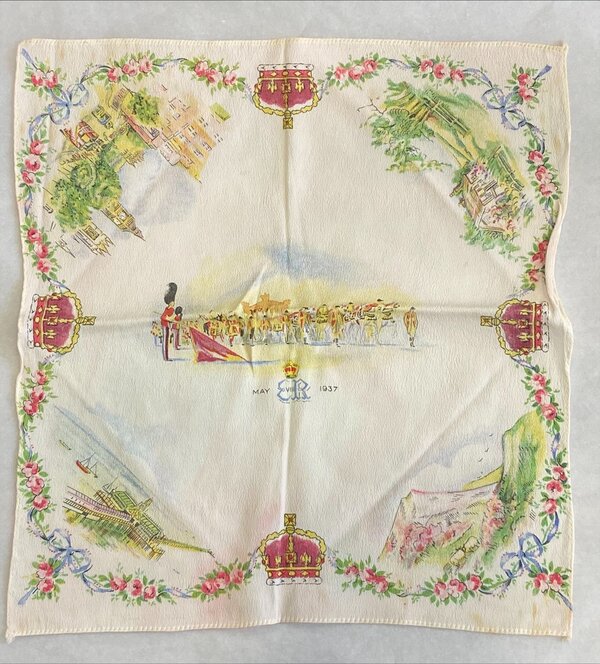
Although four monarchs were crowned in the 20th century, souvenirs were made for the Coronation of a fifth monarch, King Edward VIII, who abdicated in December 1936. His brother, Prince Albert, was crowned as King George VI, in his place on the intended date, 12th May 1937. Newry and Mourne Museum holds a number of handkerchiefs which bear the date of Edward VIII’s Coronation and are illustrated with scenes of the UK.
The Museum is currently offering free tours of the exhibition galleries on Wednesdays and Thursdays at 2.00 pm. These must be booked in advance by calling our Education Officer at 0330 137 4422.
Newry and Mourne Museum is open Tuesday – Saturday 10.00 am – 4.30 pm. Please call 0330 137 4422 or email museums@nmandd.org for further information.
Please visit our website at www.visitmournemountains.co.uk