 Write a comment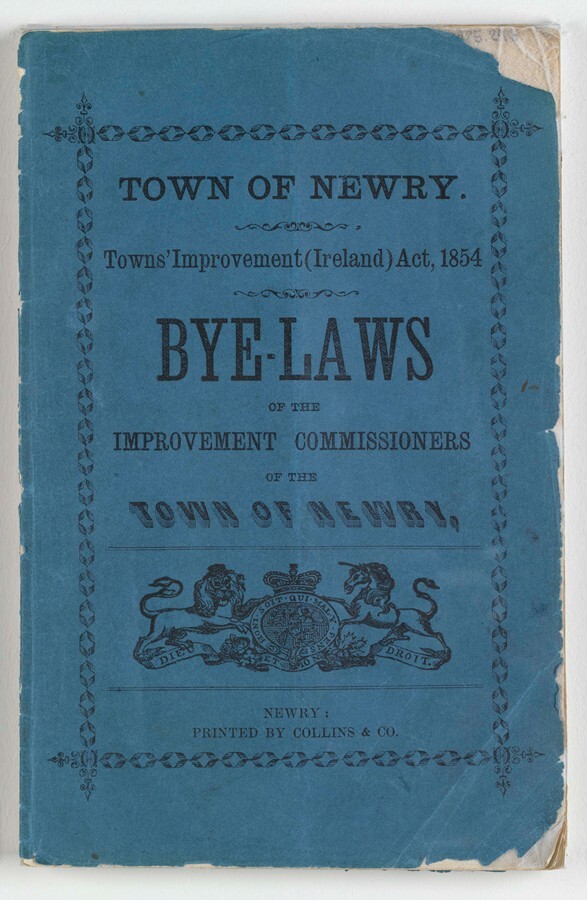
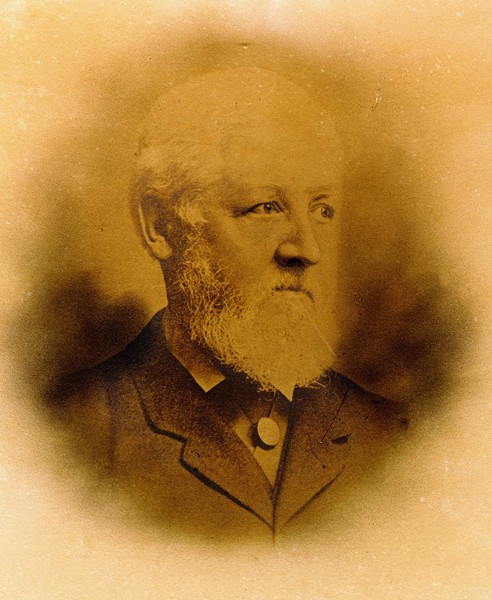
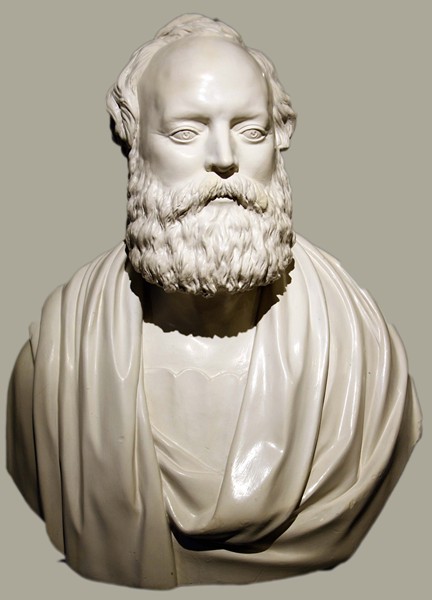
Born in Scotland in 1814, James McGeorge, whose plaster bust is on dis had settled in Newry by the age of 24 when he is recorded as owning the “Newry Mart”, a haberdashery shop in North Street. McGeorge’s commercial enterprises provided him with a platform to establish himself as a leading citizen in Newry and the surrounding area.
James McGeorge was a keen philanthropist and most of his charitable work related to education and the promotion of literacy. The development of a library in the town was largely set up with his own personal finances.
He became a Police Commissioner for Newry and later, a Town Commissioner, a position he held until his death in 1870. McGeorge was also involved in the local gas company, and in the establishment of the Newry and Warrenpoint Railway. His main other business venture in the area was a scutch mill at his farm at Carnmeen, near Newry.
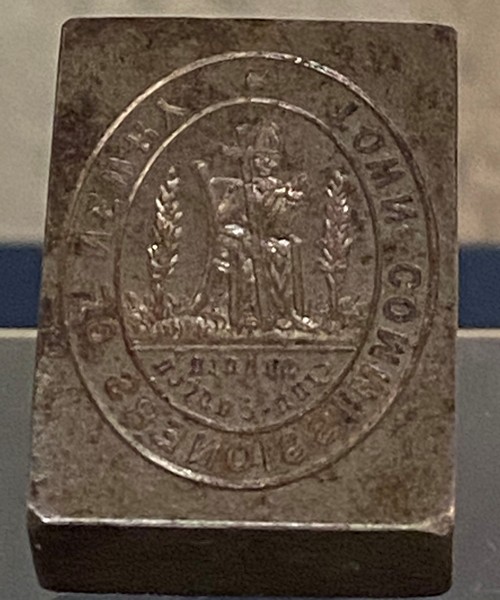
The governing of the town, in which James McGeorge was involved, was first contemplated in the early 1820s. A Bill was promoted in 1828 to provide for a local government after a failed attempt in 1824. This time it was so highly approved that it went from being a local Act to a public one - “An Act for the lighting, watching, and cleansing of cities, town corporate, and market towns in Ireland.” This Act originated in Newry and Newry became a model for municipal administration throughout Ireland. Twenty-one Commissioners of Police were chosen to undertake the running of this Act.
The Commissioners employed eleven officers called the Town Watch and paid their salaries from local taxes. The duties of the Town Watch included patrolling the town, lighting streetlamps every evening and keeping the street’s clean and free from obstruction. They also dealt with minor crimes and disorderly behaviour.
In its Collection, the Museum holds various letters from Newry Watchmen dating from the 1850s. The condition of the streets was the main reason for the letters, but this was not the only obstacles faced by the Watchmen. On 21st December 1857, a letter written by Hugh Dunsheath, Superintendent of the Town Watch, to the Commission reported a Watchman, namely Owen Toal, who had been knocked down by a boy on a galloping horse. Unfortunately, he received a broken collarbone in the incident.
In 1854 a piece of legislation was introduced that had a profound effect on Newry. The Towns’ Improvement (Ireland) Act allowed for any town if it so wished to have a local authority. Town Commissioners would take control of all municipal matters and the board of Police Commissioners were dissolved.
Over the next number of years, the Town Commissioners turned their attention to improving the poor sanitation in Newry through the construction of sewers and introducing health regulations for public places, shops and workplaces. Next was the supply of water and other administrative issues were addressed. Newry had around two hundred wells, but many were not fit for purpose. John James O’Hagan argued on the Bill for Newry’s case in the House of Lords for a full ten hours. It eventually passed and became law on 14th August 1871.
The Town Commissioners were dissolved in 1898 when a new Local Government Act was introduced, and district councils were evolved.
This is part of Newry and Mourne Museums series of articles on the contents of some of the display cases in the Museum.
The Museum is currently offering free tours of the exhibition galleries on Wednesdays and Thursdays at 2.00 pm. These must be booked in advance by calling our Education Officer at 0330 137 4422.
Newry and Mourne Museum is open Tuesday – Saturday 10.00 am – 4.30 pm. Please call 0330 137 4422 or email museums@nmandd.org for further information.
Visit their website at www.visitmournemountains.co.uk