 Write a comment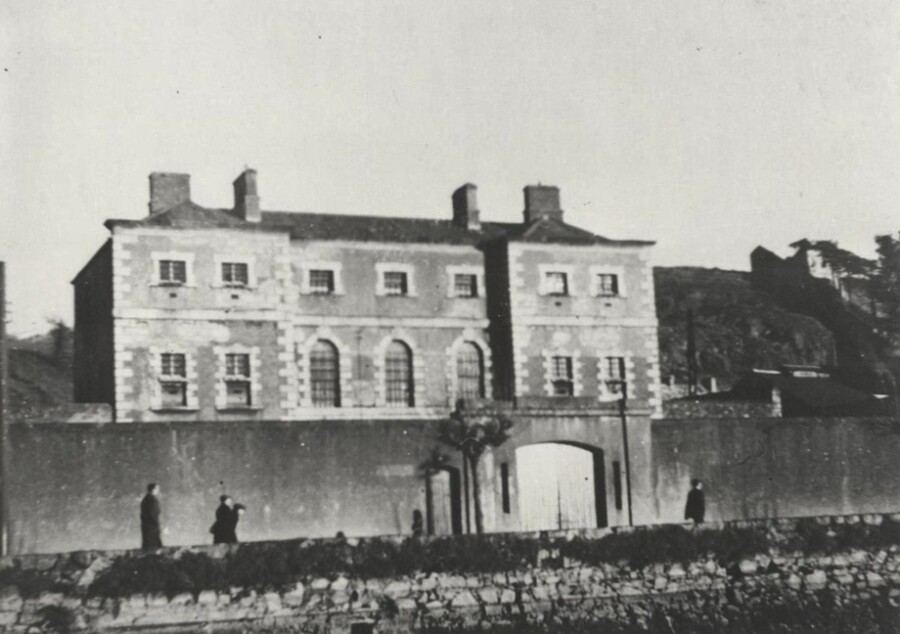
Continuing from last week’s article on Kilmorey Street bridewell, this week’s focus will be on improvements made to the building from the 1850s onwards. By 1849 reports regarding the state of the bridewell were not satisfactory. John Fraser, Surveyor for Down stated,
‘I would again beg leave respectfully to state, that the present Newry Bridewell is in a very deficient state of repair. Measures should at once be taken to remedy the evil, either by a thorough repair of the present edifice, or the erection of a new bridewell.’

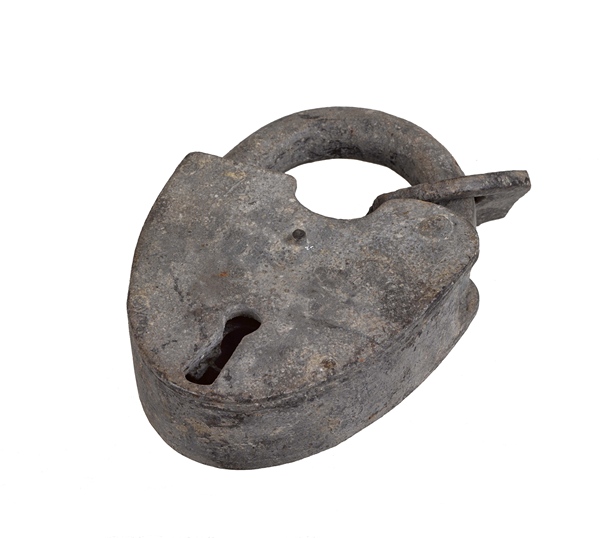
The reports clearly had some impact, as there was a greater drive to improve the bridewell, as seen from the increasing advertisements for tenders in the local press for supplies. In the 1860’s, there were various advertisements for the painting and repairing of the bridewell, a new entrance door, new granite coping to the entrance gate, and the supplying and fitting of a new kitchen range. An 1867 advertisement appointed £130 for the repairs that were to meet the specifications of the County Surveyor, a considerable sum at the time.
Tenders also give us some idea of conditions of the inmates. They were variously supplied with bread and buttermilk for their diet, yellow soap for their cleanliness, ticken (ticking) cloth and straw was probably used to make bedding, coal was used to heat the building, and carriages were used for their conveyance.
During its existence, Kilmorey Street bridewell had various Keepers or Governors; they include George Thompson, Thomas Guy, John Matthews, Joseph Lawson, Mr. Griffin, George Moore, David Shaw, and Robert McBarron. The Keeper of the Bridewell was an important job as can be seen from the advertisements for tender for their uniforms.
‘the suit consisting of Frock coat, vest, trousers, and cap, all of steel grey cloth, and properly lined; silk stock or Necktie, and pair of boots.’
The Governor’s role involved maintaining the bridewell and the upkeep of the inmates, as well as giving evidence about inmates in court. It was a dangerous job and quite a few were injured in the course of their work and sometimes in public, Joseph Lawson was assaulted in 1886 and Robert McBarron was assaulted in a shop in 1910.
The bridewell remained in place for many years, but by 1922 it was commandeered by the R.I.C. In 1923 it was finally declared officially closed by an order of the Governor of Northern Ireland, who directed that it shall no longer be used as a bridewell or prison. It remained an R.I.C. (latterly) R.U.C. barracks for some time. The Gas Department acquired the site in the late 1940s and used the building to store old cookers. By 1958 it was reported as being a long disused building which is now effectively hidden by gasometers and high walls. It was demolished sometime between 1958 and 1959, with one of the workmen engaged in the demolition finding an Irish halfpenny of the reign of George II dated 1742. A coin that once may have been used when the site was still the Old Custom House.
The Museum is currently offering free tours of the main exhibition galleries on Wednesdays at 2.00 pm. These must be booked in advance by calling our Education Officer at 0330 137 4422.
Newry and Mourne Museum is open Tuesday – Saturday 10.00 am – 4.30 pm. Please call 0330 137 4422 or email museums@nmandd.org for further information.
Visit their website at www.visitmournemountains.co.uk