 Write a comment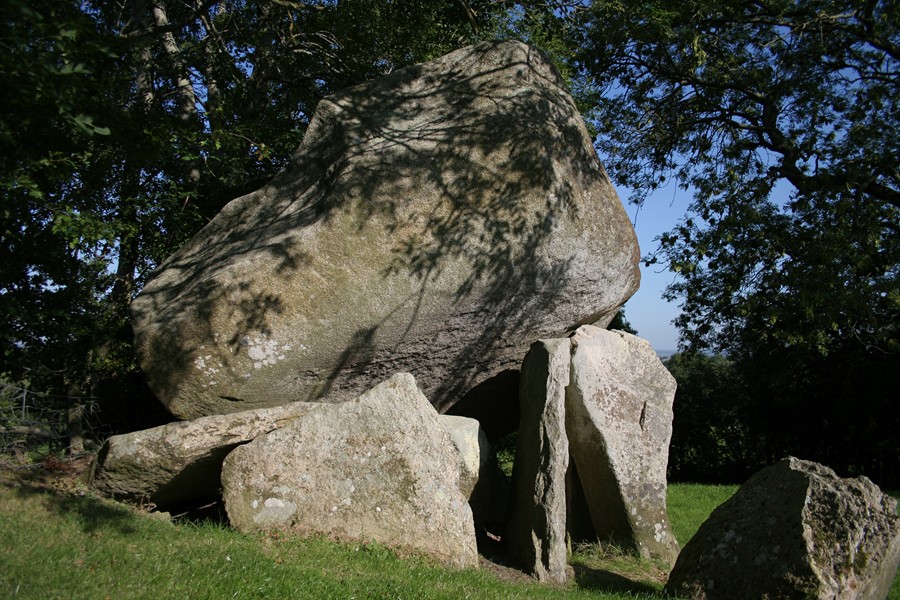
There has been human habitation in Ireland for 9,000 years, but it is only from the Neolithic period (4000 – 2500 BC) that archaeologists have found some evidence of beliefs and customs. Known as the first farmers, Neolithic people built megalithic tombs.
Excavation of these tombs provides insight into burial customs of the period and some archaeologists believe that the tombs were also ritual centres celebrating solar and lunar events. This may be reflected by the commanding position of the passage tomb on the summit of Slieve Gullion.
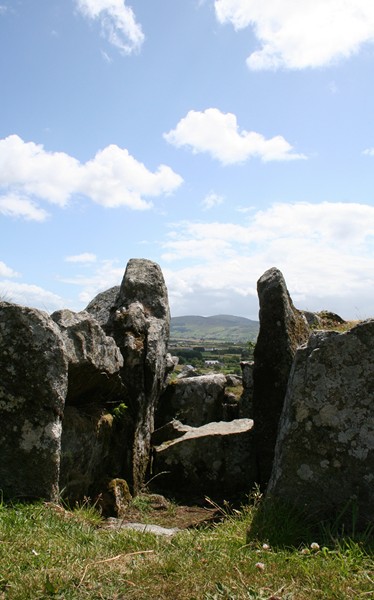
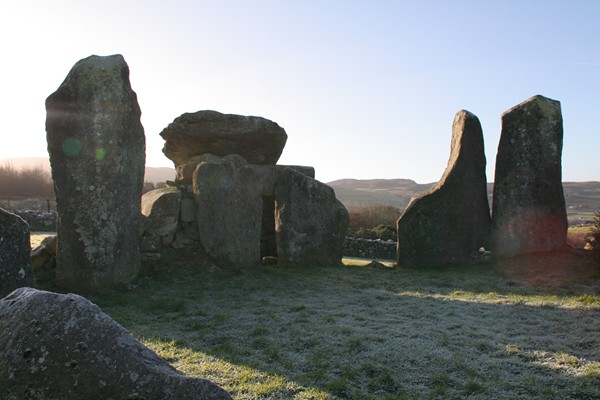
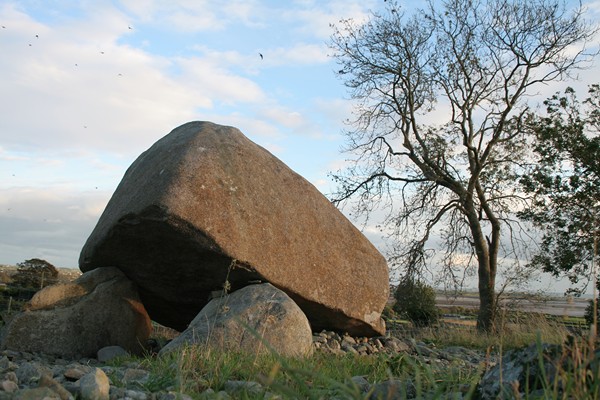
The evidence for beliefs and customs is richer and more varied in the Bronze Age (2000 BC -500 BC). Burial customs changed, with human remains placed in a pit or stone lined cist. Monuments of this period such as stone circles, henges, standing stones and rock art have been interpreted as possibly having some ritual or astronomical significance. Examples of prehistoric tombs in the Newry and Mourne area include Slieve Gullion Passage Tomb, Clontygora and Ballymacdermot Court Tombs, all in south Armagh and Goward Portal Tomb at Hilltown and Kilfeagahan Portal Tomb, near Rostrevor, in south Down.
The ritual deposition of metal objects, human remains and animal bones in lakes and rivers in the middle Bronze Age and continuing into the Iron Age, may indicate a type of water cult. These objects have been found in the King’s Stable, a man-made pool, and Loughnashade Lake, both near Navan Fort. It has been speculated that the origins of some of the holy wells of the Early Christian period may date back to these water cults.
Navan Fort was the Emain Macha of the Ulster Cycle stories and was a major Iron Age ritual and royal centre. These stories portray the legendary heroes of Ulster such as CúChulainn, who had pagan beliefs and looked to druids, a priestly caste, for divination and advice. Tales such as the Táin Bó Cúailnge (Cattle Raid of Cooley), portray druids as sorcerers opposed to the coming of Christianity.
The druids were also associated with the rituals that accompanied the four sacred festivals that demarcated the seasonal changes; Imbolc, Beltane, Lughnasa and Samhain. Aspects of these festivals were later Christianised, for example the spring festival of Imbolc on the 1st and 2nd of February was associated with the pagan goddess Brigit. This became the feast day of Saint Brigid, whose birthplace was Faughart near Dundalk.
Over millennia, a rich oral tradition developed around prehistoric monuments. This folklore was collected in south Armagh by T.G.F. Paterson and Michael J. Murphy, and in south Down by E. Estyn Evans and Michael G. Crawford, representing a vibrant legacy of the beliefs and customs of the past.
The Museum is currently offering free tours of the exhibition galleries on Wednesdays and Thursdays at 2.00 pm. These must be booked in advance by calling our Education Officer at 0330 137 4422.
Newry and Mourne Museum is open Tuesday – Saturday 10.00 am – 4.30 pm. Please call 0330 137 4422 or email museums@nmandd.org for further information.
Please visit our website at www.visitmournemountains.co.uk