 Write a comment
By the mid-18th century, residents of Newry enjoyed performances of music and drama by visiting companies such as the Smock Alley Players from Dublin and troupes from Belfast.
Newry’s first theatre, known as the New Theatre in High Street, opened in 1769. In 1783 a second, purpose-built theatre was opened in Hill Street by the actor Thomas Betterton. Both theatres were short lived and had disappeared by the 1830s, replaced by the Assembly Room in Hill Street, which relocated to Bank Parade in the 1860s.

Interest in drama and the arts continued throughout the 19th century. Warrenpoint Town Hall opened in 1884 providing a hall for public entertainment. Percy French was one of the first to perform there. In Newry, the opening of the Town Hall in 1894, provided a larger venue and improved facilities for performers and adverts in local papers from the time, illustrate a variety of shows. These included theatre companies, opera companies and concerts by artists such as world-renowned baritone Andrew Black in 1903 and virtuoso violinist Tavidar Nachez in 1906.

Local amateur drama and music groups began to emerge in the late 19th and early 20th centuries, including the Bessbrook Players, Mayobridge Players and Burren Dramatic Club who were active at this time, as were Newry Amateur Operatic Society and Mr. Gilholy’s Choral Society. The influence of the Gaelic League led to the emergence of drama groups such as the Lislea Players and encouraged the revival of Irish dance. It also led to the first Warrenpoint Feis, held on the 15 August 1905. In 1928, Newry Musical Feis was established, giving many people their first experience of performing music, folk dancing and verse speaking on stage.
During the Second World War, the Council for the Encouragement of Music and the Arts organised productions of music and drama, and stars of Irish stage such as Micheál Mac Liammóir and Hilton Edwards appeared in productions in Newry Town Hall. In Kilkeel, the Vogue Cinema entertained locals and troops stationed in the district.

The growing popularity of drama during the 1940s saw the development of numerous dramatic societies, including Newpoint Players, Colmcille Players and Kilkeel Dramatic Society. Such was its popularity, that by 1948 the drama section at Newry Feis had become so large that a separate festival was needed, leading to the inauguration of Newry Drama Festival in 1949.
Founded in 1945, Newry Musical Society’s first production was The Mikado in Newry Town Hall in 1946 and it went to on stage many more Gilbert and Sullivan operettas and musicals in the succeeding decades. The late 1940s and early 1950s saw highly popular variety shows held in Newry Town Hall, under the direction of Pat McKevitt. The concerts provided a platform for local artistes to share the stage with national stars, such as James Johnson, a Belfast tenor who sang at Covent Garden.
Support for local drama and musical societies continued, in spite of the increasing popularity of television in the 1960s. The early years of the Troubles impacted negatively on the local arts scene, but optimism prevailed. This culminated when the first purpose-built Arts Centre in Northern Ireland opened in Newry in 1982, the same year the first Lislea Rural Drama Festival took place.
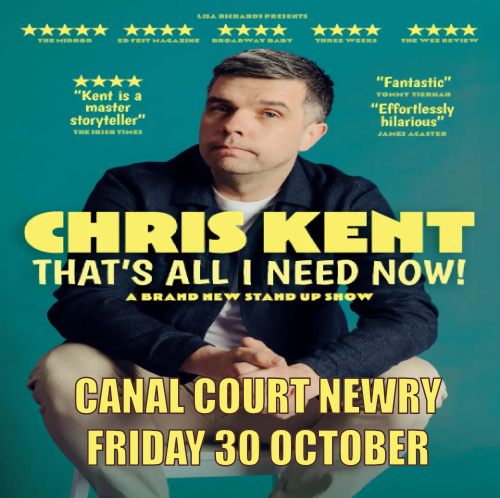
The performing arts in the area continue to flourish. Newry Musical Feis has become one of the largest festivals of its type in the world. Groups such as Newry Musical Society, Newpoint Players and Newry Drama Festival, all founded in the 1940s continue to entertain local audiences.
The Museum is currently offering free tours of the exhibition galleries on Wednesdays and Thursdays at 2.00 pm. These must be booked in advance by calling our Education Officer at 0330 137 4422.
Newry and Mourne Museum is open Tuesday – Saturday 10.00 am – 4.30 pm. Please call 0330 137 4422 or email museums@nmandd.org for further information.
Please visit our website at www.visitmournemountains.co.uk