Write a comment
Warrenpoint has long been a venue for entertainment. The Promenade played host to various bands during the summer months in the late 19th century, performing to tourists on holiday, or day-trippers brought by train. These ranged from military bands such as the East Lancashire Regiment Band who performed in 1888, to local bands including Warrenpoint Amateur Brass Band, who played in July 1877. Their entertaining programme included quick marches, valses and gallops.


In 1906, the same year Warrenpoint Municipal Park was established, pierrots were invited to perform around the Promenade, a tradition that continued until the 1920s. A bandstand in the park became a popular venue for musical performances.
Under the influence of the Gaelic Revival, Warrenpoint Feis was first held on the 15 August 1905. The event took place outdoors in the field adjacent to Duke Street and was closely associated with the Catholic Church, with Rev Hugh O’Reilly of St. Colman’s College acting as President and Father Mallon of Warrenpoint distributing prizes. Various contests were held in brass and reed bands, female and male choirs, soloists, recitations in Irish and musical instrument playing. A second Feis occurred on the same day the following year, but due to inclement weather and competing attractions, there was a low turnout.

The Feis was later revived as Warrenpoint Musical Feis and is held annually in Warrenpoint Town Hall, with contests held in Irish Dancing, music, singing, verse and drama.
Dramatic productions increased in popularity after the Second World War. Warrenpoint Catholic Social centre in Peter Street erected a stage upon which Warrenpoint Dramatic Society rehearsed and produced variety shows, minstrel shows and one act plays. The Town Hall staged their productions including Peg of My Heart (1949), Daddy Long Legs (1950) and The Next Big Thing (1951). In 1951 it was also the venue for the town’s first pantomime Jack and the Beanstalk which was remarkable for its special effects, which included the giant walking and the beanstalk growing in full view of the audience.
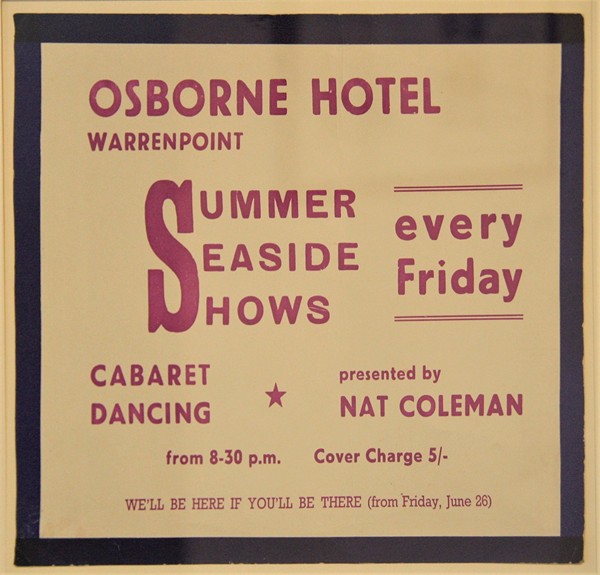
Frank Hanna produced the pantomimes until 1984, after which Liz Boyle took over. Some of the early pantomime cast members included Bobby Reoch, Pamela Halliday, Jean McGuigan and Christy McGuigan, while dancing was usually choreographed by Arthur Burns. The pantomime tradition has continued through the years and is still as popular as ever today.
Newry and Mourne Museum is open to the public seven days a week with admission free of charge. For opening hours, information on events and exhibitions, other services and bookings please phone 028 3031 3178 or visit www.visitmournemountains.co.uk