 Write a comment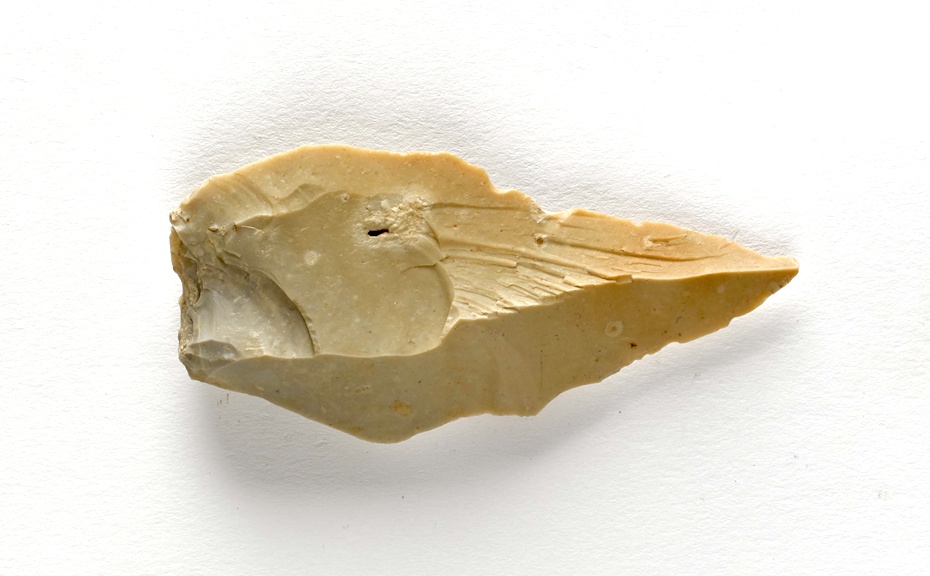
Visitors to Newry & Mourne Museum can discover how a distinctive stone from County Antrim helped connect communities across Ireland and Britain some 6,000 years ago. Objects on display provide a local window into the Neolithic period, when porcellanite axes were produced in large numbers and travelled far beyond their places of origin.
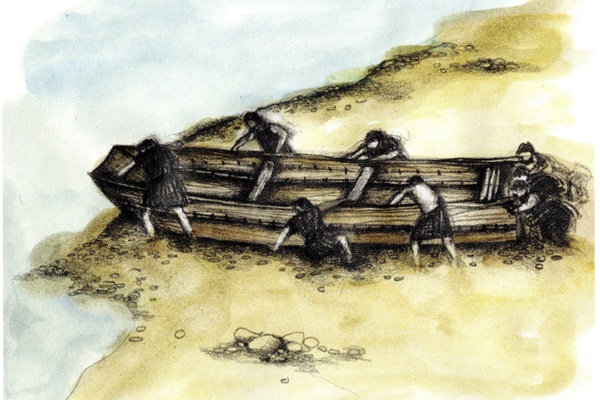
carried prehistoric travellers between Ireland and Scotland. Newry and Mourne
Museum Collection
The axes came from two principal production sites: Tievebulliagh in the Glens of Antrim and Brockley on Rathlin Island. Both contained quarries and working areas. Porcellanite is a dense, fine-grained, bluish-grey volcanic rock that can be shaped to form a keen edge and polished to a smooth sheen and County Antrim is the only known source of the stone in Britain or Ireland. The Irish Stone Axe Project has recorded more than 11,000 porcellanite axes from every corner of Ireland. These account for over half of all the stone axes in its survey; the remainder were made from dozens of other materials, including shale and mudstone.
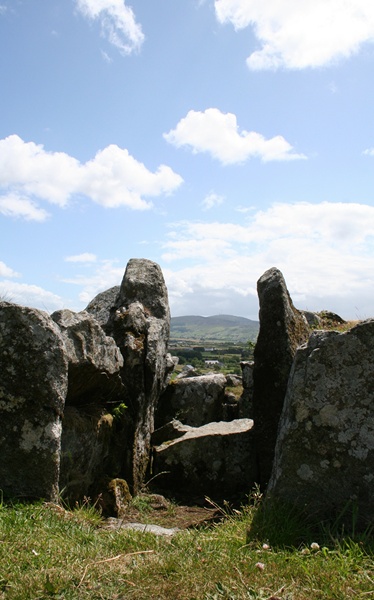
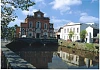
Viewpoint outside Newry, known locally as the
Cashla or the Fairy Ring. Newry and Mourne
Museum Collection (photograph by Christina Joyce)
Now displayed in Gallery One at Newry & Mourne Museum, an early Neolithic porcellanite axe demonstrates the qualities that made this material so highly valued. Dating to around 4500 BC and discovered near Dundrum in County Down, the axe is on loan from the Ulster Museum, courtesy of National Museums NI. Porcellanite is hard enough to withstand heavy impacts, yet fractures predictably, allowing skilled makers to form a consistently sharp cutting edge. These qualities made it more desirable than typical flint tools. The axes were also visually distinctive: makers used abrasive sandstone and water to polish their surfaces to a smooth, reflective sheen. Durable, sharp and carefully finished, a porcellanite axe was ideally suited to felling and cutting trees.
The museum’s displays place the axe within the wider story of life in the Newry and Mourne area. A Neolithic flint scraper from the Carnbane excavations, dating from 4000 BC to 2400 BC, is another everyday tool used by prehistoric communities, including for working animal hides. Together, these objects reveal the range of materials and skills employed locally during the period.
The sea helped rather than hindered the movement of porcellanite. From Rathlin Island, the Kintyre peninsula in Scotland is visible across approximately 11 miles of water. Axes made from Antrim porcellanite eventually reached as far north as Orkney and as far south-east as Kent in England.
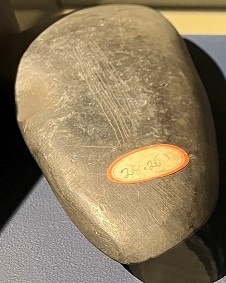
dating to c. 4500 BC and found
near Dundrum, County Down.
On loan from Ulster Museum
courtesy of the National
Museums of Northern Ireland.
Archaeologists have found no evidence that a single organised trade network carried porcellanite axes over such distances. Instead, the objects may have passed gradually over generations from one community to another as gifts, valued barter goods or symbols of status. Some show little or no wear and appear to have had no practical purpose. Oversized examples would have been too large and heavy for everyday use and may instead have served as prestige objects acquired by powerful individuals. The 19 axes of the Malone hoard, discovered at Danesfort on Belfast’s Malone Road, now in the collection of the Ulster Museum, are striking examples and are estimated to have required hundreds of hours of work. At the other end of the scale, miniature axes may have been toys or amulets. Although some could have been used for fine woodworking, the evidence suggests that most were not tools. The ceremonial significance of porcellanite is further reflected in its frequent inclusion among grave goods buried with the dead.
The story also extends into the landscape around Newry. Ballymacdermot Court Tomb, near Bernish Viewpoint and known locally as the Cashla or the Fairy Ring, is another reminder of the communities that lived here during the Neolithic period. A photograph of the monument forms part of the museum material accompanying the displays.
By: Matthew O'Neill
Newry & Mourne Museum offers free tours of its main exhibition galleries on Wednesdays at 2.00 pm. Tours must be booked in advance by calling the Education Officer on 0330 137 4422. The museum is open Tuesday to Saturday from 10.00 am to 4.30 pm.
For further information, call 0330 137 4422, email museums@nmandd.org or visit www.visitmournegullionstrangford.com.