
 Write a comment
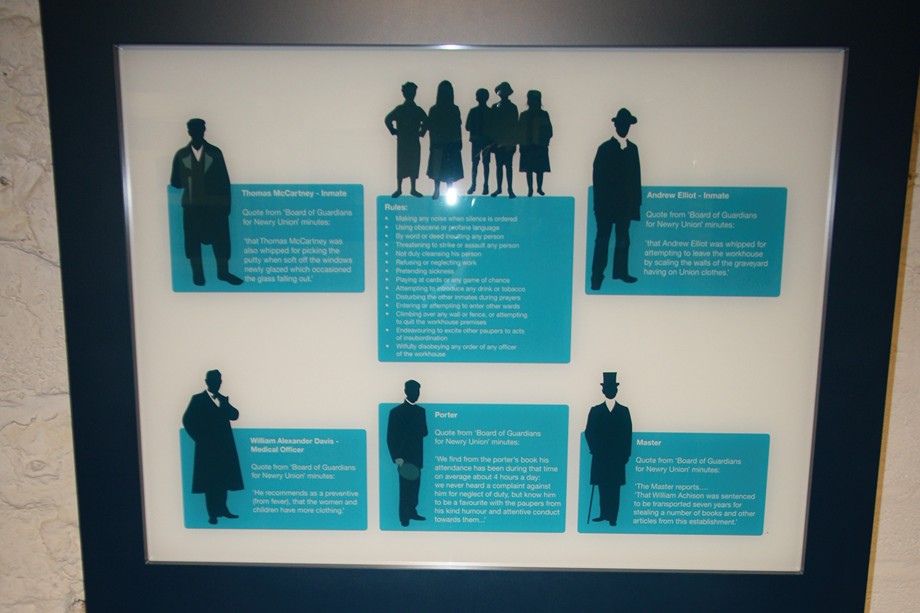
Museums incorporate interactives into their exhibitions to enable visitors, especially children, to engage with artefacts on display. Interactives provide a more hands-on experience and stimulate deeper thinking about artefacts in an entertaining and exciting way. The exhibition galleries at Newry and Mourne Museum include several interactive displays for children and their families, including a touch screen display looking at aspects of local history in the 20th century and a spinner exploring the history of the Bagenal’s Castle and McCann’s Bakery. Also installed is an interactive which provides an insight into life in Newry Union Workhouse in the 19th century.

Workhouses, established under the Poor law of 1838, were seen as a means of dealing with the very poor by housing them in an institution, which would provide food and lodgings in return for labour. They were designed to house those who were destitute and, for many, entry was often seen as a last resort.
Newry Union Workhouse built in 1841, on the site of what is now Daisy Hill Hospital, was run by a Board of Guardians. These men were Justices of the Peace or master figures from the area who were responsible for, and gave an account of, the running of the workhouse to the Board at monthly meetings.
When admitted, people became known as ‘inmates’ and were required to work at breaking stones or tending to the sick. If capable, inmates had to work ten hours a day, six days a week. Children were given some basic education. If families were unfortunate enough to find themselves in the Workhouse the only time they saw each other was at meal times or at Church on Sunday. Food was limited and discipline was strict.
During the time of The Great Famine, one of the bleakest periods in Irish history, the Newry Workhouse was overcrowded. Sickness was rife due to very poor conditions such as damp beds and poor sanitation.
The new interactive display, housed in Gallery Two of the Museum, provides an insight into daily life in the Workhouse and references first-hand accounts of what life was like in this period. One male inmate was “whipped for picking the putty when soft off the windows newly glazed which occasioned the glass falling out”. Alternatively, “William Acheson was sentenced to be transported seven years for stealing a number of books and other articles from this establishment”.
You can also read about the type of work inmates were expected to perform such as ‘oakham’ picking and see the rules and regulations they were subject to including being forbidden to use “obscene or profane language”.
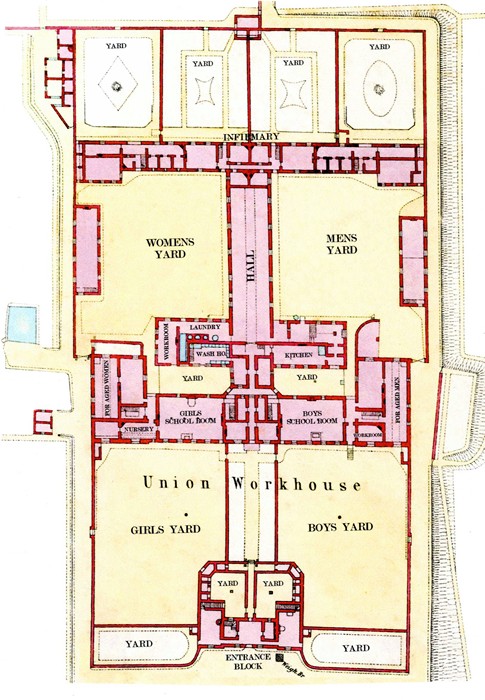
Included in the interactive is a floor plan of the Workhouse, indicating the various rooms and showing how the building was divided with men on one side and women on the other, with separate yards for boys, girls, men and women.
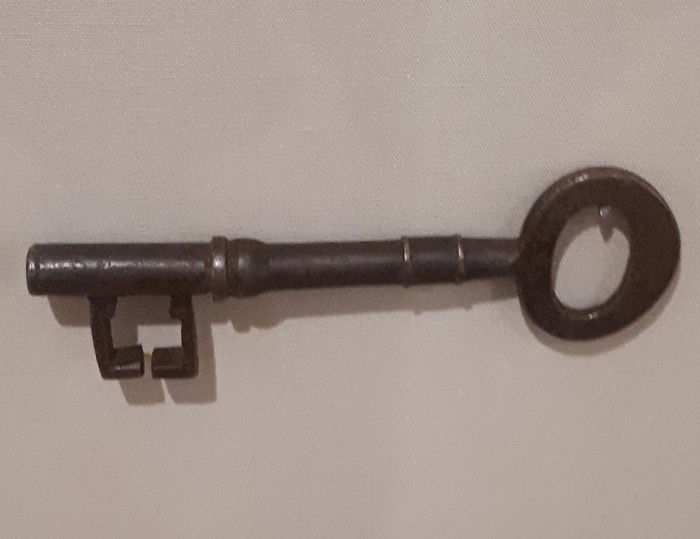
The interactive complements many of the artefacts on display in Gallery Two relating to Newry Workhouse which include a key and a Bible purchased from Thomas McKnight, an inmate of the workhouse, by Henry Barcroft of The Glen in 1875. The interactive is used as part of the workshops the Museum provides for schools studying this period. Students will learn more about the harsh conditions people faced in “the most feared and hated institution in Ireland”.
The Museum is currently offering free tours of the exhibition galleries on Wednesdays at 2.00 pm. These must be booked in advance by calling our Education Officer at 0330 137 4422.
Newry and Mourne Museum is open Tuesday – Saturday 10.00 am – 4.30 pm. Please call 0330 137 4422 or email museums@nmandd.org for further information.
Please visit our website at www.visitmournemountains.co.uk