
 Write a comment
The recent relocation of civil registration services from Newry Town Hall to Newry and Mourne Museum offers a timely opportunity to look back at where the story began. Today, the registration of births, deaths, marriages and civil partnerships is a familiar part of civic life, but in the nineteenth century it marked a major shift in how people’s most important life events were recorded.

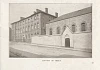
(Now Dominic Street), Newry
In England and Wales, civil registration began in 1837, replacing parish registers that were often incomplete and largely maintained by the Church of England. For non-conformists, including Methodists, Baptists, Presbyterians and Catholics, this meant there were few legally recognised alternatives when proof of identity, age or marriage was required. By the 1830s, a growing modern state also needed reliable information for public health, Poor Law administration and the census, encouraging the creation of a universal, secular system of registration.

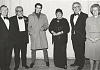
Basin Walk, Newry which was opened in August 1866
and was certified for Solemnising Marriages by
James Burns on 7th May 1867
In Ireland, however, civil registration developed more slowly and in response to a very particular legal crisis. In 1842, the House of Lords judgment in the bigamy case R v Millis cast doubt on the validity of Irish Presbyterian and other non-conformist marriages, causing alarm across Ulster. The implication that long-established marriages might be invalid, and that children of those unions might be deemed illegitimate, provoked public outcry. Parliament responded with the Marriages (Ireland) Act 1844, which recognised future non-conformist marriages and provided for their legal solemnisation and registration. Civil registration of marriages began on 1 April 1845, but at first it applied only to non-Catholic Christian, Jewish and civil marriages. The Catholic Church concerned that civil registration might lessen the religious character of marriage ceremonies, resisted inclusion at this stage.
The new system brought official record-keeping into communities across Ireland. A General Register Office was established in Dublin, while existing Poor Law Union boundaries were used to define the Registrar’s Districts. There were initially 130 districts across Ireland in 1844–1845, rising to 163 after administrative reforms in 1851. The practical importance of the records was reflected in the care taken to protect them: district registrars were supplied with strong iron boxes, fitted with locks and keys, in which to keep the register books safe.

ceremonies Photograph taken by author
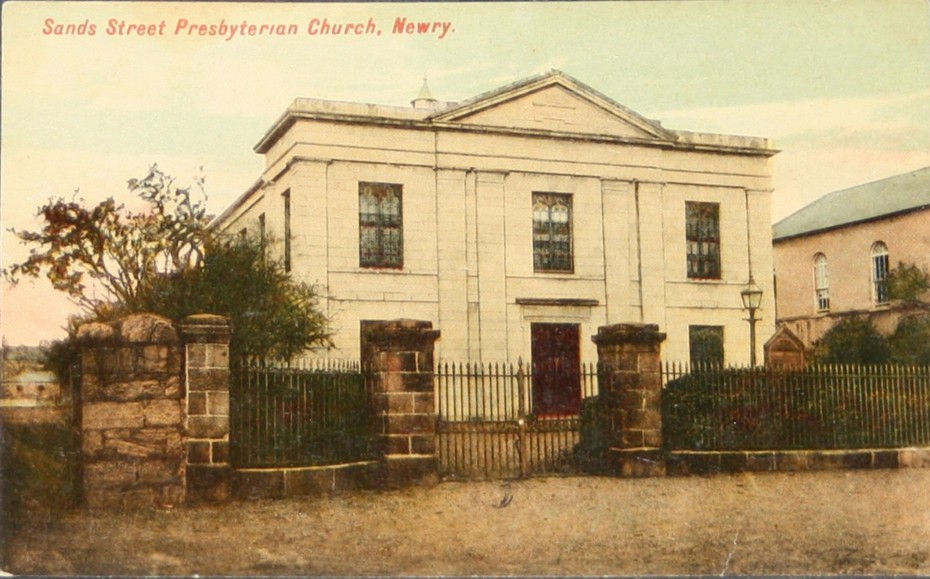
Newry’s first District Registrar of Marriages was William Henry, whose name appeared in the Newry Telegraph on 22 April 1845 in notices certifying the legal right of local Presbyterian churches to solemnise marriages. Among them were the First Presbyterian Meeting House on High Street, Warrenpoint Remonstrant Meeting House and Sandy Street Presbyterian Meeting House. Henry was also a brewer and acquired Southwark Brewery, previously owned by Arthur Russell, father of Charles Russell, who later became England’s first Catholic Lord Chief Justice since the Protestant Reformation.

cakes to customers. Newry & Mourne Museum Collection
The Marriages Act also allowed civil marriages to take place in the District Registrar’s office by declaration. Henry likely conducted his registration business from Southwark Brewery at 13 Queen Street, now Dominic Street, as suggested by street directories from 1858 and 1859. Although uncommon, civil marriages did take place at the registrar’s office, with examples recorded in December 1857 and July 1859. Registrars received fees for solemnising marriages, handling administrative work and providing certified copies of records.
Henry was succeeded by James Burns, who served from around 1865 onwards. Burns was a former apprentice and printer with the Newry Telegraph and went on to found its rival, The Newry Reporter, a newspaper still published today. His experience as a newspaper proprietor, printer and businessman made him well placed for the detailed duties of a registrar. He carried out the role from a number of premises, including 2 Kildare Street and the News Rooms at 63 Hill Street, and continued in the post until his death in 1900.
The Burns family connection continued into the next generation. Arthur R. Burns, James’s son, is recorded as Deputy Registrar of Marriages in 1900 and, like his father, was involved in the management of The Newry Reporter. In May of that year, he appeared before the Petty Sessions Court in Hill Street, giving evidence that he had witnessed Robert McAllister present an altered birth certificate to facilitate his marriage to Alice McAllister. Such episodes remind us that registration was never merely a matter of paperwork. These records affected inheritance, legitimacy, identity and family life, and they remain vital sources for local and family historians today. A future article will examine the registration of births, deaths and Catholic marriages, the merger of separate registrar services and the role of local councils in overseeing registration.
The Museum is currently offering free tours of the main exhibition galleries on Wednesdays at 2.00 pm. These must be booked in advance by calling our Education Officer at 0330 137 4422.
Newry and Mourne Museum is open Tuesday – Saturday 10.00 am – 4.30 pm. Please call 0330 137 4422 or email museums@nmandd.org for further information.
You can visit the Museum website at www.visitmournegullionstrangford.com