Write a comment
The old Port began to decline as the needs of Newry’s shipping merchants changed. In 1806 the Old Customs House was converted into a bridewell (a house of correction or a prison) just as a new custom house was being established in Merchant’s Quay. In 1807 Lord Kilmorey had a new butter crane erected at the side of the Canal just below Merchants Quay beside Ballybot bridge. The old butter crane had been situated at Boat Street which was too far from the Canal.

The new butter crane, which the quay was named after, was a quality testing station, where butter was tested, graded, weighed and taxed before being exported to Liverpool. By 1820 Newry had a considerable export of butter provisions, annually rated at about 80,000 casks. In later years as the butter market declined the Buttercrane began to accommodate additional purposes including a Pork & Flax Market in the 1840’s and timber yards belonging to Newry Saw Mills, Wood and Iron Company possibly by the 1860’s. In 1831 plans were in motion for a new bridge between Margaret Street and Monaghan Street called Needham Bridge, a development of consequence linking the Low Ground/Hill street area with the developments on Merchant Quay and Monaghan Street.
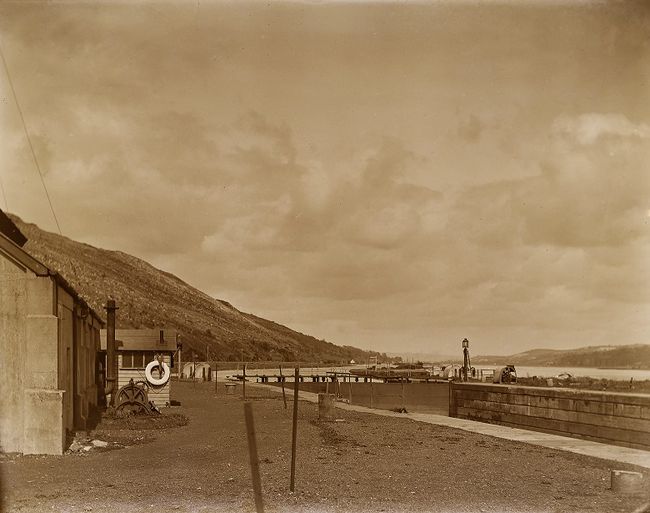
The Albert Basin and Victoria Lock were completed in April 1850 and improved Newry’s port facilities by accommodating ships of over 500 tons. This incredible feat took seven-eight years to complete and was christened with a major show on 15th April. The Newry Telegraph reported on 16th April that “Amidst the thunder of cannon, and the cheers of assembled thousands, the sea lock was opened, and several vessels were admitted into the spacious waters of the Canal. The vessels were bedecked with flags; and on each side, were the picturesque hills, which echoed the roars of the cannon, and the sheers of the multitude. The schooner Pride, belonging to the townsman Francis Carvill, took the lead…As each successive vessel approached the Albert Basin, she was greeted with loud cheers, the assembled multitude appearing highly delighted with the magnificent and beautiful spectacle. The band of the 2nd Regiment, during all the time played, in their superior style, a selection of admired music.”
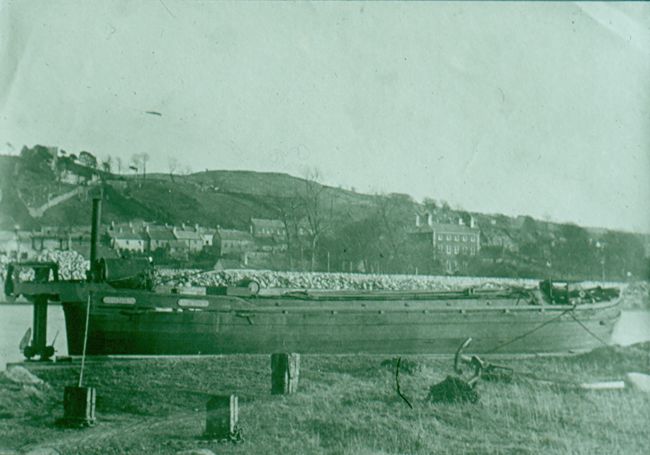
In 1853, merchants and traders of Newry got up a memorial in consequence of the lack of legalised space for loading and unloading vessels in Newry. Merchant’s Quay was the only quay legalized for the use of loading and unloading of ships up until 1853. Canal Quay and Sugar House Quay were only used by favor of permission from Her Majesty’s Custom’s authorities. No permission was granted for the use of Buttercrane Quay, or the embankment opposite Merchant’s Quay at this time. The quays surrounding the Albert basin had only just been recently permitted by Her Majesty’s Customs to be used, though again the said Albert Quays were not fully and properly legalized for such purposes. With the aid of the then local MP William Kirk, the whole series of quays were legalized for this important use, encouraging Newry’s trade for many decades to come.
The Museum is currently offering free tours of the exhibition galleries on Wednesdays and Thursdays at 11.00 am. These must be booked in advance by calling our Education Officer at 0330 137 4422.
Newry and Mourne Museum is open Tuesday – Saturday 10.00 am – 4.30 pm. Please call 0330 137 4422 or email museum@nmandd.org for further information.