 Write a comment
A cross-border citizens' jury has published seven recommendations for the future of Carlingford Lough. The jury called for stronger governance, ecological restoration, community wealth building and improved infrastructure following what organisers describe as the first cross-border democratic lottery process on the island of Ireland.

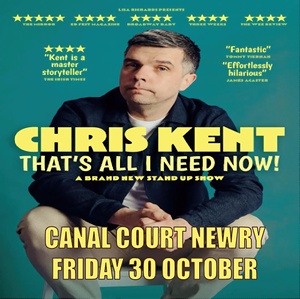
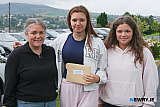
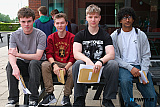
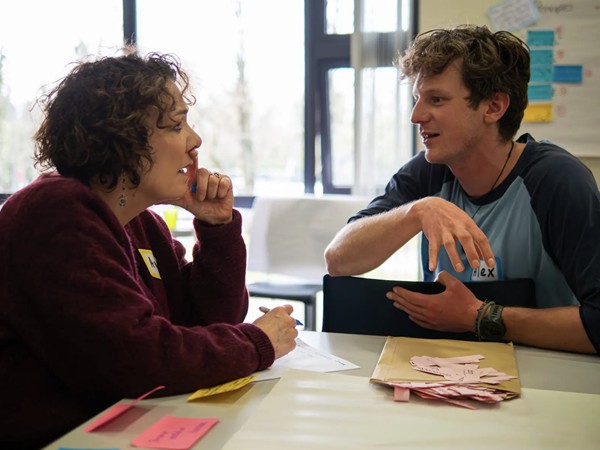
Thirteen people from communities on both shores of the lough, drawn from Rostrevor, Warrenpoint, Carlingford and Omeath, were selected by democratic lottery to broadly represent the diversity of life around the lough. Between February and March 2026 they took part in three full in-person days, on 7 February, 21 February and 28 February, along with a final online evening session on 16 March, hearing evidence, deliberating and reaching shared conclusions. The process was facilitated by Involve, convened through The Wheel's Shifting Tides project, and funded by Creative Ireland.
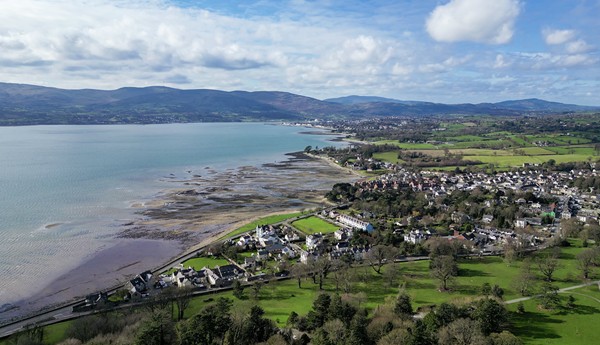
The jury was asked a single question: "The future of Carlingford Lough depends on finding the right balance between economic development and bringing nature back to good health. How do we strike that balance, and how can local people help shape and safeguard the lough for the long term?"
In response, jurors agreed three guiding principles intended to underpin all future decisions about the lough: ecological protection, recognition that the lough is one community with equality and parity between the two shores, and the provision of accessible, inclusive information under one consistent voice.
Building on those principles, jurors set out seven recommendations.
- One Community: investment in sustainable, community-led cross-border partnerships, festivals and shared experiences across the lough.
- Better Infrastructure: improved roads, parking, public transport, mooring facilities and signage to support tourism, economic development and resident living standards.
- Youth Engagement: structured opportunities for young people to engage with the lough, through volunteering, work experience, and schools programmes.
- Health of the Lough and its Catchment: restoration of native species and habitats, starting with mapping the lough’s current condition and investing in seagrass, native oysters, and citizen science.
- Central Data Portal: a public, regularly updated portal for data on the lough’s health, water quality, species, and recreational and economic activities
- Local Economy: a Community Wealth Fund, financed through tourist levies, tax incentives and other mechanisms, to support local economic actors and contribute to the lough’s health.
- Trans-boundary Governance: strong, effective cross-border governance that treats Carlingford Lough as a single, thriving ecosystem, underpinned by radical transparency, equity, community participation, and intergenerational responsibility.
Eimar, a jury member from Warrenpoint, said: "The Citizens' Jury has been a unique opportunity for residents from both shores to come together. The process allowed us to listen, discuss and plan. We worked together with a shared goal – the protection of Carlingford Lough, which belongs to all of us. As jurors, we have done our bit, now we call on decision‑makers to engage with our findings and take meaningful action."
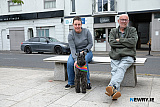
Tom, a jury member from Carlingford, said: "This was a remarkable experience, one that every person should have the chance to participate in. The recommendations come from everyday folk who care about the health of the lough and the surrounding areas. My hope is that the powers that be take seriously our recommendations and look towards ways of implementing them. Grassroots, bottom up involvement of regular people will only make society better. In my opinion."
Before-and-after surveys carried out as part of the process found jurors' understanding of local decision-making improved significantly, with the biggest shift recorded in their sense of personal agency around environmental decisions. Six jurors said they expected to be more active in their community as a result, and none expected to be less active.
Suzie Cahn, Director of Shifting Tides at The Wheel, said: "As Shifting Tides drew to a close we saw the opportunity to end with something genuinely innovative. This is the first time a citizens' jury has crossed the border on the island of Ireland and what matters most is what it produced. Thirteen local people, from both sides of a complex political border, sat down, heard the evidence and agreed. Their recommendations are grounded, practical and ambitious. I believe that decision makers on both sides of the border have an obligation to respond to them seriously."
Rebekah McCabe, Head of Northern Ireland at Involve, said: "One of the things we've learned from this process is that ordinary people often find it easier to collaborate across a border than institutions do. The lines that complicate things at an official level matter far less to residents who already share a landscape, livelihoods, hopes and concerns. Decision-makers on both sides of this border now have an obligation to honour that capacity for cooperation, and to respond to these recommendations seriously."
Tania Banotti, Director of the Creative Ireland Programme, said: "It's truly inspiring to see how the Shifting Tides project has grown since 2023. The Creative Climate Action Fund has demonstrated that an interdisciplinary approach is a powerful catalyst for change. When communities co-create solutions backed by experts in innovative engagement, they transform climate action goals into shared, sustained action. The communities of Rostrevor and Carlingford are a wonderful representation of this approach in action."
Formal presentations of the jury's findings will be made to the Loughs Agency, Newry, Mourne and Down District Council, and Louth County Council, as well as ministers in DAERA, the Department for the Economy, the Department of the Environment, Climate and Communications, and the Department of Agriculture, Food and the Marine. TDs, MLAs, civil society organisations and local community groups will also receive the recommendations directly.
The findings are published in a full report, 'Two sides, one conversation: a story of cross-border democracy', available at www.involve.org.uk.