 1 Comment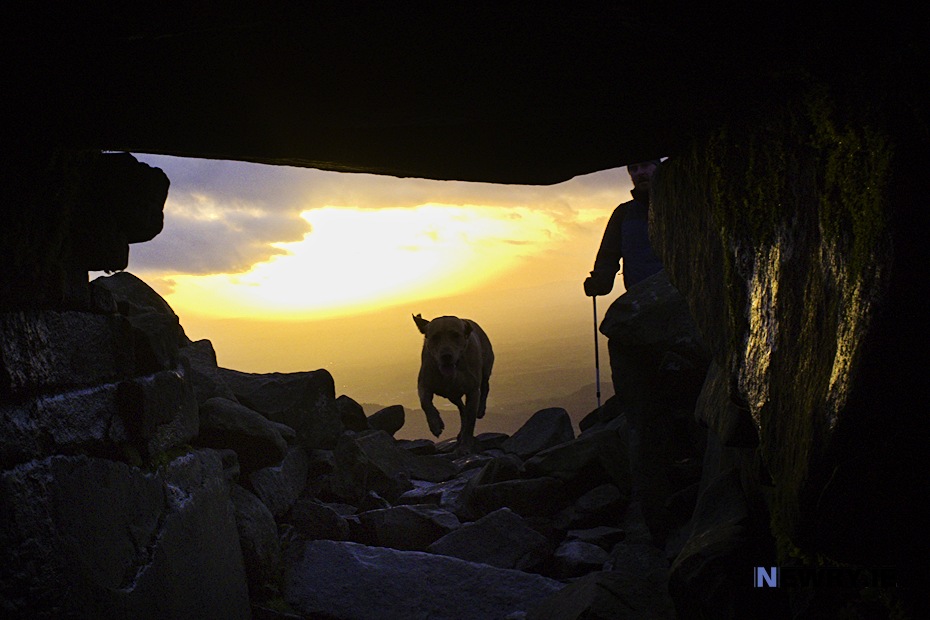
A decision by the Department for Communities to close the South Cairn at the top of Slieve Gullion means that visitors to the historical site will not be able to take in the winter solstice for possibly the first time ever. On the winter solstice the sun shines through the entrance illuminating the wall at the back of the chamber in the prehistoric passage tomb.

The Ring of Gullion AONB Facebook page on 1 December detailed the closure: "For safety reasons, the interior of the South Cairn at Slieve Gullion remains closed. Potential structural issues identified in July mean it will not be open for the Winter Solstice 2025.
"This closure is essential to protect the monument and keep visitors safe while we carry out vital works. Love Heritage NI are working hard to restore access as soon as possible - thank you for your patience and support!"
Speaking to the Stormont Assembly on Monday, Newry and Armagh MLA Aoife Finnegan called on DfC for transparency and a commitment to reopen without delay. Ms Finnegan said "for the first time in over 6,000 years, the South Cairn on the summit of Slieve Gullion is closed. It is the highest surviving Neolithic passage tomb in Ireland, older than the Pyramids, aligned with the winter solstice and a place where families, walkers, tourists and schoolchildren have gathered for generations to witness sunlight travel through a stone chamber that was hand-built by our ancestors. However, this winter, for the first time in its history, they will meet a locked gate.
"The Department for Communities closed the South Cairn due to safety concerns. No one disputes that safety matters, but it was closed without funding being in place to fix the issues, a clear plan or a timeline for reopening. That is the core of the problem. A monument that has survived invasion, weather, famine, plantation and conflict now has access to it stalled by bureaucracy. That tells us something that many in south Armagh already know all too well: too often, heritage is the first to be restricted and the last to be prioritised.
"The mountain is not geography; it is identity, memory and story. Tradition tells us that St Oliver Plunkett, Primate of All Ireland, once hid in that cairn, sheltered by the people of south Armagh, as the Crown hunted and sought to arrest him. A community that risked itself to protect its faith and culture now stands behind a fence at the very site that it safeguarded.
"That history of resistance, endurance and defiance is written into the stone of Gullion. It is who we are. Yet, despite its importance, tourism and cultural value and international archaeological significance, our council area does not even carry the name south Armagh. We sit inside the Newry, Mourne and Down District Council, even though south Armagh makes up more than one third of the district. Slieve Gullion is routinely marketed under the Visit Mourne brand, despite its not being in the Mourne region.
"Slieve Gullion is in south Armagh, which is a region of unique heritage, mythology, language, landscape and creative energy, and we deserve to be recognised, respected and invested in. Our people should not be locked out of their own history, and our children should not grow up being told that their identity is the footnote to someone else's brand. We want transparency, clarity and a commitment to reopen access to the South Cairn, not some day or when budgets appear, but with purpose, because heritage delayed is heritage denied. As a wise woman once said, we are women of south Armagh; born of granite, we endure."
"We will keep speaking up for that place, the mountain and the story until the cairn, Cailleach Berra’s house, is reopened."
In a reply to a Newry.ie query a Department for Communities Spokesperson said: ""The interior of the South Cairn remains closed for safety reasons. This closure is essential to protect the monument and keep visitors safe while vital works are carried out. We are working hard to restore access as soon as possible."
The DfC explain that the passage and main chamber were excavated by archaeologists in 1961 and shortly after the excavation, a concrete roof was installed over the main chamber. This roof is supported by steel beams which have become corroded over time and so will require replacement.
DfC say the issue was highlighted as part of the Department's proactive programme of cyclical inspections of State Care Monuments and robust health and safety regime to ensure public safety. As such, in July the Department closed the site as a precautionary measure.