 Write a comment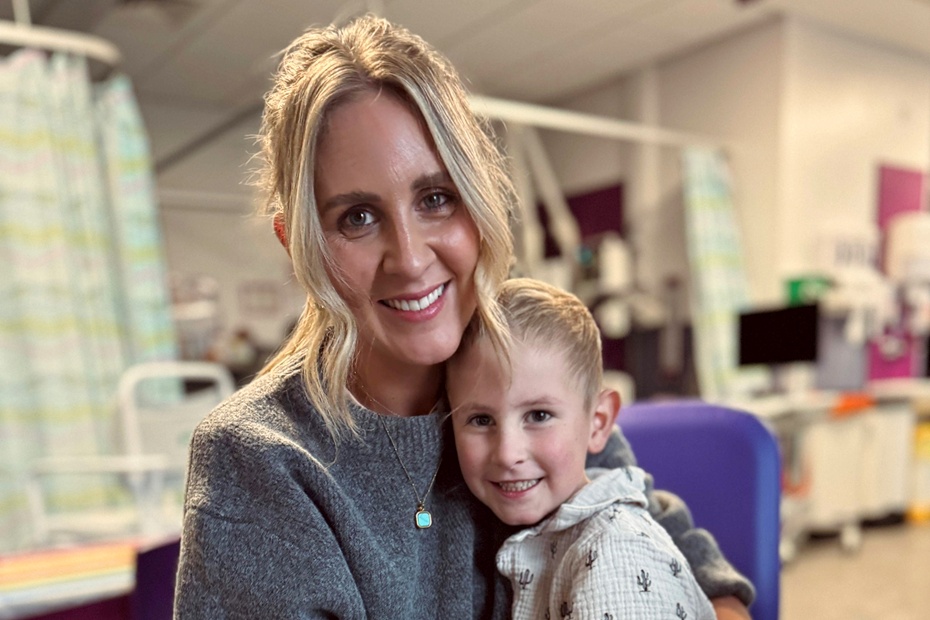
Seven-year-old Leo O'Brien from Newry has been named a British Heart Foundation Young Heart Hero after three open-heart surgeries and years of treatment for a complex congenital heart condition. His family is sharing his story to highlight World Heart Day held yesterday 29 September.

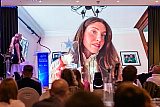
Leo was recognised for defying expectations at the British Heart Foundation's Young Heart Hero Awards, held at Paradox Museum in London. He was among a group of children from around the UK honoured at the ceremony, which recognises children, young advocates and fundraisers who have overcome challenges and made a difference in the fight against cardiovascular diseases.
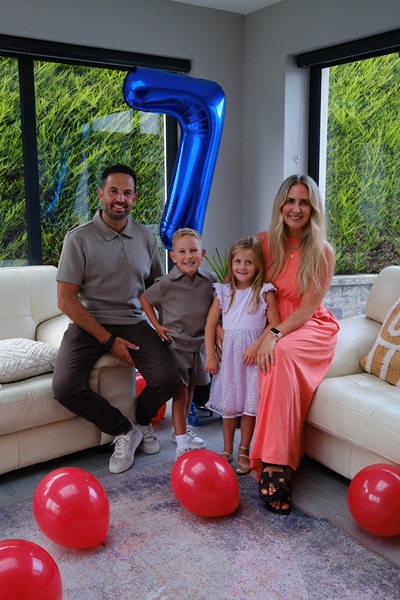
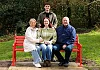
sister Kate, mum Emma and dad Andrew) has been
named a British Heart Foundation Young Heart Hero
His mother, Emma O'Brien, a content creator and BHF retail ambassador, says her son is an inspiration. "Even when you have been told there is very little hope, Leo shows that a child can still have a good life," she says.
Leo's condition was first suspected at Emma's 20-week pregnancy scan in early 2019, when the sonographer could see only two chambers of his heart. Further specialist assessment confirmed hypoplastic left heart syndrome, in which the left side of the heart does not develop properly.
Emma said: "At the 20-week scan I felt like a rabbit caught in headlights. I had so many questions, but nobody could tell me whether Leo would live. I remember leaving the hospital in pouring rain, completely floored by what we had been told.
"When Leo was born, the picture was even more complicated than we had expected. We fought for him to be assessed for surgery, and when Birmingham agreed to take him to do both the surgery and the valve repair, it gave us a chance.
"Usually the surgery on its own is high risk, but they explained to me that adding a valve repair on to this already complex surgery meant the risk was even higher."
Leo was born in August 2019, and doctors then discovered a severely leaky tricuspid valve, which added to the complexity of his condition. He became critically ill and was transferred to Birmingham for specialist care. After further review, surgeons were able to operate when he was one week old.
His early months included a lengthy hospital stay, difficulties gaining weight and numerous failed attempts to come off the ventilator, which made for a very anxious time for Emma and her husband. Leo returned home just before Christmas, before travelling back to Birmingham for his second open-heart surgery early the following year.
Emma said: "That first year was incredibly hard. Leo was tube-fed and I had to weigh everything he was given, but he kept surprising everyone. He came off the feeding tube at around 10 months and learned to eat normally. Even as a baby, his determination was clear."
Leo underwent his third open-heart surgery in Birmingham in August 2025. Before the operation he had become breathless, cold and unable to keep up with other children, and his oxygen levels were typically around 78 to 80 per cent. Emma says his oxygen levels are now around 94 per cent and the difference has been "incredible".
"Leo told us he was going to Birmingham to 'get his legs fixed'," Emma said. "He now feels like he is flying. He is back at school, full of energy and convinced he is going to win sports day. His physical ability may still be behind other children because he spent so long unable to join in, but he feels amazing in himself."
Emma began sharing Leo's journey online to help other families feel less alone. Her advocacy also led to her becoming a BHF retail ambassador, supporting the charity's shops and encouraging people to help fund lifesaving research.
She said: "I want to offer hope to families who may be where we once were. If sharing his story makes a difference to one family, it is worth it.
"I feel it is my purpose to raise awareness and support research that could have a positive impact on Leo and the life he gets to lead. We are so thankful for how well he is doing, and his resilience continues to amaze us."
Fearghal McKinney, Head of British Heart Foundation Northern Ireland, said: "This World Heart Day, Leo's story is a powerful reminder that heart disease can affect people at every stage of life. He has shown extraordinary courage throughout a journey no child should have to face. By sharing their family's experience, Emma is also helping others facing similar uncertainty to feel less alone.
"Decades of BHF-funded research have transformed the outlook for babies born with severe congenital heart defects, but there is still much more to do. With the public's support, we can continue powering breakthroughs that give children like Leo the chance of a healthier future."
Before the BHF existed, most babies born with a severe congenital heart defect in the UK did not live to see their first birthday. Today, with the help of decades of BHF-funded research, more than four out of five babies diagnosed with a congenital heart defect in the UK now survive to adulthood.
That research includes the work of BHF Professor Robert Anderson, who mapped the anatomy and electrical system of different congenital heart defects during the 1970s and 1980s. His work enabled surgeons to avoid placing a stitch where it could disrupt an electrical circuit in the heart, making surgery safer for children like Leo.
Nominations for the Young Heart Hero Award 2027 open on 25 November. For further information on this and on ways to support BHF, visit bhf.org.uk.