
 Write a comment
An evening dedicated to exploring the crucial relationship between soil health, farming practices and environmental sustainability is set to take place in south Armagh next week.
Newry, Mourne and Down District Council is hosting the event on Wednesday 15 October at 7.30pm in the Cardinal O'Fiaich Heritage Centre in Cullyhanna, bringing agricultural expertise directly to the local farming community.
The speaker for the evening is Andy Doyle, an agricultural journalist with more than 30 years' experience in the field and formerly Tillage Editor of the Irish Farmers Journal. Drawing on his extensive background in both agricultural journalism and crop research, Andy will delve into the science of how soils work, what makes soil healthy, and how different farming approaches affect both the ground beneath our feet and the wider climate.

The session is designed particularly for farmers, landowners and anyone involved in managing land sustainably. Attendees will gain practical understanding of how maintaining healthy soils can boost farm productivity whilst simultaneously supporting local biodiversity and building greater resilience against the challenges of climate change. The evening will also create space for discussion and the sharing of knowledge among those whose livelihoods depend on working the land.
Council Chairperson Councillor Philip Campbell welcomed the initiative, saying: "We are proud to welcome Andy Doyle to our district for what promises to be an informative and inspiring evening. Soil is the foundation of our farming heritage and our future. Events like this highlight the importance of protecting and understanding our natural resources, and I encourage all local farmers and landowners to attend and take part in this important conversation."
The event ties into the broader work of the Mourne Gullion Strangford Geopark, which plays an important part in soil conservation through protecting the geological heritage that shapes soil formation. The remarkable variety of rock types found across the Geopark creates an equally diverse range of soils, which in turn supports the region's biodiversity, helps with climate resilience and enables sustainable farming practices.
The event is free to attend. Those interested can find more information and book their place at mournegullionstrangfordgeopark.com
Write a comment
Police officers from both sides of the border are urging local businesses to exercise extreme caution following a sophisticated fraud operation that has cost firms, particularly those in border regions, substantial sums of money.
The PSNI's Serious Crime Branch, working alongside An Garda Síochána through the Joint Agency Task Force, is currently investigating 75 reports of business related crimes. The frauds have predominantly targeted the agricultural sector, with farm machinery and equipment dealers bearing the brunt of the scam.
Superintendent Peter Stevenson described the intricate nature of the criminal operation, which sees fraudsters pose as legitimate buyers before disappearing with high-value goods. "In each of the cases we are investigating, companies have agreed to sell items such as farm machinery, quad bikes etc. to a 'buyer', who usually claims to represent another business in the same sector," he explained.
The fraud follows a calculated pattern. After agreeing a sale, victims receive what appears to be proof of payment via screenshot showing either a bank card transaction or transfer. However, these payments are either immediately cancelled or completely fabricated, typically using cloned cards sourced from across Ireland. Delivery drivers, often unaware they're part of a criminal scheme, are then instructed to collect the goods, sometimes being diverted to alternative addresses whilst in transit. By the time sellers realise no funds have arrived, the criminals have vanished with the merchandise.
Authorities believe numerous businesses on both sides of the border have fallen victim but haven't come forward. "We believe this may have happened to other businesses here and in the Republic of Ireland who have not reported it so we want to encourage reporting and raise awareness," Superintendent Stevenson said.
Some recent investigations have yielded success stories. Officers managed to recover a dumper truck thanks to distinctive markings, whilst An Garda Síochána located a stolen quad bike using an installed tracking device, highlighting the value of protective measures.
Superintendent Stevenson outlined several precautions businesses should consider. "One preventative measure businesses and sellers may wish to consider is marking sold items or tracking them," he advised. He also suggested verifying purchasers by contacting the companies they claim to represent using publicly available contact details rather than information provided by the buyer.
Additional red flags include assessing whether a buyer's online presence appears genuine and active, and checking whether purchases align with the supposed business type. "One fraud we have investigated saw a construction firm apparently attempt to buy large quantities of silage wrap, an item used almost exclusively by farmers," Superintendent Stevenson noted.
His most emphatic advice concerned payment verification. "Always ensure that funds have been received prior to shipping by checking with your own bank or financial institution and do not depend on confirmation from the buyer, as this can easily be faked. Online checkers are also available to verify sort-codes."
Detective Superintendent John O'Flaherty, co-chair of the Joint Agency Task Force meeting, confirmed An Garda Síochána has tracked stolen goods moving from various locations throughout the Republic towards the Northern Ireland border. "The fraudulent theft of goods is not confined to border areas and I urge business owners to be vigilant and make all the appropriate checks and balances. An Garda Síochána continues to work closely with our counterparts in the PSNI, not only investigating these crimes but to make our communities aware that their businesses and livelihoods may be targeted in the future," he said.
"An Garda Síochána, under the auspices of the Joint Agency Task Force, has identified a number of incidents where goods were obtained and shipped through fraud amounting to considerable losses to the injured parties."
Adding another layer of complexity, Superintendent Stevenson revealed fraudsters have exploited dormant businesses to add legitimacy to their schemes. "In some of these incidents, we have also seen examples of occasions when buyers have provided a VAT reference for their supposed business, which when checked by the seller, often comes back to the legitimate firm or individual the buyer claimed to represent," he said.
These VAT numbers belonged to essentially inactive businesses whose owners were completely unaware their details were being misused. Superintendent Stevenson suggested companies with dormant businesses might consider deregistering to prevent their credentials being exploited by criminals.
Whilst agricultural businesses have been the primary targets, police stressed that any company operating online faces potential risk. "Whilst many of the reports received have been from those in the agri-business sector, any business operating online could be targeted. We are working closely with our partners, and with An Garda Síochána in particular, to identify the criminals involved and I would encourage any business who believes they've fallen victim, or anyone with information that could assist detectives to please get in touch by calling the non-emergency number 101, or online at https://www.psni.police.uk/report" Superintendent Stevenson concluded.
Information can also be provided anonymously to Crimestoppers on 0800 555 111 or at www.crimestoppers-uk.org. Further guidance on protecting businesses from scams and fraud is available at https://www.psni.police.uk
Write a comment
Four Markethill High School pupils have been announced as worthy runners up in the 2025 ABP Angus Youth Challenge while a Crossmaglen schoolgirl took an Outstanding Individual Achievement Award.
The ABP Angus Youth Challenge is delivered in partnership with the Certified Irish Angus Producer Group to give teenagers the opportunity to rear Angus cattle and complete a research project addressing real-world agricultural issues.
The team from Markethill High School was named runners-up. The team of Natasha Dickson, Rachel Johnston, Ellie Gilmore and Autumn Mulholland were praised for their project “Food Provenance: Do You Know What You Eat?” They developed and published a recipe cookbook, “A Cut Above the Rest,” featuring Northern Irish beef dishes. The project sold 280 copies, raising £2,300 for Air Ambulance NI and Rural Support NI, and engaged with the public through cookery demonstrations at the Armagh Show.
The Outstanding Individual Achievement Award went to Casey Jane Creegan from St Joseph’s High School, Crossmaglen. Alongside team-mate Michaela McGuinness, she worked on a project entitled “Sustainable Beef Consumption and the Young Consumer.” The judges recognised Casey Jane for her enthusiasm, teamwork and community commitment.
Enniskillen Royal Grammar School was crowned the overall winners of the Challenge. The team impressed the judges with their project “One Health: The Link Between Animal, Human and Plant Health.”
The winners received the ABP Angus Youth Challenge Cup and a further £1,000 cash prize for their school.
Throughout the past year all four teams have been rearing Angus cross calves which were awarded to all finalists. Earlier this month they were able to sell their finished cattle to ABP and retain the proceeds for themselves.
The team from Lecale Trinity Grammar School, consisting of Ben O’Connor, Brent Magouran, Christopher Cunningham and Lochlann Hegarty, were also commended as finalists for their project “Raising Awareness of Animal Welfare Standards.” They hosted an Animal Welfare Conference at their school and developed education resources for schools, taking inspiration from an online meeting secured with the international expert in animal behaviour Temple Grandin.
Speaking at the ceremony, ABP’s George Mullan congratulated all the finalists. “These young people have shown curiosity, teamwork and pride in local agriculture. They’re exactly what the agri-food sector needs for the future,” he said.
Dr Sinclair Mayne, a leading scientist and agricultural adviser, also addressed the audience, highlighting the importance of food production to Northern Ireland’s economy. The event concluded with the ABP Angus Youth Exhibition, where new entrants for the 2026 Challenge showcased their early-stage projects in the hope of securing a place in next year’s final.
The programme helps participants develop practical farming, business, communication and leadership skills, supporting the next generation of agri-food professionals. ABP is one of Europe’s leading privately owned agribusiness companies and is the largest beef processor in Ireland and the UK with sites in Newry, Lurgan and Dungannon. The company also operates substantial renewable (Olleco), pet food (C&D), and protein divisions. ABP and its affiliates employ over 14,000 people and have over 50 manufacturing plants operating across nine countries. For more information, visit www.abpfoodgroup.com
Write a comment
A record 39 school teams from across Northern Ireland competed in the 2025 ABP Angus Youth Challenge Exhibition at the Logan Hall, Balmoral Park, marking the largest participation since the competition began in 2017. Teams from St Joseph's High School, Crossmaglen and St Patrick’s School, Keady took part.
Hosted by ABP in partnership with Certified Irish Angus Producer Group, the exhibition brought together Year 11 pupils to present their ideas on key issues affecting agriculture, food production and land use. The teams were judged by a panel of industry and education representatives, with those progressing to the final stage set to be awarded their own mini herd of Angus cross calves to rear sustainably with the support of a CAFRE (College of Agriculture, Food and Rural Enterprise) mentor.
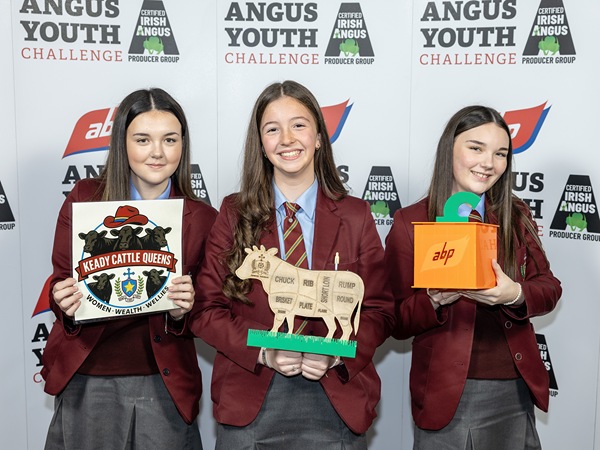
Over the course of next year, the finalists will also receive communication and interview training, complete a research project, study trip, and sell their finished cattle to ABP, retaining the proceeds for themselves. The overall winning school or club will receive a £1,000 cash prize at the end of the programme.
The response from schools reflects a broader trend evidenced by the increased uptake for the CCEA-accredited GCSE in Agriculture and Land Use. George Mullan, Managing Director of ABP in Northern Ireland, said: "The standard of entries was outstanding, showing the curiosity and talent that exists among our young people. It's encouraging to see such passion for the future of the agrifood industry which is central to Northern's private sector economy."
Charles Smith, General Manager of the Certified Irish Angus Producer Group, added: "The ABP Angus Youth Challenge is supporting the next generation of our industry. The response to the competition from rural and city schools demonstrates the growing awareness of the wide range of employment opportunities across the supply chain."
Guest speaker at the event, agricultural scientist Dr Sinclair Mayne, highlighted the impact that the ABP Angus Youth Challenge is having on young people. He said: "There are great opportunities for innovation, personal satisfaction and growth across a wide range of careers from research, education, knowledge transfer, supply and processing sectors, and farming. The ABP Angus Youth Challenge is inspiring young people to explore these opportunities."
The ABP Angus Youth Challenge programme reflects ABP's wider commitment to promoting agricultural education, sustainability and skills development, helping to secure the future of one of Northern Ireland's most important industries.
Write a comment
The north's maincrop potato harvest is now 80% complete, however recent heavy rainfall has slowed up progress with growers hoping to lift the remaining crop before the arrival of frosts in November.
Wilson's Country agronomist Stuart Meredith said the progress made with this year's harvest up to now is on a par with that achieved in 2024. He said the recent heavy rains have held up harvesting in all areas but up until now it has been non-stop harvesting. He added: "As we move into November there is an increased risk of frosts so the sooner we get the remaining 20% lifted the better as the quality of the product in the ground can deteriorate quite quickly."
There are a number of quality related issues relating to the 2025 maincrop harvest. Bruising is one of these that will have an impact on packing yields, the agronomist confirmed, and again this is very much a weather related issue, directly associated with the lack of moisture over the summer months. As potato crops come under moisture stress, the dry matter content within the tubers below the ground rises rapidly, as was the case this year in some areas. Unfortunately, this leads to black bruises under the skin of the potatoes during the harvesting process. However, with the higher dry matter comes a flourier, better tasting potato for the consumer.
Where 2025 potato yields are concerned, it's very much a north south split. Stuart Meredith said all potato crops came under significant moisture stress as they were bulking up, which was a direct consequence of the dry summer weather. However, crops grown in lighter soils, such as those prevalent in South County Down, were more badly affected than was the case in places like Northern Antrim, where the heavier clay soils are more moisture-retentive.
Across the board, the Wilson's Country agronomist is projecting an average potato yield of 18 tonnes per acre off the field, and that's pretty representative of what would be expected in a normal year. The company's own potato acreage is up slightly this year, which reflects their growing commitment to salad potatoes, including the varieties Venezia and Empress. These salad varieties were planted out later than maincrop varieties but harvested at an earlier date.
Stuart Meredith concluded that prices are very much supply and demand driven. With around 20% of the potatoes in Northern Ireland and around 40% of Rooster in the Republic of Ireland still to be harvested, it's still too early to predict what the market will do.
Write a comment
Farmers across Newry and Armagh have been urged to urgently vaccinate their cattle against Bluetongue disease following its detection in several cows on a farm in Bangor, County Down.
MP Dáire Hughes has called for immediate vaccination to protect livestock and prevent further economic losses, warning that the issue is particularly pressing for rural constituencies like Newry and Armagh which is home to almost 3,000 farms. Many of these farms are in close proximity to the border, with livestock easily able to come into contact with animals on farms in County Monaghan and County Louth.
Mr Hughes said: "We need to know what investigations are underway to determine how this herd contracted Bluetongue and how the disease first entered the island. Vaccination is our best line of defence against Bluetongue. I urge all farmers to act now and ensure their cattle are vaccinated to safeguard their herds. We cannot afford to delay. Our farmers' livelihoods depend on it, as do rural communities."
The Newry and Armagh MP called for the vaccine to be immediately approved and licensed by the relevant authorities in the south so that farmers across the entire island can access vital protection without delay. Vaccination is not currently approved or licensed in the south.
Mr Hughes said: "Disease does not recognise arbitrary borders. This is especially pertinent for Newry and Armagh, with almost 3,000 farms and many in close proximity to the border. Livestock can easily come into contact with animals on farms in Co. Monaghan and Co. Louth. The repercussions of a lack of vaccination could be devastating for any farming family, the wider agri-food sector and connected rural economy."
The MP also called for farmers whose cattle have been culled due to Bluetongue to receive full and timely compensation, saying it is crucial that farming communities are supported during this challenging time.
Mr Hughes concluded that there must be an all-island strategy to tackle the disease, saying Bluetongue is a cross-border issue requiring a coordinated approach. He added: "DAERA and DAFM need to work together to protect our farmers and control the spread of this disease."
Write a comment
The Royal Ulster Agricultural Society presented four awards for outstanding dedication and long service to agriculture at their Christmas Council lunch in December 2025.
Eugene McVeigh from Poyntzpass was presented with a Long Service Award in recognition of 45 years as Farm Operation Manager at Acton House Farm, Poyntzpass by RUAS President John Henning OBE.
Since he began his career in 1980 at Acton House owned by the Best family, Eugene's roles on the farm have been many and varied, but he quickly distinguished himself as a highly capable ploughman, a skilled sprayer operator and more recently as manager of the farm's composting operation.
The Best family were proud to acknowledge Eugene's outstanding contribution not only to Acton House Farm, but also to the wider farming community. His skill, dedication and generosity have left a lasting impact on all who have worked with him.
David McClurg and the Fleming family were also presented with Gold Society Awards for over 50 years of service as exhibitors at Balmoral Show. Also celebrated on the day was Walter Thompson from Ballywalter on 47 years of employment with Dunleath Estates Limited.
Write a comment
MP Dáire Hughes believes the EU-Mercosur trade deal which is to be signed by European Commission President, Ursula von der Leyen in Paraguay this Saturday represents a serious and growing threat to farmers both north and south, and has accused the Irish Government of failing to act when it had the chance.
The Newry and Armagh MP said “The Irish Government had a responsibility to stop Mercosur and they failed completely in that task. They had multiple opportunities to act, to build opposition and to defend farmers across the island of Ireland - north and south - and they chose not to.
Mr Hughes said that a similar trade agreement by the British Government is being considered “That would further expose farmers in the North to unfair competition and low-standard imports, piling pressure on an already fragile sector."
“Mercosur will only compound these problems. It opens the door to low-standard imports that will undercut local producers, drive down prices and weaken environmental, animal welfare and food standards. Agriculture on this island is deeply interconnected - a bad trade deal does not recognise borders." he added.
Me Hughes said Sinn Fein believe Mercosur is a bad deal for farmers, consumers and rural communities.
“The actions of the Irish Government and the direction being taken by the British Government only reinforce the need for Irish unity and a consistent, all-island government that puts the interests of farmers and our people first, right across this island.”
Write a comment
MP Dáire Hughes has welcomed the decision of the European Parliament on Wednesday to support a challenge initiated by Sinn Féin MEPs and the Left Group to refer the Mercosur trade agreement to the European Court of Justice.
The Newry and Armagh MP said the vote represents a major victory for farmers north and south and clear proof that Sinn Féin's challenge is working to protect Irish people, the environment and the future of farming across the island of Ireland. He added that pressure must now be maintained to ensure this disastrous deal is stopped once and for all.
Hughes commended Sinn Féin MEPs Lynn Boylan and Kathleen Funchion for their leadership in drafting the motion and for leading the campaign against Mercosur in the European Parliament.
"This is a major victory in the battle against this ruinous deal. It is a victory for farmers north and south, for consumers, and for the protection of our environment," he said. "The full implementation of the Mercosur deal is now likely to be suspended for up to two years. That gives us vital time to continue building opposition and to ensure this deal is never ratified."
While the vote was tight, the MP said it sends a very clear message that there are serious concerns right across Europe about Mercosur, and the deal can be stopped.
He said everyone knows this is a bad deal, with the so-called safeguards not worth the paper they are written on. Current checks and controls on imports of beef produced using hormones and banned antibiotics are not working, and Irish farmers are being undercut by produce that would not meet standards here.
"This referral to the ECJ now gives the Irish Government the time and opportunity to engage with MEPs from other EU member states and build a blocking coalition if the deal returns to the European Parliament," Hughes said. "Sinn Féin's challenge is working to protect Irish people, our environment and our farmers, and we cannot take our eye off the ball. We must keep the pressure on to ensure this deal is stopped once and for all."
He said his party will continue to stand with farmers across the island of Ireland in opposing Mercosur and defending rural livelihoods, and called on the British government to reconsider any trade deal with Mercosur, as this decision further underlines the serious legal, environmental and agricultural concerns surrounding the agreement.
Hughes said the issue also highlights the importance of Irish unity. "Only with an all-Ireland approach, with full democratic control over trade, agriculture and food standards, can we ensure that disastrous deals like Mercosur are stopped and that the interests of Irish farmers, workers, consumers and our environment are properly protected."







 |
 |
 |