Write a comment
During the festive season, there are many traditions that we all love to indulge in and a core staple for many of us is tied to the food we share at Christmas. This year, Newry and Mourne Museum will be looking through some recipe books in the collection to highlight the history of some of our Christmas treats.

Many Christmas recipes use dried fruits and spices, the origins of which date back hundreds of years. As these ingredients were expensive, it was a luxury to use them at Christmas time. A1904 Newry Technical School Cooking Class book contains a recipe for mince pies which is remarkably like the recipe used today, unlike in Tudor times, when they contained mutton. It was also the fashion at that time for mince pies to be shaped like a crib, a tradition that endedin the mid-seventeenth century.
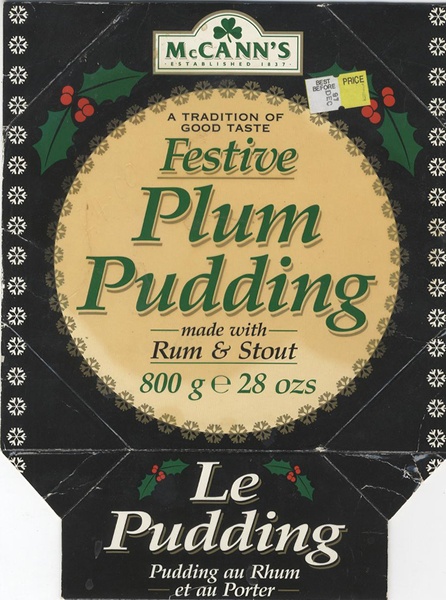
Christmas puddings or plum puddings originated in the 14th century and were originally a savoury dish known as frumenty, which included meat, onions, dried fruit and spices. With the addition of eggs, breadcrumbs and alcohol, it began to evolve so that by the Victorian era they were very similar to today’s puddings. Creating the pudding was considered especially important in the Victorian era as it required a helping hand from the whole family.
On ‘Stir-Up’Sunday at the beginning of Advent, each family member participated in making the pudding, which was made up of suet, breadcrumbs, dried fruit and spices. They would each make a wish and stir clockwise for good luck. Then a ring (for marriage), coin (for wealth), or thimble (for a happy, but single life) was tossed into the batter, to tell the fortunes of those who found themin their portion. Until Christmas Day the pudding hung from a sack, then it was boiled in beef broth for eight hours. After dinner it was turned out on a platter, topped with a sprig of holly, and set alight. The head of the household sliced and served it, asking for a blessing on all who prepared it.
A book, written by fifteen-year-old Mary Ann Scott, contained many popular Christmas recipes,including one for plum pudding. Although the puddings did not contain plums, at the time, plum was a by-word for any type of dried fruit. Other recipe books in the collection have variations on the recipe and method. The 1936 souvenir cookbook from the Christian Brothers’ Bazaarfeatures Miss Nannie Treanor’s recipe for cottage plum pudding which only required the pudding to be steam for two hours before serving. Another recipe book entitled ‘Great Grandmother’s Recipe Book’ offers an alternative recipe without the use of eggs.
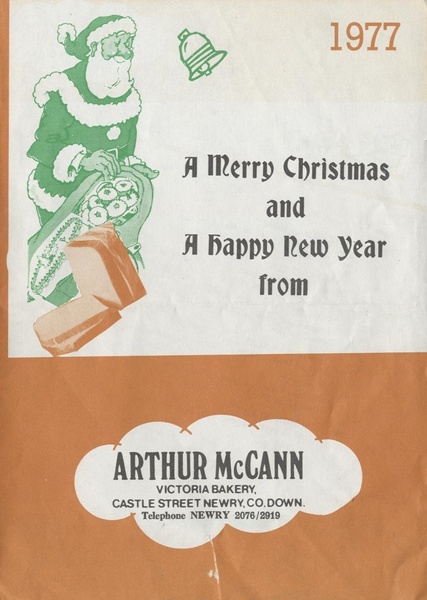
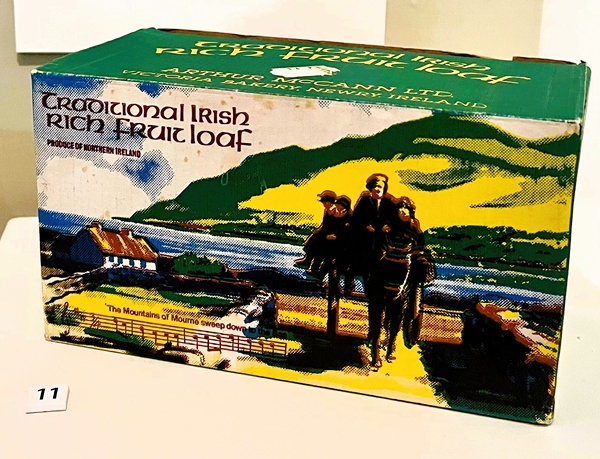
One local business that took great pride in celebrating festive food was McCann’s Bakery. The bakery added a festive touch to their goods. In the 1970s, as part of their “Snowtime” range, plum cake became the “Christmas Rose”, madeira cake was nicknamed the “Robin”, and their mixed fruit cake was christened the “Santa Claus”. McCanns were aware of the popularity of their baked goods and presented them in gift boxes for posting inland and internationally, so people could send their friends a taste of home. A Christmas card that accompanied their Rich Fruit Loaf suggested several ways to enjoy it; by slicing it thinly and spreading liberally with butter or honey; topped with cheese and toasted or fried.
The Christmas Puddings and Rich Fruit Loaves they advertised during this time were made from the recipes that they had developed sixty years previously and were also gifted to the landlord as part of their rental agreement.
For further information about Newry and Mourne Museum, visit our website at www.visitmournemountains.co.uk
By Noelle Frew and Joanne Glymond