Write a comment
Derrymore House in Bessbrook, two miles from Newry, is a significant component of the National Trust’s portfolio and features in key moments in both Irish and British history.

The name Derrymore originated from ‘doire’, the Irish for an oak grove and ‘mór’, meaning large. Derrymore formed part of the lands of the O’Hanlons, who are believed to have at one-time owned land stretching from Armagh to Dundalk. Sir Oghie O’Hanlon, the last O’Hanlon lord of Orior passed Derrymore and other lands to the Bagenals as they developed their estates around Newry. In due course Derrymore was inherited by the Needhams, Earls of Kilmorey, who leased it to the Corry family.
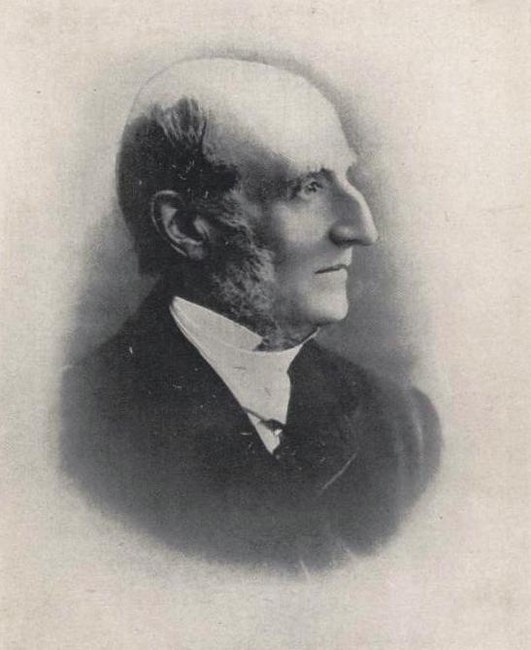
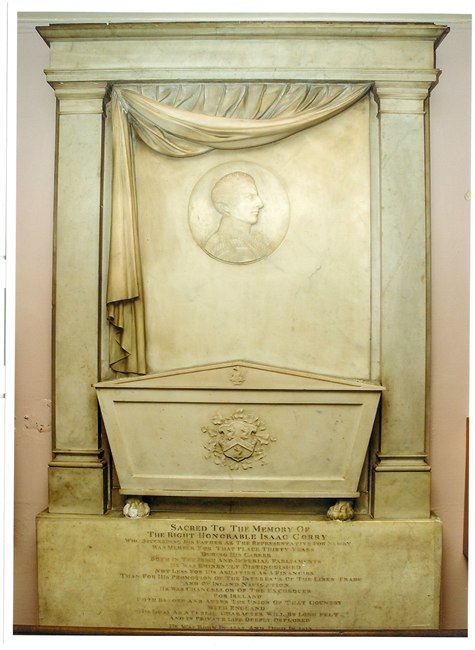
Issac Corry Junior became heir to Derrymore and following his election as Member for the Borough of Newry in 1776, at aged just 21, built a thatched cottage style house. The single storey with basement, is surprisingly spacious, and a large drawing room links the two wings. This room later became known as the Treaty Room. In the days of the Irish Volunteers, Corry was an enthusiastic supporter of the movement and in fact was Commandant of the First Newry Company in 1778. His outlook changed as he became more sympathetic to the views of the English Government and it is understood that Act of Union was composed in the Treaty Room in Derrymore House.
In 1810, Derrymore House was purchased by Lieutenant-Colonel Young, son of the Reverend John Young of Eden, County Armagh. At this time an entrance hall was added to the house. In 1828 the property was sold to Edward Smyth of Newry who owned it until 1859 when his family advertised the house and land for sale.
It was acquired by the Richardson’s, a Quaker family, in 1844 with major interests in the linen industry. They were the builders of the model village at Bessbrook, the first model village of its kind in Northern Ireland. There is no evidence to suggest that any of the Richardson family lived at Derrymore House; they leased it and built another house, The Woodhouse, on the northern part of the demesne.
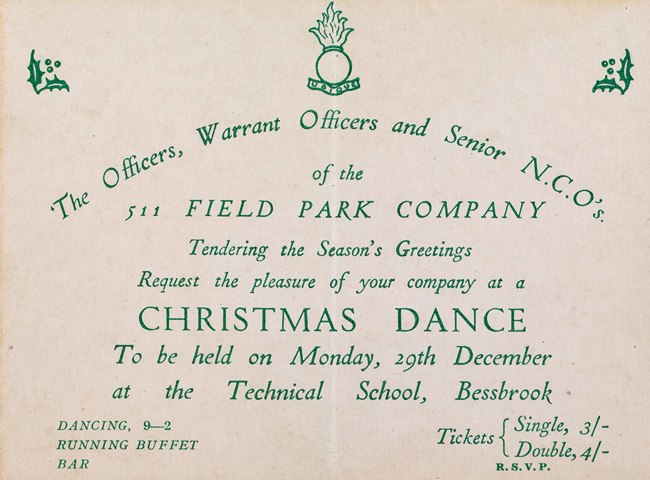
In 1940, British troops arrived at Derrymore House. Soldiers of the Fife and Forfar Yeomanry occupied Nissan huts in the grounds at the early stage of World War II; they left in 1943, when American soldiers arrived. The site became known as Q-111D, Quartermaster Depot. A concrete road is all that remains from this time on the estate.
In 1952, John S. W. Richardson offered Derrymore House to the National Trust. The entrance hall was demolished restoring the 18th century character of the building. During the ‘Troubles’, Derrymore House was bombed on numerous occasions from 1972 until 1979. The caretaker, Edmund Baillie risked his own life by carrying bombs away from the house and, although damage occurred, substantial repairs were completed.
In 1985 John Richardson generously donated the rest of the Derrymore Demesne to the National Trust, including The Woodhouse, walled gardens and various lodges.
The Museum is currently offering free tours of the exhibition galleries on Wednesdays and Thursdays at 11.00 am. These must be booked in advance by calling our Education Officer at 0330 137 4422.
Newry and Mourne Museum is open Tuesday – Saturday 10.00 am – 4.30 pm. Please call 0330 137 4422 or email museum@nmandd.org for further information.